
24/7 Customer Support

Free returns

Same-day & Next-day Delivery

Quality Guaranteed

Unlock Your Welcome Offers: FREE Delivery | Up to 80% OFF | Free 30-day JoyPlus trial
Download the APP
A pet slow feeder bowl can make mealtimes more engaging for pets that gulp down food, but choosing the wrong design may create new problems. Some bowls look interactive yet have openings that are too difficult for smaller pets. Others slide across the kitchen floor, trap food in hard-to-clean corners or offer features you will rarely use.
The practical choice depends on your pet’s size, eating style, food type and daily routine. This guide highlights the common buying traps, the specifications worth checking and a selection of options for different UK households.
Deep ridges and narrow channels can slow eating, but they may frustrate cats, kittens, flat-faced dogs or pets eating wet food. A design should extend mealtime without making it difficult for your pet to reach an appropriate portion.
For cats, a whisker-friendly, low-profile surface is often more suitable than a deep dog-style maze. For enthusiastic eaters, a more structured anti-gulping pet feeder may be appropriate, provided your pet can access the food comfortably.
A lightweight bowl can move around the floor while your pet eats. This is particularly inconvenient on laminate, tiled or wooden flooring. Look for a non-slip pet feeding bowl, integrated mat or holder that keeps the feeder stable.
Suction features also need realistic expectations. A suction cup generally works best on clean, smooth surfaces such as glass or tiles, rather than textured walls or fabric.
Not every slow feeder works equally well with kibble, raw food, wet food and liquid treats. Textured mats are usually designed for spreadable foods, while raised-baffle bowls are more commonly used with dry food. If you serve several food types, check whether the product has separate sections or a surface suitable for different consistencies.
Food-contact surfaces should be clearly described as food-grade and free from materials you wish to avoid, such as BPA, PVC or phthalates. Product information should also explain whether the item is dishwasher-safe, microwave-friendly or suitable for freezer use.
Rubber and thermoplastic rubber mats can offer flexible textured surfaces for licking. Stainless steel bowls are easy to rinse and are commonly chosen for everyday feeding or drinking. Always follow the manufacturer’s care instructions, particularly when using heat or a dishwasher.
Check the feeder’s dimensions against your pet’s mouth size and normal portion. A small feeder may suit a cat or small dog but be unsuitable for a larger breed. A bowl that is too shallow may not provide enough challenge, while one that is too deep can be impractical for short-nosed pets.
A product such as a slow feeder bowl for cats should generally provide comfortable access without forcing the whiskers against high sides. A slow feeder bowl for dogs may need a larger surface area and heavier construction, especially for pets that push bowls around.
An elevated slow feeder bowl can be useful where you want the feeding height adjusted as a dog grows or when multiple pets of different sizes share a home. Look for secure legs and clear height settings rather than relying on vague “ergonomic” wording.
If your pet drinks vigorously, a slow feeder with water bowl or floating water bowl combination may help keep the surrounding floor drier. Remember that the water section is not necessarily a slow-feeding section, so monitor normal water access separately.
For holidays, visits to family or trips in the car, a foldable mat or travel-friendly pet feeder is easier to store than a rigid stand. A compact mat can also work well as an alternative feeding station when space is limited.
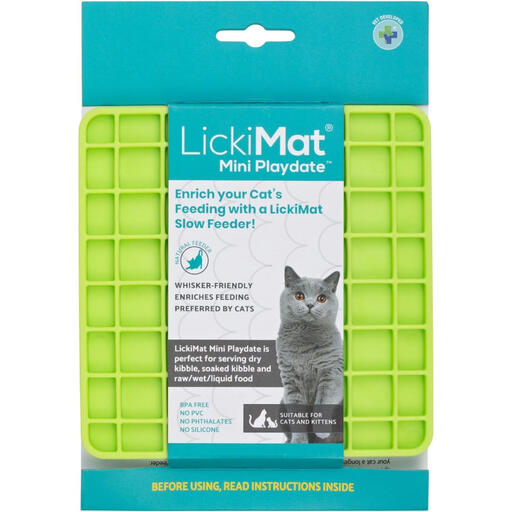
Why This Fits Their Persona: Its compact 6 x 6-inch format suits cat owners with a small footprint in the kitchen or those wanting a simple feeder for travel and occasional enrichment.
The textured surface is designed for wet, raw, liquid and kibble foods, avoiding a single-purpose feeder that only suits dry food.
Food-grade rubber; compact and freezer-friendly design for spreadable treats.
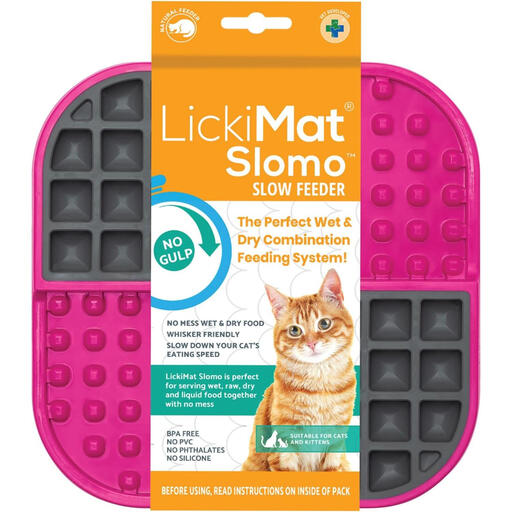
Why This Fits Their Persona: Suitable for households that want separate areas for wet, dry and liquid foods, particularly where a fussy cat needs a low-profile feeding surface.
The low-profile, whisker-friendly layout avoids forcing a cat to reach into a deep maze.
Separate textured sections; accepts wet, dry and liquid foods.
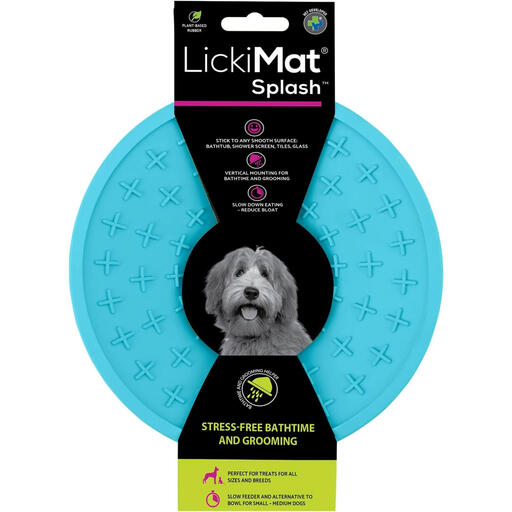
Why This Fits Their Persona: A practical option for bath time, grooming, travel or other situations where a dog needs a hands-free licking activity on a smooth surface.
Its large suction cap is intended for smooth hard surfaces, addressing the sliding problem without suggesting it will grip every wall.
Natural rubber construction; suitable for meals, treats and training rewards.

Why This Fits Their Persona: The foldable stand and four height settings suit homes with a growing dog, changing routines or pets that need feeding and drinking stations together.
The adjustable frame avoids committing to one fixed height, while the separate stainless steel bowl supports routine cleaning.
Four height levels from 10cm to 31cm; includes a slow feeder bowl and stainless steel bowl.
We have compiled a complete, real-time list of products that fully satisfy these strict selection criteria and UK safety regulations.
Yes, some models are designed specifically as a slow feeder bowl for cats, with low-profile, whisker-friendly surfaces. Avoid assuming that a dog maze will suit a cat. Check the height, texture and access points, particularly for kittens, older cats or flat-faced breeds.
A dog lick mat can provide a focused licking activity during situations such as grooming, travel or thunderstorms. It should not be presented as a medical treatment, and every dog responds differently. Use suitable food, supervise your dog and remove the mat if chewing begins. A cat lick mat can similarly provide an engaging feeding alternative for cats, but it must be sized and textured appropriately.
Lifespan depends on material, cleaning routine, frequency of use and whether your pet chews it. Food-grade rubber, silicone, polypropylene and stainless steel each have different care requirements. Check the product after every wash and replace it if damaged. Regular cleaning does not remove the need for inspection, especially when the feeder is used daily.