
24/7 Customer Support

Free returns

Same-day & Next-day Delivery

Quality Guaranteed

Unlock Your Welcome Offers: FREE Delivery | Up to 80% OFF | Free 30-day JoyPlus trial
Download the APP
Fast eating, spilled water and food scattered across the kitchen floor are common problems for UK pet owners. Pet slow feeder mats can make mealtimes more engaging while helping to keep feeding areas tidier, but the products are not interchangeable.
Some are designed for licking soft food, others divide dry meals into sections, while a pet feeding mat simply catches spills. Choosing the wrong style can mean wasted money, difficult cleaning or a mat that moves around the floor within days.
A lick mat for dogs or lick mat for cats uses textured grooves, pockets or raised patterns to spread food across a larger surface. It is intended to encourage licking and extend treat or mealtime.
A splash-proof dog feeding mat, by contrast, is usually a flat silicone sheet with raised edges. It helps collect water and food debris but does not necessarily slow eating. If your main issue is a messy feeding station, a silicone pet food mat may be suitable. If your dog eats too quickly or becomes bored, look for an enrichment feeding mat instead.
A mat may be described as non-slip, but performance depends on the surface beneath it. Dusty flooring, textured tiles and damp laminate can reduce grip. Suction designs generally work more effectively on smooth, hard surfaces such as glass, tiles or polished floors.
For pets that pull, fold or chew their mats, a holder or heavier base may be more practical than a lightweight flexible sheet.
Slow feeder mats are feeding accessories, not chew toys. A determined chewer may damage rubber or thermoplastic rubber, creating loose pieces. Check the mat before each use and remove it if it is cracked, torn or deteriorating.
Also check whether the product is suitable for hand washing, a dishwasher, a microwave or freezer use. Food trapped in deep textures can become unpleasant if the mat is not cleaned promptly.
Look for clearly stated materials such as food-grade silicone, food-grade TPR or natural rubber. Product descriptions should explain what the mat is made from and, where provided, whether it is free from substances such as BPA, PVC or phthalates.
Material alone does not determine durability. A soft, flexible mat may be comfortable for licking but less suitable for a dog that bites edges. If your pet is an eager chewer, choose a sturdier design or use the mat only while supervised.
Raised ridges, brush-like tips and pockets create different levels of challenge. Fine textures are suited to yoghurt, purée, wet food and other spreadable treats. Larger sections can accommodate kibble, raw food or mixed meals.
For cats, a cat slow feeder mat should ideally have a low-profile, whisker-friendly surface. Some cats reject deep bowls or narrow channels that touch their whiskers. A slow feeder for cats with multiple sections can also make it easier to separate wet, dry and liquid food.
Measure the available floor or wall space before ordering. A large pet food mat may suit several bowls, but a compact mat is more convenient for a flat share, small kitchen or travel bag.
For spill control, check the raised-edge height and total dimensions. A 60 × 40cm mat, for example, can accommodate more than one bowl and provide wider floor coverage. For licking activities, stability matters more than overall size. A suction cup, non-slip holder or weighted base can help reduce movement.
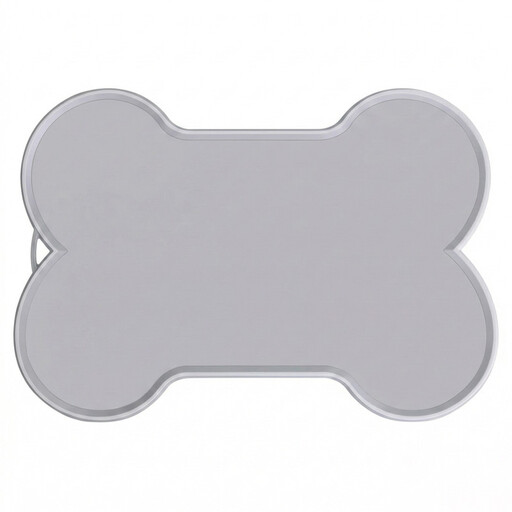
Why This Fits Their Persona: A practical starting point for households that mainly need to protect floors from water and food spills around one or more bowls.
It is clearly positioned as a splash mat rather than a slow-feeding lick surface, helping avoid buying the wrong product for spill control.
55 × 40cm silicone surface, widened edges and multiple colour options.
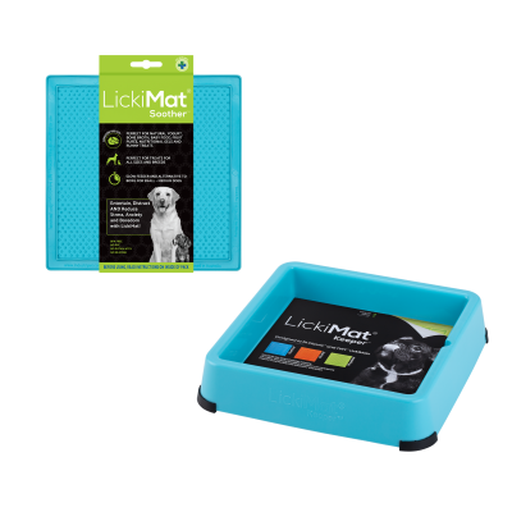
Why This Fits Their Persona: Suitable for owners wanting a more secure setup for daily enrichment, grooming distractions or quiet time at home.
The Keeper holder is designed to reduce sliding and edge access, addressing the problem of a flexible mat being pulled across the floor.
Includes a holder that can also be used as a slow feeder bowl; suitable for soft and liquid foods.
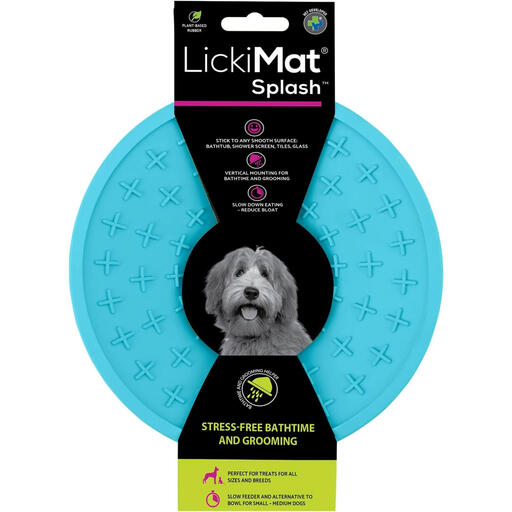
Why This Fits Their Persona: A focused option for dogs that need a lick-based distraction during baths, travel or other potentially stressful routines.
Its suction-cap design is intended for smooth hard surfaces, so buyers can assess whether their tiles, glass or floor are suitable before purchase.
Large suction cap and central rubber teat; made from recyclable natural rubber.
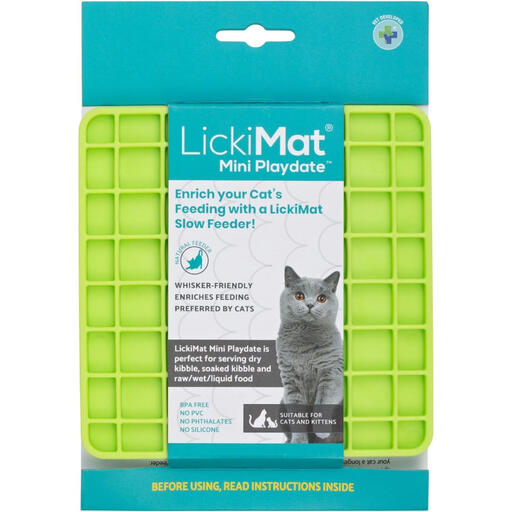
Why This Fits Their Persona: Its compact format suits kittens, smaller cats, travel and owners who want to introduce enrichment gradually.
The 6 × 6 inch format is easier to store and carry than a large feeding station, while its textured surface remains suitable for varied food types.
Supports wet, raw, liquid and kibble food; made from food-grade rubber and polypropylene.
We have compiled a complete, real-time list of products that fully satisfy these strict selection criteria and UK safety regulations.
They can be introduced gradually, provided the food is appropriate for the animal’s age and the pet is supervised. Start with an easy-to-lick texture and short sessions. Remove the mat if your pet bites or tears it.
Lifespan depends on chewing behaviour, cleaning routine, heat exposure and storage. Inspect the surface regularly for cracks, loose pieces, deep scratches or changes in texture. Replace the product when it shows damage, even if it still appears usable.
A licking activity can provide occupation during events such as bathing, grooming or travel, and some owners use a calming lick mat as part of a routine. It should not be treated as guaranteed anxiety relief for dogs. If anxious behaviour is persistent or severe, consult a qualified veterinary professional.