
24/7 Customer Support

Free returns

Same-day & Next-day Delivery

Quality Guaranteed

Unlock Your Welcome Offers: FREE Delivery | Up to 80% OFF | Free 30-day JoyPlus trial
Download the APP
Living with pets brings immense joy, but it also comes with the constant challenge of managing shedding hair, dander and tracked-in dirt. For many UK pet owners, a standard hoover simply doesn’t cut it. Pet hair weaves itself into carpets, clings to upholstery and gathers in corners, while fine dander can affect air quality.
Finding a machine specifically designed for these challenges can transform your cleaning routine. This guide is designed to help you navigate the key features of a good pet vacuum cleaner. We will look at what makes a vacuum effective against pet-related mess and present a few recommended models that are well-suited for the task, helping you maintain a cleaner, more comfortable home.
Choosing the right model goes beyond just looking at suction power. Here are a few practical factors to consider to ensure you get a machine that meets the demands of a pet-friendly household.
While strong suction is important, it is the combination of power and the right tools that makes a powerful pet hair remover. Standard floorheads can struggle to lift fine, embedded hair from carpet fibres or furniture. Look for models that include a dedicated pet turbo tool. These are often smaller, air-driven or motorised brush heads designed to agitate and lift stubborn hair from upholstery, stairs and pet beds.
For many, particularly those with allergies, a pet is a beloved family member, but their dander can be a persistent trigger. An anti allergen vacuum cleaner is equipped with a high-efficiency filtration system, often a HEPA (High-Efficiency Particulate Air) filter. This type of filter is designed to capture microscopic particles like dander, pollen and dust mites, preventing them from being recirculated into the air as you clean. This is a key feature for improving indoor air quality.
Your choice between a corded or cordless model will depend on your home's layout and your cleaning habits.
Here are a few models that offer features specifically geared towards the challenges of cleaning up after pets.
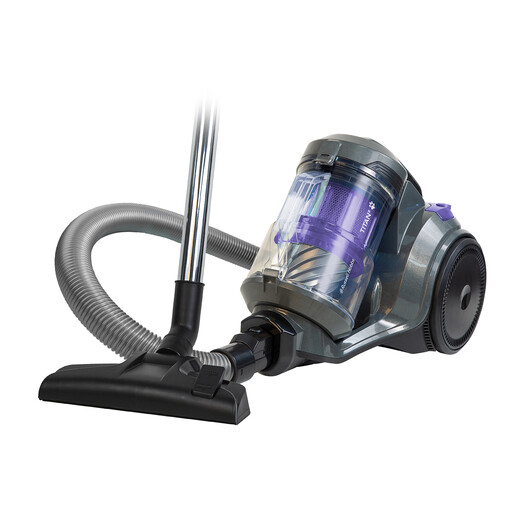
This cylinder vacuum from Russell Hobbs is a corded workhorse designed with pet owners in mind. It combines a high-efficiency motor with a suite of tools to manage hair and dust across different floor types.
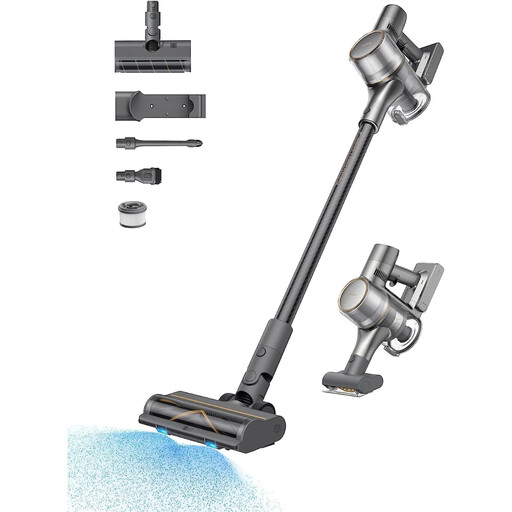
The Dreame R20 offers the convenience of a cordless stick vacuum without compromising on power. It is packed with smart features that make daily cleaning more efficient, especially in a busy home with pets.
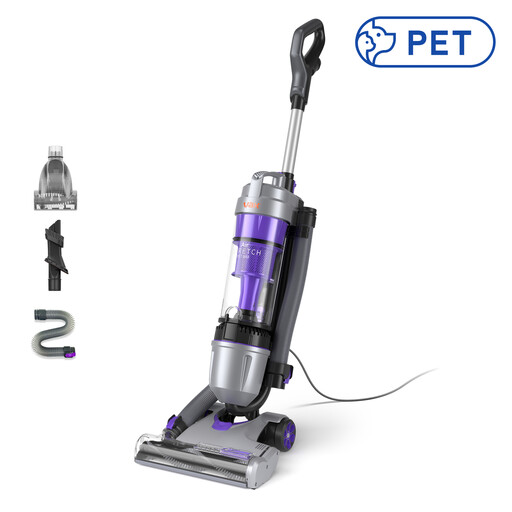
For those who prefer the consistent power and feel of an upright vacuum, the Vax Air Stretch Pet Max offers an impressive combination of reach, power and pet-focused features.
If the models above aren't quite what you're looking for, or if you're interested in other home organisation tools, you can explore more options. From powerful vacuums to storage solutions like a durable carpet bag, finding the right tool for a tidy home is key.
What is the most important feature in a vacuum for pet hair? While strong suction is crucial, the single most important feature is often a motorised or air-driven pet tool. This attachment uses a spinning brush roll to actively agitate and lift stubborn, embedded hair from carpets, rugs and upholstery, which suction alone cannot always remove.
Are cordless vacuums powerful enough for dog hair? Yes, many modern cordless vacuums are more than capable of handling dog hair. Look for models with high Air Watts (AW) or Pascal (Pa) ratings, as these figures indicate strong suction. A good cordless pet vacuum will also have a decent runtime (40+ minutes) and come with a mini motorised tool for concentrated cleaning on furniture and pet beds.
How does an anti allergen vacuum cleaner help with pets? An anti-allergen vacuum helps by capturing the microscopic particles that pets shed, primarily dander. It uses a sealed system and a high-grade filter (like a HEPA filter) to trap these tiny allergens, preventing them from being blown back into the room's air during vacuuming. This can contribute to a healthier environment for family members with sensitivities.