
24/7 Customer Support

Free returns

Same-day & Next-day Delivery

Quality Guaranteed

Unlock Your Welcome Offers: FREE Delivery | Up to 80% OFF | Free 30-day JoyPlus trial
Download the APP
A pet water fountain can make drinking more appealing by keeping water moving, filtering loose hair and reducing the need to refill a traditional bowl several times a day. However, the right choice depends on your pet, household layout and willingness to maintain the pump and filter.
Marketing can make every automatic dispenser sound effortless. In practice, a few overlooked details can lead to noise, blocked pumps or expensive replacement parts. This guide explains what to check before buying, then matches several options to different UK households.
A listing may quote operation below 20 or 23 dB, but the perceived sound can still vary according to the pump, water level and surface beneath the fountain. A unit placed on a hard kitchen floor may transmit more vibration than one positioned on a rubber mat.
Look for a clearly stated noise figure, a stable base and a pump that can be removed for cleaning. A quiet pet water dispenser should also offer a mode that suits your home. Intermittent or sensor operation may be preferable in a bedroom, while continuous flow may suit pets that regularly drink throughout the day.
A 2-litre pet water fountain may be practical for one cat or a small dog, but it will require more frequent top-ups in a multi-pet household. A 2.5-litre pet water fountain gives more reserve, although capacity does not remove the need to change water and clean the unit.
Large reservoirs can also take up considerable floor or worktop space. Check the fountain’s dimensions and leave room to lift the tank out without knocking over nearby items.
Filters can trap hair, dust and some impurities, but they do not replace regular cleaning. Hair can collect around the pump inlet, while slime may develop in damp corners if water is left unchanged for too long.
Before purchasing a filtered cat water fountain or dog drinking fountain, check:
A standard plug-in model is often suitable beside a wall socket. If you want to position the fountain away from cables, look for a wireless cat water fountain, cordless pet water fountain or battery-operated cat water fountain.
Battery models offer flexible placement, but check charging time, battery capacity and the operating mode used when running wirelessly. A motion sensor may help conserve power, while continuous flow can use more energy. Keep charging bases, adapters and cable connections away from splashes, and follow the supplied instructions.
A BPA-free pet fountain may appeal to shoppers who want the reservoir made without BPA, but this description alone is not a complete safety certification. Review the stated materials, manufacturer information and UK product documentation. Stainless steel or ceramic drinking surfaces may be easier to inspect and clean than textured plastic, while ABS plastic can keep the overall unit lighter.
Prioritise a removable tank, accessible pump and smooth internal surfaces. If a product includes dishwasher-safe parts, confirm exactly which components qualify; batteries, adapters and powered sections should not be immersed.
Multi-stage filtration can include foam, mesh or activated carbon elements. The number of stages is less useful than knowing what each filter does and how frequently it must be changed. Waterfall, bubbler and spout designs may suit different pets, so observe whether your cat or dog prefers a shallow stream or open drinking area.
For households with several animals, a multi-pet water fountain should have enough surface area and capacity to reduce crowding. It is still sensible to provide an additional bowl in another room.
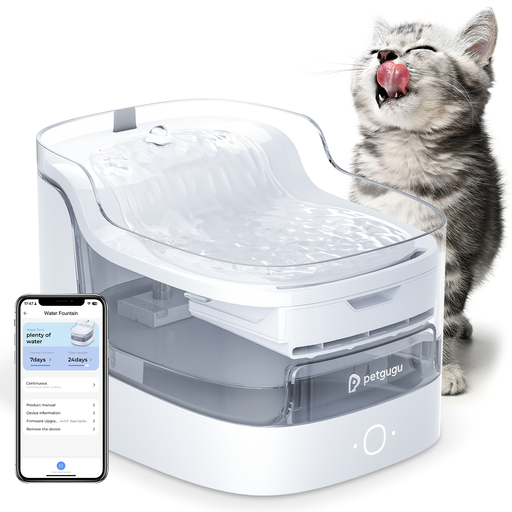
Why This Fits Their Persona: A practical starting point for a cat or small dog owner who wants circulating water, wireless pump convenience and a compact 2-litre reservoir for a flat or smaller home.
The listing states operation below 20 dB and includes eight-stage filtration, while dual continuous and intermittent modes help adapt use to your routine.
2-litre capacity; wireless pump; eight-layer filter; water-flow design intended to attract interest.
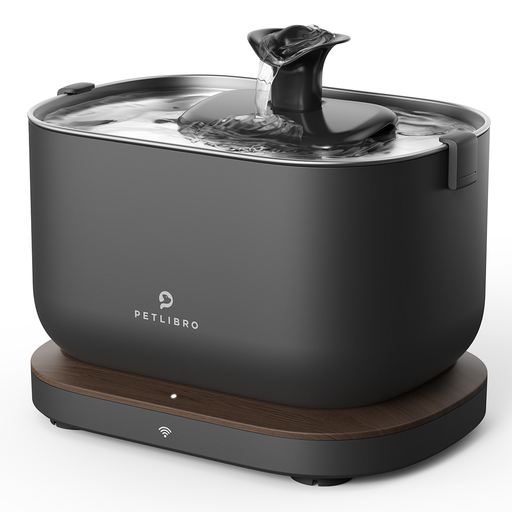
Why This Fits Their Persona: Suitable for owners who value cordless placement, a stainless steel tray and sensor-controlled dispensing in a tidy indoor setup.
The stated filter replacement interval is approximately two weeks, making ongoing maintenance easier to plan than an unspecified schedule.
2.5-litre capacity; BPA-free ABS housing; stainless steel tray; listed noise level below 23 dB; up to 30 days of use per charge in stated conditions.
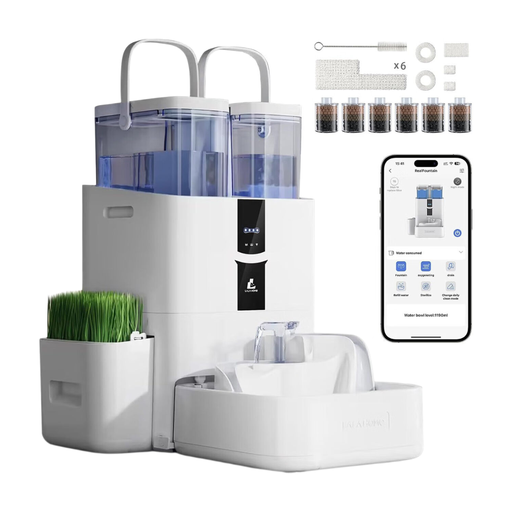
Why This Fits Their Persona: Designed for multi-pet households that need a much larger reserve and prefer app-assisted monitoring rather than daily manual refilling.
Its stated cleaning guidance specifies filter, sponge, bowl and pump intervals, helping owners budget time for maintenance rather than relying on vague “self-cleaning” language.
10-litre dual reservoir; five-stage filtration; BPA-free food-grade ABS stated in the listing; optional app and Wi-Fi control.
Replace stagnant water regularly, even when the reservoir is not empty. Unplug the device before filling or cleaning, then disassemble the pump according to the instructions. Remove hair from the intake and allow washed parts to dry fully before reassembly.
For cordless models, never immerse the battery compartment or charging base. Place every fountain on a level, stable surface and check for leaks after setup. Filters are consumable items, so include their replacement cost when comparing the long-term price.
We have compiled a complete, real-time list of products that fully satisfy these strict selection criteria and UK safety regulations.
It depends on your pet and the selected mode. Continuous circulation provides a regular moving stream, while sensor or intermittent modes can reduce operating time and energy use. Always ensure the reservoir cannot run dry, as pumps may be damaged when operated without sufficient water.
The exact schedule varies by model, number of pets and household conditions. As a practical routine, refresh the water frequently, rinse the bowl every few days and clean the pump and internal parts at the interval stated by the manufacturer. Multi-pet homes may need more frequent cleaning.
Cordless designs can reduce trailing cable hazards, but they still contain electrical and battery components. Use only the supplied or approved charger, keep charging parts dry and inspect the unit for damage. Follow the product instructions rather than placing a battery-operated fountain outdoors or in a wet area unless the documentation specifically permits it.