
24/7 Customer Support

Free returns

Same-day & Next-day Delivery

Quality Guaranteed

Unlock Your Welcome Offers: FREE Delivery | Up to 80% OFF | Free 30-day JoyPlus trial
Download the APP
Navigating the world of 3D printing materials can be complex. When you need parts that are stronger and more heat-resistant than PLA, PETG often emerges as the go-to choice. However, not all spools are created equal. Many UK makers, from hobbyists to engineers, find themselves frustrated by failed prints, wasted material and parts that don't live up to their promise. This guide cuts through the clutter to focus on what truly matters when selecting a reliable PETG filament 1.75mm.
Before you add that next spool to your basket, let's look at the common pitfalls that can turn a promising project into a tangled mess.
To ensure your prints are successful, focus on these critical technical specifications. They are the foundation of a reliable and strong 3D printer filament.
Always check the manufacturer's stated dimensional accuracy. A tolerance of +/- 0.02mm is excellent, while +/- 0.03mm is a solid standard for consistent results. Anything higher introduces a risk of print quality issues. Equally important is the winding. Look for terms like "neatly wound" or "tangle-free," which indicate the manufacturer has invested in quality control to prevent mid-print snags. This is a key characteristic of a good low warp filament, as consistent extrusion helps minimise internal stresses.
High-quality PETG is made from pure polymer without cheap fillers that can compromise strength and cause nozzle clogs. The packaging is your first clue to the filament's condition. It should arrive in a vacuum-sealed bag with a desiccant sachet inside. This minimises moisture absorption during shipping and storage. For anyone printing regularly with PETG in the PETG filament UK market, investing in a 3D printer filament dryer is a practical step to restore moisture-exposed spools and maintain print quality.
A reputable filament manufacturer will provide a clear range for printing temperatures (nozzle and bed) and speeds. Vague or missing information can be a red flag. For standard PETG, expect a nozzle temperature around 230-250°C and a bed temperature of 70-80°C. Speciality filaments like PETG carbon fibre will have different requirements and may necessitate hardware upgrades, such as a hardened steel nozzle, to handle their abrasive nature.
We have filtered the options based on the criteria above, matching them to common user needs across the UK.
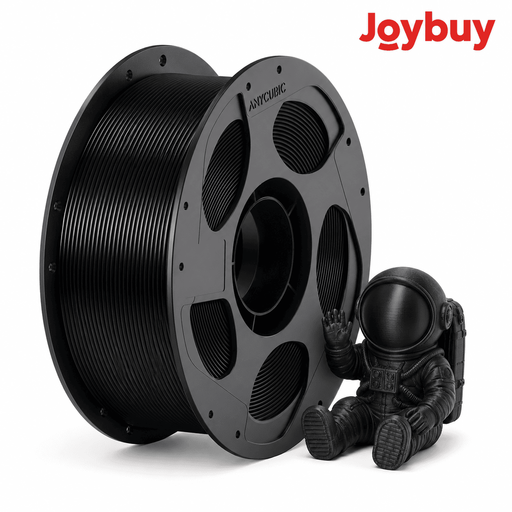
Why This Fits Their Persona: This user needs a reliable, no-fuss filament for a wide range of projects, from household fixes to creative models. The Anycubic PETG offers a great balance of printability, strength and value, making it an ideal workhorse material.
This filament is known for its neat, uniform winding, directly addressing the "tangle and jam" disaster. Its consistent diameter helps ensure smooth extrusion, reducing the likelihood of failures on long prints.
Offers a dependable printing experience and comes in a wide variety of colours, including black PETG and clear PETG, on a standard 1kg PETG filament spool.

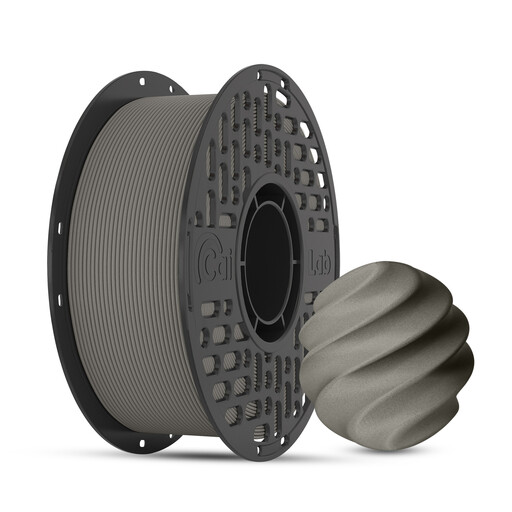
Why This Fits Their Persona: This user is creating prototypes, jigs or end-use parts that require high impact strength and dimensional stability. The Cailab PETG is formulated specifically for these demanding applications.
Its low-shrinkage and low-warping properties counter the "difficult to print" aspect of some PETG filaments. The high dimensional accuracy ensures that printed parts match their intended design specifications precisely.
Combines high impact strength with excellent chemical resistance, making it a durable choice for parts that will be handled or exposed to workshop environments. A true strong 3D printer filament.
Why This Fits Their Persona: For those who need maximum stiffness and strength without moving to industrial-grade materials, this PETG carbon fibre filament is the logical next step. It's ideal for drone frames, automotive brackets and other high-stress applications.
This is a specialised material that sidesteps vague strength claims. The inclusion of carbon fibres provides a verifiable increase in rigidity and structural integrity over standard PETG, delivering on its high-performance promise.
Delivers significantly enhanced stiffness and a professional matte finish. Note: Requires a hardened steel nozzle due to the abrasive nature of carbon fibre.
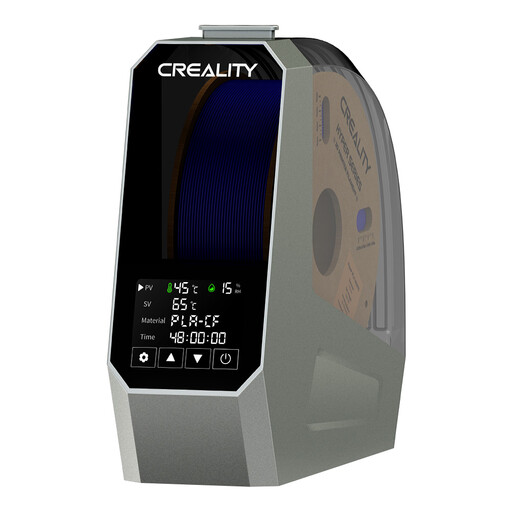
Why This Fits Their Persona: This user understands that material preparation is just as important as the printer itself. They want to eliminate moisture as a variable to achieve flawless prints every time, especially with hygroscopic materials like PETG and Nylon.
This is the definitive solution to the "moisture and stringing" trap. By actively heating and circulating air, it removes absorbed water from the filament, restoring it to its optimal printing condition and preventing common PETG issues.
Ensures maximum layer adhesion and print quality by providing consistently dry filament. It can even allow you to dry the filament while you print, making it an essential tool for serious makers.
We have compiled a complete, real-time list of products that fully satisfy these strict selection criteria and UK safety regulations.
Stringing with PETG is most often caused by two factors: moisture in the filament and incorrect retraction settings. Because PETG is hygroscopic, it absorbs moisture from the air, which turns to steam in the hotend and oozes out. The first step is to dry your filament using a dedicated 3D printer filament dryer. After that, fine-tune your printer's retraction settings in your slicer software—try increasing the retraction distance or speed in small increments.
Yes, in most practical applications, PETG is a strong 3D printer filament that offers superior durability compared to standard PLA. It has better impact resistance (it's less brittle) and can withstand higher temperatures before deforming. This makes it a much better choice for mechanical parts, outdoor items or components that will be under any kind of stress.
Most modern FDM 3D printers are capable of printing with PETG. The key requirements are a hotend that can safely reach and maintain a temperature of around 230-250°C and a heated print bed that can reach 70-80°C to ensure good first-layer adhesion. While an enclosure can help maintain a stable ambient temperature and improve results, it is not strictly necessary for printing with a low warp filament like PETG. However, if you plan to use abrasive variants like PETG carbon fibre, you must upgrade to a hardened steel nozzle to prevent rapid wear of a standard brass nozzle.