
24/7 Customer Support

Free returns

Same-day & Next-day Delivery

Quality Guaranteed

Unlock Your Welcome Offers: FREE Delivery | Up to 80% OFF | Free 30-day JoyPlus trial
Download the APP
As a Joybuy Product Recommendation Officer, my role is to help you navigate the crowded market of 3D printing materials. When it comes to choosing a versatile workhorse filament, PETG often comes up as a popular choice, balancing the strength of ABS with the user-friendliness of PLA. However, not all spools are created equal, and a poor choice can lead to frustration, wasted time and failed prints.
Before you add a spool to your basket, it's crucial to understand the common pitfalls that many makers encounter. A little knowledge can save you from the disappointment of a purchase that doesn't live up to its promises.
To ensure you are purchasing a high-quality and reliable FDM printer filament, focus on these essential specifications. They are the true indicators of performance, far more than flashy marketing claims.
This is arguably the most critical technical specification for any filament. It refers to how consistent the filament's diameter is along its entire length. Look for a stated tolerance of ±0.03mm or, even better, ±0.02mm. A tight tolerance ensures a smooth and predictable flow of material through your printer's hotend, which is fundamental for achieving high-quality prints without jams or gaps. A filament that maintains a consistent 1.75mm diameter is the foundation of reliable printing.
The quality of the raw PETG resin and the manufacturing process directly impact the final print. High-quality filaments are made from virgin (non-recycled) resin, which results in better colour consistency and mechanical properties. Furthermore, the filament should be neatly wound onto the 1kg PETG spool. A tangle-free, uniform winding prevents the spool from snagging mid-print, a simple mechanical failure that can destroy hours of work. Always check that the product arrives in a vacuum-sealed bag with a desiccant pouch to guarantee it is dry and ready to print.
PETG is valued as a strong 3D printer filament that is also heat resistant filament to a degree. Check the manufacturer's recommended printing temperatures (both nozzle and bed). A good quality PETG will have a consistent melting point, allowing you to dial in your settings for optimal layer adhesion and surface finish. This makes it a durable PETG suitable for functional parts that need to withstand moderate stress and temperatures higher than PLA can handle.
Based on these practical criteria, here are a few options matched to different types of users and projects.
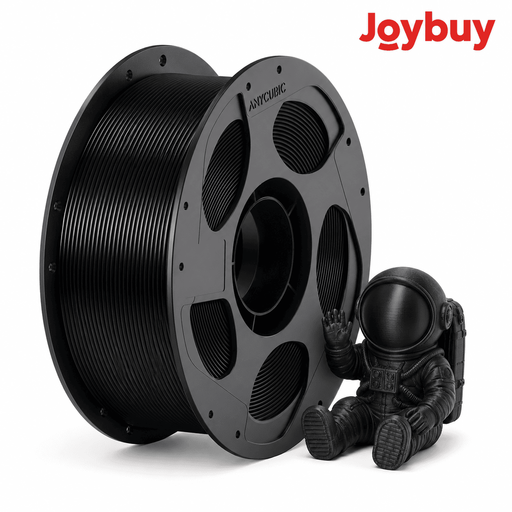
Why This Fits Their Persona: This user needs a reliable, no-fuss filament for a wide range of projects, from household repairs to creative models. This option provides a dependable baseline for general-purpose printing without a premium price tag, available in a wide array of standard colours.
It comes vacuum-sealed with a desiccant, directly addressing the moisture trap. The neat winding on the spool also helps prevent tangles that can ruin long prints.
Excellent value and a broad selection of colours, making it easy to stock up for various projects. Standard 1kg PETG spool size is compatible with most printers and spool holders.

Why This Fits Their Persona: This user, often an engineer or designer, needs a durable PETG for creating functional prototypes, jigs or parts that must withstand mechanical stress and exposure to common chemicals. Performance is their priority.
This filament is marketed with a focus on "exceptional dimensional accuracy" and "low shrinkage," directly countering the pitfalls of inconsistent diameter and warping that cause functional prints to fail.
Formulated for high impact strength and chemical resistance, making it a reliable choice for parts that need to perform under pressure. It balances the toughness of ABS with the printability of PLA.
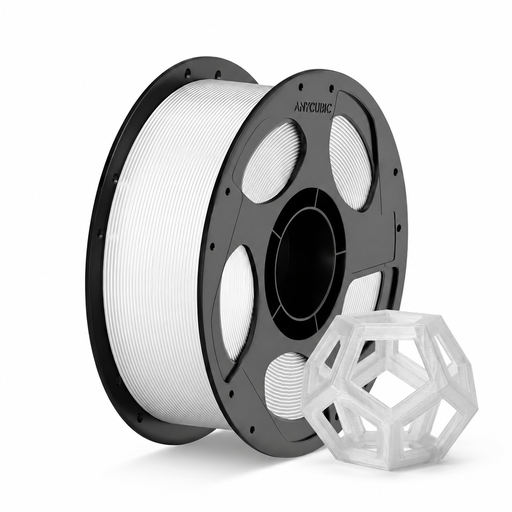
Why This Fits Their Persona: This user prioritises visual quality, surface finish and unique colours for creating display pieces, vases or artistic prints. The clarity and gloss of the final product are paramount.
A high-purity, dry filament is essential for achieving a truly clear or vibrant, glossy finish. This option's quality control helps avoid the cloudy, stringy results common with moisture-damaged PETG.
Offers excellent optical clarity for translucent prints and a high-gloss finish that makes colours pop. Ideal for projects where the final look is as important as the structure.
We have compiled a complete, real-time list of products that fully satisfy these strict selection criteria and UK safety regulations.
This is a common question for those expanding their filament collection. Here’s a simple breakdown:
Stringing, or "hairy" prints, is the most common issue with PETG, usually caused by moisture. If you're experiencing it, here are three steps to take:
While the base PETG material is often used for food and drink containers (like water bottles), a 3D-printed object is a different matter. The printing process creates tiny layer lines that can trap bacteria and are difficult to clean thoroughly. Additionally, your printer's brass nozzle may contain small amounts of lead that can leach into the print. For these reasons, it is not recommended to use 3D-printed PETG objects for direct, long-term contact with food unless they have been treated with a certified food-safe coating.