
24/7 Customer Support

Free returns

Same-day & Next-day Delivery

Quality Guaranteed

Unlock Your Welcome Offers: FREE Delivery | Up to 80% OFF | Free 30-day JoyPlus trial
Download the APP
Choosing pet health supplements can seem straightforward until you compare powders, syrups, chews, oils and multivitamin formulas. Labels may feature long ingredient lists, broad promises and attractive serving claims, but these details do not always tell you whether a product suits your pet, routine or budget.
The most useful approach is to match the supplement with a clearly defined nutritional goal, then check the species guidance, active ingredients, dosage and storage instructions.
Dogs and cats do not have identical nutritional requirements. A product labelled for dogs only should not automatically be given to a cat, even if the ingredients appear familiar. Likewise, a general dog supplement may not be appropriate for a pet with a diagnosed condition or medication schedule.
Check the “suitable for species” information first. Multi-pet households may prefer a formula clearly labelled for both dogs and cats, while a targeted canine heart health supplement should be reserved for dogs as directed.
More ingredients do not necessarily mean better value. The important details are the named active ingredients, their quantities where provided, the serving size and the intended use.
For example, a dog multivitamin may combine vitamins, minerals, omega-3 fatty acids and joint-support ingredients. This can be practical for general nutritional support, but it may be unnecessary if your dog already receives a complete diet and another fortified product.
A supplement only fits your routine if your pet will consume it consistently. Tablets can be difficult for some animals, while powders and liquid supplements can be mixed into food or water. However, powders may absorb moisture, and syrups can have a limited use period after opening.
Before buying, consider whether you can measure the serving accurately and follow storage instructions. Keep supplements sealed, dry and away from children and other animals.
Start by identifying the primary need:
Senior pets may need closer dietary consideration, particularly if they have kidney, liver, heart or digestive concerns. Ask a vet before introducing a new product when a pet has a diagnosed condition, is pregnant or lactating, or takes prescribed medicines.
Look beyond front-of-pack wording and find the full ingredient panel. Useful information can include:
For example, the LitPet CardioPlus formula lists Coenzyme Q10 at a minimum of 0.8% and taurine at a minimum of 3.5%, alongside L-carnitine and vitamins. The label also provides weight-based directions, making the serving easier to compare with your dog’s size.
A large container is not automatically economical. Calculate the approximate number of daily servings from the net quantity and your pet’s weight. A small dog may use a 200g powder slowly, while a larger dog may use it more quickly.
Also compare the feeding method. A product mixed with food may suit pets that resist tablets. A liquid can be measured directly or added to food, but the bottle may require use within a specified period after opening. Warm water should not be assumed to be suitable for every formula: probiotic powders may lose activity when mixed with high temperatures.
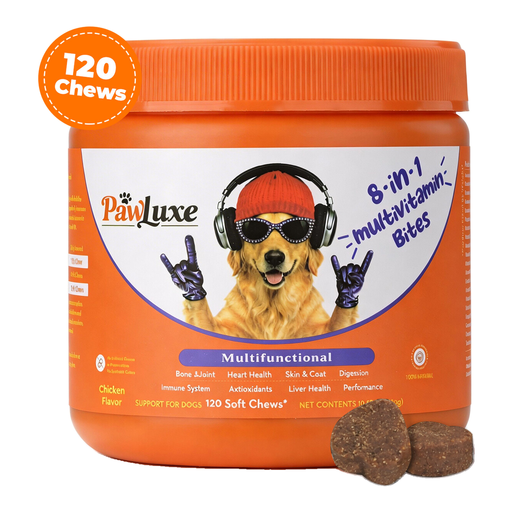
Why This Fits Their Persona: A 120-count format gives dog owners a straightforward way to organise daily feeding without measuring powder or liquid.
The serving format and active-ingredient panel are clearly presented, helping buyers assess quantity rather than relying only on “8-in-1” wording.
Soft chews contain listed vitamins, EPA, DHA, glucosamine, chondroitin and Bacillus subtilis microorganisms.
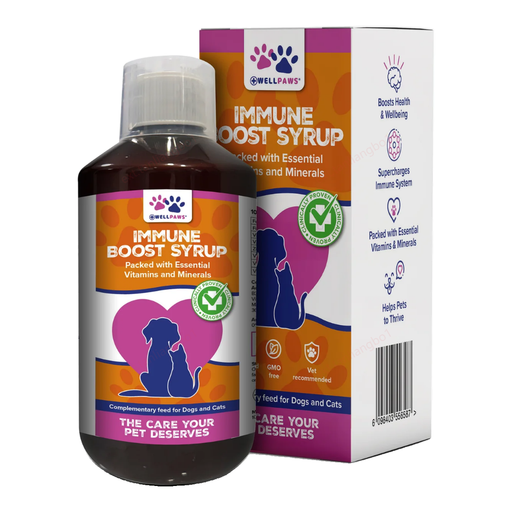
Why This Fits Their Persona: The 300ml liquid format suits owners who want one product for dogs and cats and prefer flexible administration.
Weight-based guidance is provided from 1–10kg through 30–45kg, while the label states that it should be used within 120 days of opening.
Contains salmon oil, hydrolysed salmon protein and Fibruline Instant; can be added to food, water or given directly.
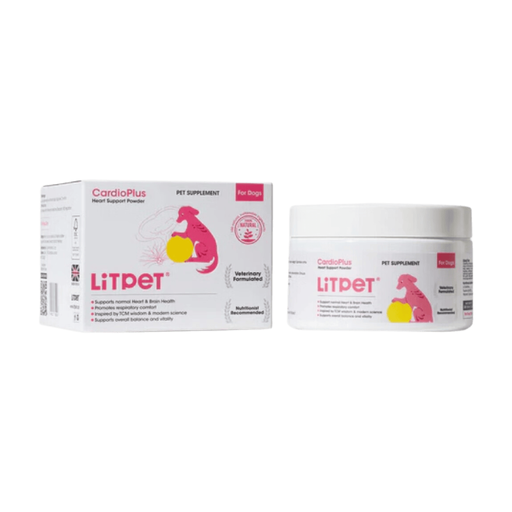
Why This Fits Their Persona: Designed specifically for dogs, this powder may suit owners seeking a measured formula for a senior dog or a vet-discussed nutritional plan.
It states the key nutrients and provides separate daily amounts for dogs under 5kg, 5–10kg, 10–20kg and over 20kg.
200g powder contains Coenzyme Q10, taurine, L-carnitine, vitamin B complex, vitamin E, vitamin C, zinc and selenium.
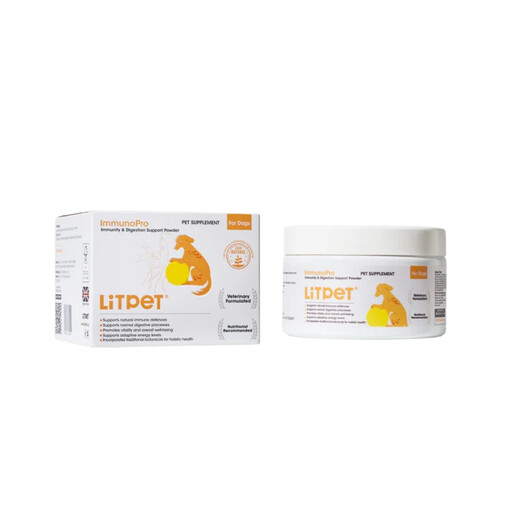
Why This Fits Their Persona: A dog-and-cat formula can simplify supplement storage for households caring for different species.
The label identifies probiotic content of at least 1.0×10⁹ CFU/g and instructs owners to avoid water or food above 40°C.
Includes Lactobacillus acidophilus, Bifidobacterium bifidum, beta-glucan, dietary fibre and listed vitamins and minerals.
We have compiled a complete, real-time list of products that fully satisfy these strict selection criteria and UK safety regulations.
No. A complete, balanced diet may already provide the nutrients your pet needs. Supplements are generally considered when a specific nutritional goal has been identified, but suitability depends on the individual animal. Veterinary advice is sensible for pets with health conditions or restrictive diets.
It depends on the product. Some labels provide a specific post-opening period, such as 120 days for the Wellpaws syrup. Powders should be kept dry and discarded if they change colour or develop an abnormal odour. Always follow the packaging instructions rather than relying on the purchase date.
Only when the product explicitly states that it is suitable for both species and provides appropriate directions. A dog-specific product, including a taurine supplement for dogs or canine heart health supplement, should not be given to cats unless a vet advises it.