
24/7 Customer Support

Free returns

Same-day & Next-day Delivery

Quality Guaranteed
Download the APP
Categories
Finding the right light bulb can feel surprisingly complex. You know you need a Philips E27 light bulb – the common screw in light bulb fitting found in countless UK homes – but the choices don't stop there. From smart features to different brightness levels and colour tones, picking the correct one is key to setting the right mood and keeping energy bills in check.
As the Joybuy Product Recommendation Officer, my role is to help you navigate these options. This guide cuts through the technical jargon to help you understand the key differences between popular Philips E27 models, ensuring you find the perfect fit for your home, whether you're after a simple, reliable replacement or a high-tech smart light bulb.
Before we look at specific products, here are a few key considerations to help you decide what you need.
The biggest choice you'll face is whether to opt for a smart bulb or a standard one.
With LED technology, the wattage number doesn't tell the whole story about brightness. While we still refer to them by their traditional equivalents (like a 60W LED bulb or 100W LED bulb), the true measure of brightness is lumens (lm).
The colour of the light has a significant impact on a room's feel.
Here are our recommendations, selected to cover the most common lighting needs in UK households.
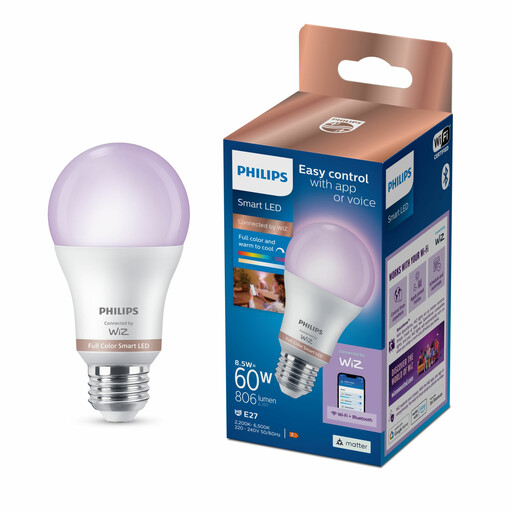
Why It Stands Out: This bulb offers the ultimate in lighting flexibility. It combines the convenience of smart control with a full spectrum of millions of colours, all without requiring a separate hub. It connects directly to your Wi-Fi, making setup straightforward.
Pros:
Who is it for? This is for the tech-savvy user, the creative homeowner or anyone who wants complete control over their home's ambience. It's perfect for living rooms, bedrooms and entertainment spaces where you might want to change the mood at a moment's notice.
View Product Details on Joybuy.co.uk
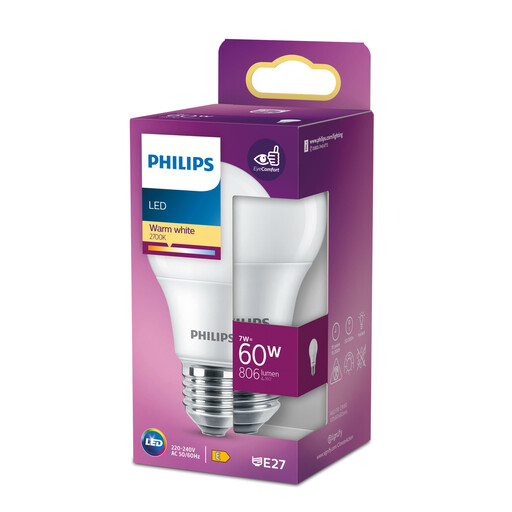
Why It Stands Out: This is the definition of a reliable, no-fuss lighting solution. It delivers the classic warm white E27 bulb glow that makes a house feel like a home, combined with modern LED efficiency and a design that minimises eye strain.
Pros:
Who is it for? Ideal for anyone needing a dependable bulb for everyday use in standard, non-dimmable fittings. It's the perfect choice for hallways, landings, cupboards and lamps where you just need good, consistent light.
View Product Details on Joybuy.co.uk
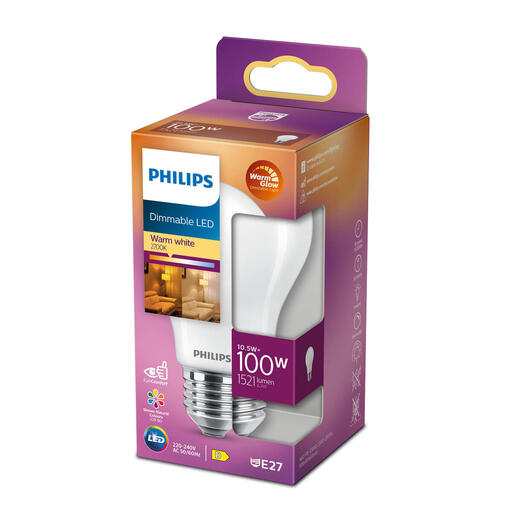
Why It Stands Out: This bulb solves the problem of needing bright light that can also be softened for atmosphere. As a 100W equivalent, it provides powerful illumination for large spaces, while its dimmable nature gives you control over the intensity.
Pros:
Who is it for? This is the go-to choice for main light fittings in living rooms, dining rooms and kitchens, especially for those who already have dimmer switches installed and want the flexibility to go from bright task lighting to a soft, ambient glow.
View Product Details on Joybuy.co.uk
While these three bulbs cover many common scenarios, the world of lighting is vast. If you're looking for different shapes, bayonet fittings or other specific features, there are many more options available.
For a wider selection of wattages, shapes and smart features, we invite you to explore our full range of LED bulbs.
What does E27 mean on a light bulb? E27 refers to the type of base the bulb has. It is the standard 27mm diameter Edison Screw (ES) fitting, often simply called a screw in light bulb. It is one of the most common light fittings found in UK homes for ceiling lights, table lamps and floor lamps.
Can I use a Philips E27 smart bulb without a hub? Yes, many modern Philips E27 smart bulb models, including the one recommended in this guide, are designed to connect directly to your home's Wi-Fi network. This allows you to control them via a smartphone app without needing any extra hardware like a hub or gateway, making the setup process much simpler.
How long do Philips LED bulbs last? Philips LED bulbs are designed for longevity and energy efficiency. While the exact lifespan varies by model, they typically are rated for 15,000 hours or more of use. This is significantly longer than traditional incandescent bulbs, helping to reduce both the cost and inconvenience of frequent replacements. Always check the product packaging for the specific rated lifespan.