
24/7 全天候客户支持

免费退货

当日/次日达

品质保障

开启新人专享福利: 全场免邮 | 低至 2 折 | 免费试用 30 天 JoyPlus 会员
下载 Joybuy
Replacing a bulb sounds simple until the new one does not fit, flickers with your dimmer or produces the wrong atmosphere. Philips LED light bulbs cover standard household bulbs, spotlights, decorative shapes and smart lighting, but the product title alone does not tell you whether a bulb suits your fitting.
Three common buying traps are worth avoiding:
Start with the fitting already installed in your lamp or luminaire. Common UK choices include:
Also check the bulb’s height and diameter. A globe bulb may have the correct cap but still be too large for a shade or enclosed fitting.
For general LED bulbs, look for the lumen output where it is provided. Equivalent wattage is useful as a familiar reference, but it is not a direct measure of LED power use.
A spotlight also needs the right beam direction. GU10 PAR16 bulbs focus light downwards, making them suitable for kitchen worktops, desks, display areas and recessed downlights. A frosted globe spreads light more evenly, which is generally more suitable for rooms requiring broad illumination.
For a multi-bulb fitting, calculate the approximate total light output by adding the lumens of each bulb. This is more useful than selecting a pack solely because it has a higher equivalent wattage.
Warm white LED bulbs create a softer, more relaxed appearance for bedrooms, living rooms, dining areas and hospitality spaces. Cool white LED bulbs provide a crisper appearance for kitchens, offices, workspaces and display lighting.
If you already have a dimmer switch, choose a clearly labelled dimmable LED bulb and confirm that the dimmer is LED-compatible. If you only need simple on/off operation, a non-dimmable LED bulb can be a straightforward replacement, provided it is not connected to a dimmer or incompatible control system.
For smart lighting, check the connection method and app requirements. The Philips smart light bulbs listed here use Wi-Fi control through the WiZ app and do not require a separate hub according to the supplied product information. They can offer scheduling, remote control and adjustable colour modes, but they still need a compatible fitting and a suitable indoor environment.
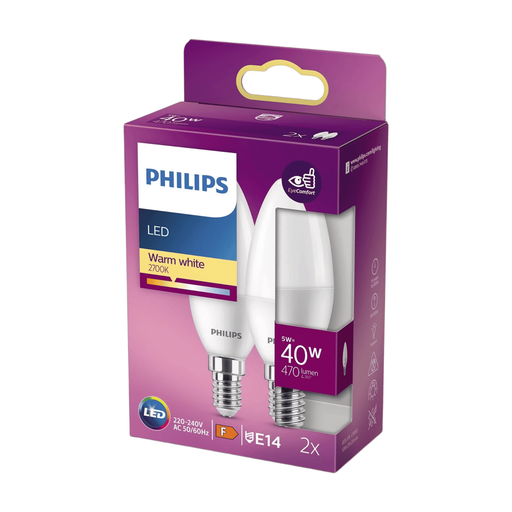
Why This Fits Their Persona: A practical pair for renters, landlords and households replacing small screw-cap bulbs in chandeliers, bedside lamps or decorative wall lights.
The E14 base, B35 candle shape, warm-white colour and non-dimmable status are clearly specified, helping prevent an unsuitable fitting or control-system purchase.
Frosted finish for diffused light; supplied as a two-pack for matching fittings.
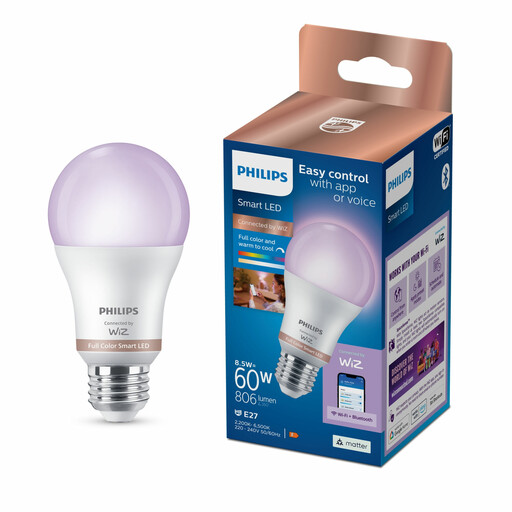
Why This Fits Their Persona: Suitable for homeowners and interior design enthusiasts who want app control, schedules and adjustable lighting scenes in a standard E27 lamp.
The E27 screw fitting and WiZ connectivity are stated clearly, while the full-colour and warm-to-cool spectrum identifies what the smart controls provide.
Wi-Fi control through the WiZ app; scheduling and colour-changing modes without an additional hub.
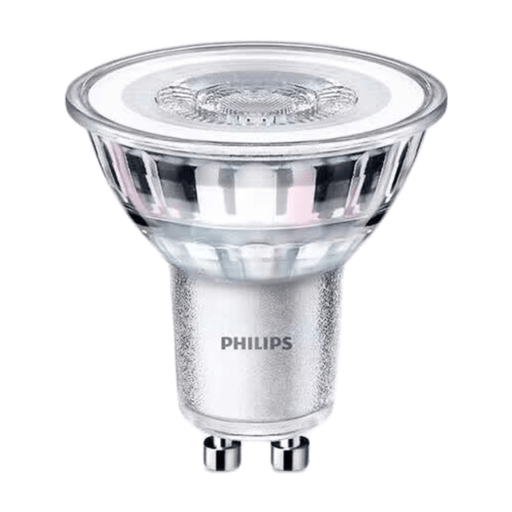
Why This Fits Their Persona: A six-pack suits kitchens, offices, landlords and small-footprint commercial spaces with several compatible GU10 downlights or spot fittings.
It is identified as a GU10, cool-white, non-dimmable PAR16 spotlight, so buyers can check the cap and control arrangement before ordering.
Directional PAR16 beam; six-bulb pack for coordinated replacement across multiple fittings.
Switch off the power at the mains and allow an old bulb to cool before removing it. Do not exceed the luminaire’s maximum rating, and do not use a bulb in a damp or outdoor location unless the complete fitting has the appropriate IP rating.
For G4 bulbs, verify that the fitting or transformer supplies the required voltage. G9 capsules are typically mains-voltage products, but the packaging and existing fitting should still be checked. Dispose of failed bulbs through an authorised WEEE recycling route or retailer take-back scheme rather than general household waste.
LED bulbs generally use less electricity than equivalent incandescent or halogen bulbs, but the actual saving depends on wattage, daily operating time and your electricity tariff. A simple comparison is:
annual running cost = bulb wattage ÷ 1,000 × hours used × electricity price
Smart scheduling can reduce unnecessary operating time, although a smart bulb still consumes a small amount of electricity when available for network control.
We have compiled a complete, real-time list of products that fully satisfy these strict selection criteria and UK safety regulations.
They can use less electricity than incandescent or halogen equivalents, but the saving depends on the bulb’s actual wattage, usage hours and electricity tariff. Compare wattage and lumens rather than equivalent wattage alone.
Only use a product labelled dimmable with an LED-compatible dimmer. Non-dimmable LED bulbs should be connected to a standard on/off switch, not a dimmer, timer or sensor.
Choose warm white for relaxed domestic areas such as bedrooms and living rooms. Cool white is generally more suitable for kitchens, workspaces, offices and display lighting where a crisper appearance is preferred.