
24/7 Customer Support

Free returns

Same-day & Next-day Delivery

Quality Guaranteed

Unlock Your Welcome Offers: FREE Delivery | Up to 80% OFF | Free 30-day JoyPlus trial
Download the APP
A Philips Sonicare electric toothbrush can make daily brushing more structured, but choosing between series, modes and accessories is not always straightforward. A higher price does not automatically mean a better match for your routine, while a low-cost model may lack features you would use every day.
Before buying, watch for three common pitfalls:
A built-in pressure sensor can alert you when you are pressing too hard. Depending on the model, this may be through vibration, a visual light or an automatic reduction in brushing intensity. It is a useful guide, but it does not replace a gentle brushing technique.
For users looking for an electric toothbrush for sensitive gums, adjustable intensity is equally important. Entry-level models may offer two intensity settings, while more advanced options can provide three levels and dedicated Gum Care or Sensitive modes.
Most rechargeable electric toothbrushes in the Sonicare range use lithium-ion batteries. Stated battery life varies from around 14 days to up to 21 days, typically based on brushing twice daily for two minutes.
Consider where you brush and travel:
Several listed models include a UK 2-pin plug, which is standard for low-power appliances such as electric toothbrushes and shavers. If your bathroom has a three-pin socket, check whether a suitable adapter is needed.
A two-minute timer helps establish a consistent brushing duration. SmarTimer and QuadPacer functions divide the session into four 30-second sections, encouraging you to move around the mouth rather than concentrating on one area.
Brush head selection also matters. Philips Sonicare replacement brush heads use a click-on system, but individual heads are designed for different priorities:
Bluetooth and app connectivity can offer coaching, progress tracking and brushing guidance. However, check smartphone compatibility and decide whether you are likely to use the app after the initial setup.
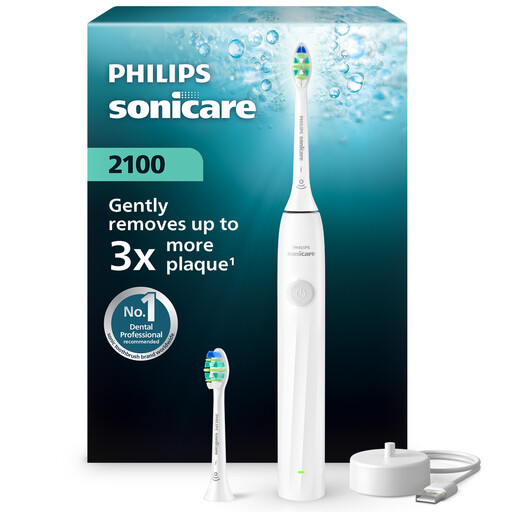
Why This Fits Their Persona: A straightforward choice for adults moving from a manual toothbrush who want rechargeable cleaning without app features or a long list of modes.
It avoids paying for Bluetooth or complex controls while still including two intensity settings, EasyStart, SmarTimer and QuadPacer guidance.
Up to 14 days of battery life, up to 31,000 brush movements per minute and compatibility with click-on Philips Sonicare replacement heads.
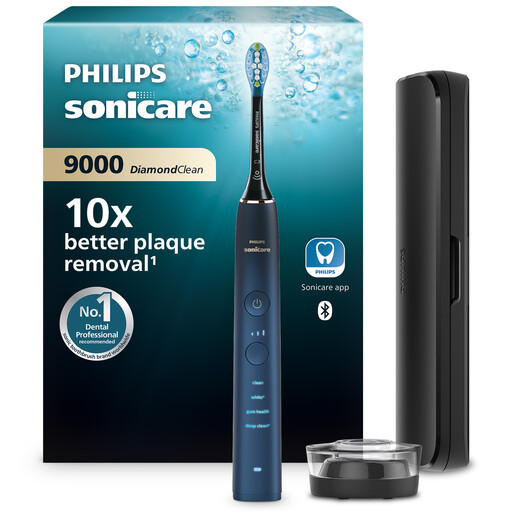
Why This Fits Their Persona: Suits users who want detailed brushing controls, app connectivity and a travel case alongside a refined rechargeable handle.
The pressure sensor, three intensities and four modes make the feature set adjustable rather than simply powerful.
Bluetooth app connectivity, four modes, three intensities, BrushSync replacement reminders and up to 14 days of battery life.
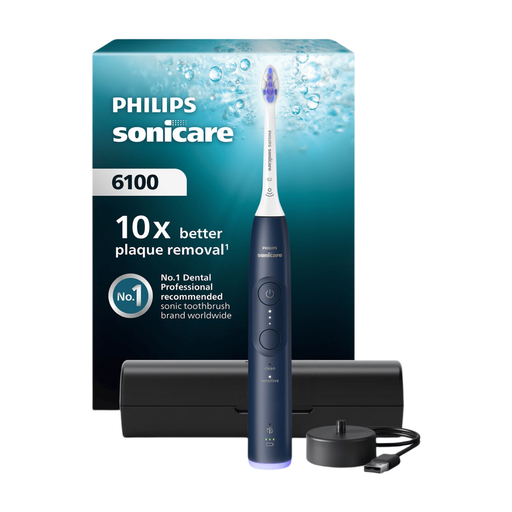
Why This Fits Their Persona: A practical match for travellers and users who want Gum Care, White and Clean modes with three intensity levels.
Its visual pressure sensor gives a clear reminder when force is excessive, while selectable intensity helps avoid using more power than needed.
Includes a travel case, three modes, three intensities, BrushSync replacement reminders and up to two weeks of use per charge.
We have compiled a complete, real-time list of products that fully satisfy these strict selection criteria and UK safety regulations.
The Series 4100 is worth considering if battery life is a priority: the HX4042/41 version lists up to 21 days, four settings, a pressure sensor and two included Optimal White W brush heads.
For couples, the Sonicare 6500 duo pack includes two handles, three modes, three intensities and two travel cases. This can be more practical than buying two separate handles, but confirm the included brush heads and charging accessories before ordering.
If surface-stain removal is your main goal, models such as the Sonicare 5300 and DiamondClean 9000 include White-related modes or whitening-focused brush heads. These products are designed for surface cleaning; they should not be treated as a substitute for professional dental care.
Families should select a child-specific product rather than adapting an adult handle. The Philips Sonicare for Kids HX6322/04 is listed for children aged three and over, with two brush heads, two intensities, KidTimer, QuadPacer and Bluetooth app connectivity. Adult supervision is recommended.
Brush heads are consumables, so include them in the total ownership cost. Replace a head approximately every three months, or sooner if bristles become frayed or damaged. Check the exact compatibility before buying a multi-pack: the C3 Premium Plaque Defence heads, for example, fit Philips Sonicare click-on handles but exclude Philips One.
Do not share brush heads, even within a household. Rinse the head after use, allow it to air-dry and clean the handle with a damp cloth. Keep the charging base and charger away from standing water, and do not use damaged parts.
Models with low-intensity settings, Gum Care or Sensitive modes and a pressure sensor provide more control. Use light pressure and allow the bristles to do the work. If you have ongoing discomfort or a specific dental condition, seek advice from a dentist before changing your brushing routine.
Listed battery life varies by model. The Series 2100 offers up to 14 days, selected Series 4100 models up to 21 days and several advanced models around two weeks. Actual results depend on usage, charging habits and battery condition.
Many handles use Philips Sonicare click-on brush heads, but compatibility still needs checking. BrushSync functions may also require a compatible handle and head combination. Confirm the model information before purchasing replacement packs.