If your phone repeatedly limits low-light, distant-subject or creative-control shots, a dedicated camera is worth carrying when its particular lens and controls solve that recurring problem. Choose a compact for a self-contained travel kit, a bridge camera when very long fixed-lens reach outweighs bulk, or mirrorless when lens choice justifies carrying more equipment; keep using your phone, with a compatible accessory if useful, when its convenience meets your needs.
Who might benefit from a dedicated camera?
Travellers photographing distant subjects
If wildlife or faraway sights are a regular subject, compare the optical reach you need with the weight you are willing to carry. Which? identifies distant subjects and optical zoom as reasons some travellers may consider a dedicated camera.
Hobbyists photographing evening scenes
If indoor or low-light scenes are where your phone falls short, weigh the camera’s sensor and lens against the zoom range you need. Which? identifies low-light photography as one reason to consider a dedicated camera.
Travellers seeking more control without an impractical kit
If you want to learn camera controls or change lenses, check whether the flexibility is worth carrying the complete kit. Which? also identifies greater creative flexibility as a reason to compare a dedicated camera with a phone.
What should you prioritise when choosing?
For consumers weighing a camera or phone accessory for travel and hobby photography, each row focuses on the primary need that would shape their choice.
| Concern |
What to check when buying |
Who this matters to |
| Optical reach |
Compare optical zoom and 35 mm-equivalent focal-length endpoints; do not treat digital zoom as additional optical reach. |
When wildlife or distant sights are recurring subjects, I want enough lens-based framing without confusing digital zoom for optical reach; around 29% of consumers put optical reach first. |
| Low-light photography |
Compare sensor type and lens aperture at the focal lengths you expect to use, along with the controls you want. |
If evening or indoor scenes are the main challenge, I want to weigh the sensor and lens together rather than assume a camera label guarantees the result; around 22% of consumers make low-light image-making their primary concern. |
| Carrying ease |
Compare ready-to-shoot weight on the same basis, including the lens needed for your subjects. |
For a full day out, I would rather carry a manageable kit than choose reach I will leave behind; around 21% of consumers put carrying ease first. |
| Lens flexibility |
Check which lens is included, the mount, and whether additional lenses are needed for your subjects. |
When learning or changing photographic interests matters most, I want to know what the initial lens can cover and what a different lens would add; around 14% of consumers prioritise lens choice. |
| Phone convenience |
Identify the limitation you want to solve and confirm a phone lens and mount match your exact device. |
If one-device convenience is my priority, I would keep using my phone unless a specific accessory or camera solves a repeated problem; around 14% of consumers put that convenience first. |
Buying pitfalls to avoid
-
Treating digital zoom as extra optical reach
Digital zoom is distinct from a lens’s optical range, so comparing a digitally extended figure with another camera’s optical figure can misrepresent the available lens-based framing.
Compare optical focal-length endpoints on the same 35 mm-equivalent basis.
-
Assuming a short mirrorless kit lens is a wildlife setup
Canon’s UK EOS R50 kit listing identifies the included lens as RF-S 18–45 mm; that kit lens should not be mistaken for a long telephoto lens.
Check the body-and-lens combination needed for your subjects, including compatibility and the weight of the complete kit.
A compatible telephoto lens may be needed if your subjects require longer reach.
-
Choosing the longest fixed zoom without checking its carrying weight
The listed Panasonic TZ99 and Nikon COOLPIX P1100 have different zoom ranges and carrying weights, so maximum reach alone does not show which camera you will want to take on a trip.
Compare ready-to-shoot weight alongside the optical range required for your usual subjects.
-
Assuming a phone lens attaches without a separate mount
Moment lists a T-Series mount separately, and compatibility depends on the phone and lens setup.
Check the exact phone, lens series, matching mount and the contents of the package.
A compatible mount may be needed if it is not included.
Camera and accessory brands to consider
Panasonic
Panasonic’s compact and bridge-camera examples illustrate different fixed-lens approaches to travel and distant subjects.
- Panasonic specifies 30× optical zoom for the LUMIX TZ99 and 60× optical zoom for the FZ82D.
- Those zoom specifications do not establish comparative image quality. Panasonic’s UK page marks the FZ82D variants displayed there as unavailable, so check a current seller listing.
Sony
The RX100 VII is a fixed-lens compact example for comparing sensor size with optical reach.
- Sony specifies an 8× optical zoom and a 1.0-type sensor for the RX100 VII.
- Assess that lens range against the subjects you photograph; these specifications do not establish that every Sony camera has the same characteristics.
Nikon
The COOLPIX P1100 illustrates a bridge-camera option for buyers prioritising very long fixed-lens reach.
- Nikon specifies 125× optical zoom and a 24–3000 mm-equivalent range for the P1100.
- Nikon lists the camera at approximately 1.4 kg. Its Dynamic Fine Zoom is digital, not additional optical reach, so consider both the optical range and the carrying commitment.
Canon
The EOS R50 with RF-S 18–45 mm lens is a defined mirrorless starting kit.
- Canon’s UK listing identifies an APS-C sensor and the included RF-S 18–45 mm lens.
- The supplied lens is not a long wildlife lens; check the additional lens choices and complete kit before deciding whether this route suits your subjects.
Moment
Moment’s phone lenses and mounts illustrate an accessory route for people who want to keep using a smartphone.
- Moment describes its Tele 58 mm lens as an option for tighter framing.
- Moment lists a T-Series universal mount separately. Match the exact lens series, mount and phone; the accessory is not established as a replacement for a dedicated long-zoom camera.
Joybuy product choices for travel photography
The products below include pocket and compact cameras, a pocket gimbal camera and an interchangeable-lens mirrorless camera. Check whether each listed lens or zoom suits your still-photography subjects, especially if distant reach is a priority.
 No image available
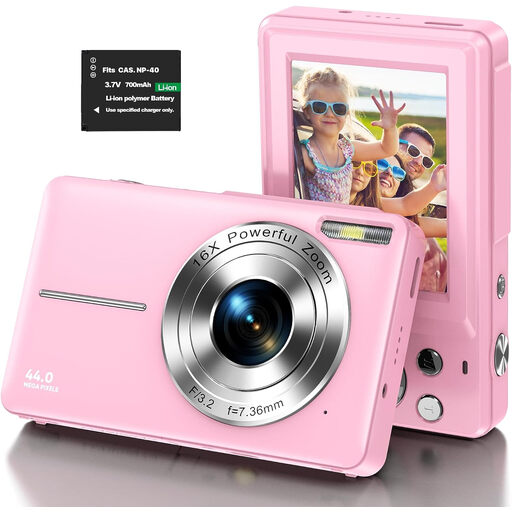
Songdian Pocket Camera, 4K, 64MP, 16X Zoom, Pink
A pocket-camera format may suit travel photography and video when a compact device is the priority; check whether its stated zoom meets your needs for distant subjects.
The product name lists 4K video, 64MP and 16X zoom. The product information says the camera is not waterproof; keep it away from rain and splashing water.
View on Joybuy
 No image available
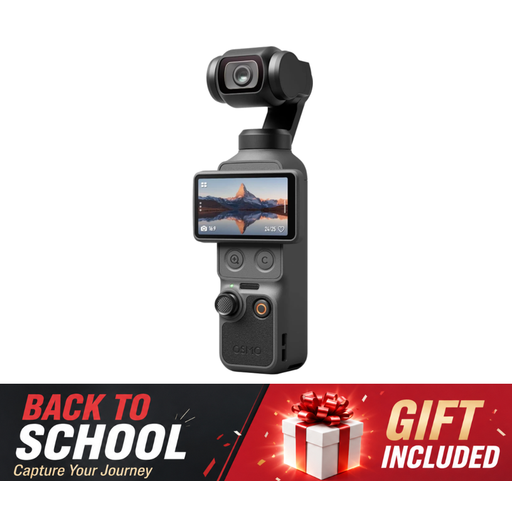
DJI Osmo Pocket 4 Standard Combo
This pocket gimbal camera is listed for photography and video; its stated 2× lossless zoom is a limited framing option rather than a substitute for very long reach.
The product name lists a 1-inch CMOS sensor, 3-axis stabilisation, 2× lossless zoom and 107 GB built-in storage. The product safety information says the gimbal is not waterproof; avoid water and high humidity.
View on Joybuy
 No image available
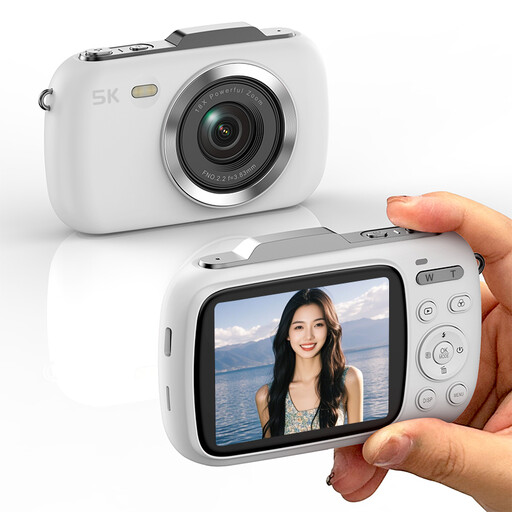
KOMERY G7 5K Digital Camera, White
Its travel point-and-shoot format may suit buyers looking for a portable camera, but check the zoom type carefully if distant subjects are the priority.
The product name lists 5K video and 80MP; the listed 18X zoom is digital, not additional optical reach.
View on Joybuy
 No image available
Sony ZV-E10K with 16–50mm Power Zoom Lens
This interchangeable-lens camera may suit someone who wants to learn with a mirrorless system; plan for a compatible additional lens if distant subjects need more reach.
The included lens is 16–50mm. The product description identifies compatibility with Sony lenses.
View on Joybuy
 No image available
Sony ZV-1F Compact Camera
This compact may suit light carrying and indoor or evening scenes, but its fixed ultra-wide lens is not designed for zooming in on distant subjects.
The product description lists a 1-inch sensor, a 20mm f/2.0 prime lens and a weight of 229g.
View on Joybuy
Questions about choosing and using a camera
Is a high digital-zoom figure the same as a longer optical lens?
No. Nikon lists the COOLPIX P1100’s 125× optical zoom separately from its digitally extended Dynamic Fine Zoom. Compare optical range when assessing lens-based reach.
Will the Canon EOS R50 kit lens cover distant wildlife?
The cited Canon UK kit includes an RF-S 18–45 mm lens, so check the focal length your subjects require and whether you need a compatible additional lens before treating the kit as a wildlife setup.
What should I check before fitting a phone accessory lens?
Check your exact phone, the lens series and its matching mount. Moment lists a T-Series universal mount for attaching T-Series I lenses, so confirm whether the mount you need is included.
How should I pack spare camera batteries when flying from the UK?
The UK Civil Aviation Authority advises keeping spare batteries in cabin baggage and checking the airline’s rules. Confirm the battery rating and protection requirements for your actual flight before packing.
What cancellation information should I check for an online camera purchase in the UK?
GOV.UK states that online sellers must tell customers they can cancel an order up to 14 days after delivery without giving a reason. Check the seller’s instructions and whether an exception applies to the transaction; this guidance is distinct from a manufacturer warranty.


