Who needs charging backup?
Backup power matters most when you need your phone during the journey and cannot count on the charging facilities at your seat.
Travellers on changing rail services
If your journey involves an uncertain train type or a change of trains, a charged power bank gives you an option that does not rely on an onboard outlet. Great Western Railway says train types can change on a route with little or no notice.
USB-C phone users relying on journey information
If your phone holds tickets, maps or travel updates, pack a cable that fits both the phone and your power source. Electrical Safety First distinguishes the smaller, reversible USB-C connector from the older rectangular USB-A connector.
Travellers packing for a day or weekend
Choose how much backup power to carry according to the recharges you expect, then check the pack’s dimensions and weight. Electrical Safety First notes that capacity affects how many times a power bank can recharge a device.
What should you check before packing?
Start with a way to charge without the train, then choose any cables or mains charger for the outlets you expect to encounter.
| Priority | What to check | Your needs |
|---|
| Backup power |
Check the operator’s facilities information for your service, but plan for a different train type. Compare power-bank capacity with the recharges you expect. |
I rely on my phone for tickets or journey updates and need it to work even if there is no usable outlet at my seat. |
| Connectors |
Match the cable to your phone and power source: USB-C to USB-C for USB-C at both ends, or USB-A to USB-C for a rectangular USB-A source and USB-C phone. Check an adapter’s stated charging use before relying on it. |
I want to use the source available without packing a cable that cannot connect to my phone. |
| Charging rate |
Compare the power bank’s stated output and input with the phone, cable and charger specifications. Electrical Safety First says power-bank output affects charging speed; a port’s shape alone does not establish the rate. |
If I have little time between journeys, I care about how the phone charges and how I will recharge the power bank. |
| Safe use |
Choose compatible equipment from a reputable retailer. Inspect the power bank, plug and cables for damage, and follow the manufacturer’s charging instructions. |
I need equipment I can carry and use without relying on a damaged cable or charger. |
Which brands offer relevant options?
These brand examples illustrate connector and power-bank features to compare; suitability depends on the exact model and your phone.
Anker
Anker’s Nano A1259 is an example of a power bank for a USB-C phone when an attached cable would reduce what you carry.
- Anker UK lists 10,000mAh capacity, a built-in USB-C cable and up to 30W bidirectional charging for model A1259.
- The stated maximum does not establish your phone’s charging rate; check phone compatibility and whether the attached connector suits you.
Belkin
Belkin offers different cable and port arrangements for travellers charging one or more devices.
- Belkin UK describes USB-C and Lightning leads on its BPB006 integrated-cable model. Its UltraCharge Pro 10K page lists two USB-C ports and one USB-A port.
- Belkin UK states that BPB006 does not ship to Scotland, Northern Ireland or the Isle of Man; check delivery terms for that model before ordering.
UGREEN
UGREEN’s MagFlow Air offers a wired USB-C connection alongside magnetic charging for compatible devices.
- UGREEN UK lists 10,000mAh capacity, Qi2 15W magnetic charging, an integrated USB-C cable and an additional USB-C port for this model.
- Check your phone and case for magnetic-charging compatibility. UGREEN’s stated charging figures are product claims, not a promise of the rate your phone will receive.
Joybuy charging options
These options cover portable backup power, a cable for mixed USB-A and USB-C sources, and a UK-plug charger for use where a mains socket is available. A cable or wall charger alone will not provide backup power on a train without a usable outlet.
 No image available
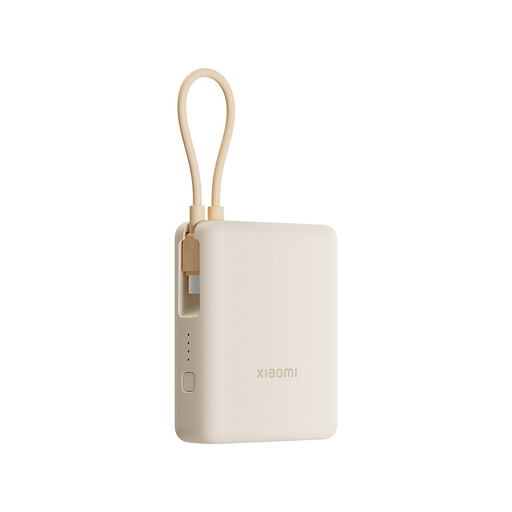
Xiaomi 33W Power Bank 10000mAh with Integrated Cable, Tan
A portable option when you need phone power without an onboard outlet. The product information lists a built-in USB-C cable, USB-C and USB-A outputs, 33W output and 30W self-charging. Check your phone’s charging compatibility; the stated 10,000mAh capacity does not guarantee a fixed number of recharges.
View on Joybuy
 No image available
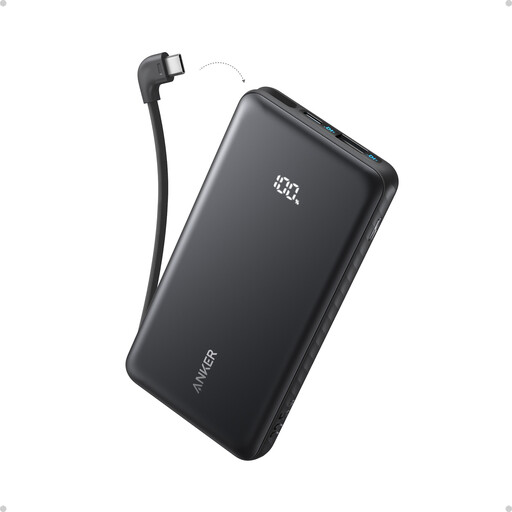
Anker Zolo Power Bank 10,000mAh 22.5W with Built-in USB-C Cable
The built-in USB-C cable gives a USB-C phone a connection to portable backup power without a separate cable. The listing states 10,000mAh capacity, a 22.5W maximum output and a USB-A port. Check the charging rate your phone supports rather than assuming it will receive the stated maximum.
View on Joybuy
 No image available
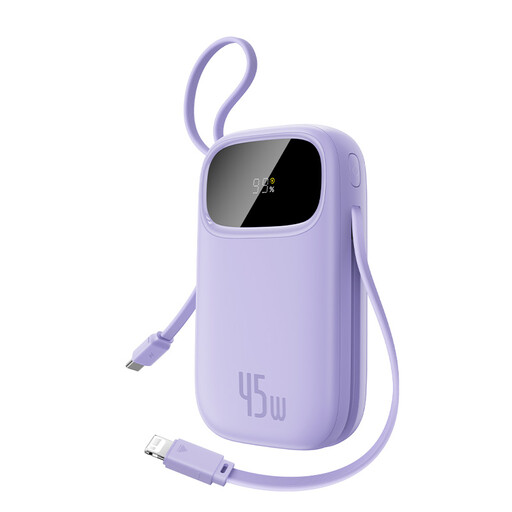
Baseus EnerFill FC31 Qpow 3 Power Bank with USB-C and Lightning Cables, Nebula Purple
Its built-in USB-C and Lightning cables, USB-C port and USB-A port offer several connection options for a journey. Check the capacity before choosing it for a particular number of recharges: the title says 10,000mAh, while the specification gives 5000mAh at 7.3V/36.5Wh and two 5000mAh cells. The listed 45W output applies to USB-C use with one device; the stated total output is 5V 3A.
View on Joybuy
 No image available
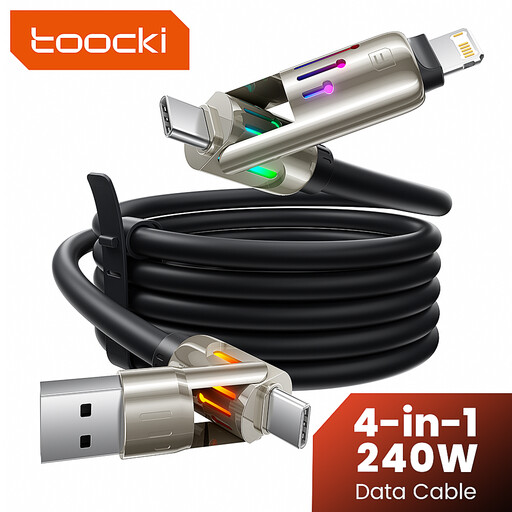
Toocki Chubby 4-in-1 USB-A/C to USB-C/Lightning Cable, 6.6FT
The listed connector options include USB-A to USB-C use, which may help when a USB-C phone needs to connect to an available USB-A source. This is a cable, not stored backup power: it still needs a working port, charger or power bank. Check the connection and charging requirements of your devices; the title’s 240W figure does not establish the rate your phone will receive.
View on Joybuy
 No image available
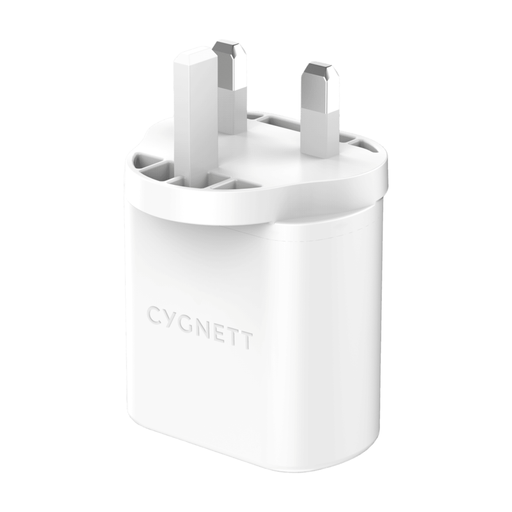
Cygnett PowerPlus 32W Dual-Port USB-C Wall Charger, UK Plug, White
This foldable UK-plug charger is a supplementary option when a usable mains socket is available. Its listed outputs include a 20W USB-C PD port and a USB-A port. Confirm that your phone and cable are compatible, and do not rely on the charger alone when your train’s socket provision is uncertain.
View on Joybuy
Common questions
Can I assume my UK train will have a socket or USB port?
No. Facilities depend on the train: Avanti West Coast describes plug and USB sockets on its Evero trains, while Greater Anglia describes both on its new trains. Great Western Railway also warns that a train type may change with little or no notice. Check your operator’s current facilities information, and carry backup power if your phone needs to remain available.
Should I take a power bank or a UK three-pin charger?
Take a power bank as the self-contained backup if you cannot depend on a mains socket at your seat. A UK three-pin charger is useful in addition when a suitable working socket is available. Choose the power bank’s capacity for your expected recharges and check its output against your phone.
Do I need both USB-C-to-USB-C and USB-A-to-USB-C cables?
For a USB-C phone, use USB-C to USB-C when your power source has a USB-C output; add USB-A to USB-C if you expect to use an older rectangular USB-A output. Electrical Safety First identifies these as different connector types. Check the source and cable specifications if charging speed matters.
Can an adapter replace a second charging cable?
It may, if the adapter is specified for your existing cable and the USB-A source you intend to use. Check the resulting connection and charging specifications rather than assuming an adapter will provide your phone’s fastest charging rate. A dedicated USB-A-to-USB-C cable is another option when you expect to use USB-A regularly.
How should I charge a power bank safely?
Use compatible equipment, inspect the pack and cable for damage, and keep the pack away from liquids and excessive heat. Electrical Safety First advises charging it uncovered in a ventilated area and not leaving it on prolonged charge, overnight or while you are away.


