
24/7 Customer Support

Free returns

Same-day & Next-day Delivery

Quality Guaranteed

Unlock Your Welcome Offers: FREE Delivery | Up to 80% OFF | Free 30-day JoyPlus trial
Download the APP
That perfect shot of your child’s first steps, the breathtaking panoramic from your holiday or the dynamic walk-and-talk for your latest vlog—all ruined by shaky, jarring footage. We’ve all been there. While smartphone cameras have become incredibly powerful, they can’t defy the natural tremor of a human hand. This is where a phone gimbal comes in.
A smartphone stabiliser is a handheld device that uses motors and sensors to keep your phone steady, producing smooth, cinematic video that looks professionally shot. But with so many options on the market, how do you choose the right one? This guide will walk you through the key features to consider and present our top recommendations to help you find the perfect tool for your creative needs.
Navigating the technical specifications can be confusing. Here are a few practical points to focus on to ensure you get a device that meets your needs.
You will often see gimbals described as '2-axis' or '3-axis'. A 2-axis gimbal corrects for tilt (up and down) and roll (side to side) movements. While better than nothing, it won't smooth out the panning (left and right) motion common when walking. For truly fluid, professional-grade footage, a 3-axis gimbal for phone is the standard. It counteracts movement on all three axes, effectively eliminating the shakes and jitters from your videos.
Your gimbal will be your companion on travels, at family events or during long vlogging sessions. Consider its weight and design. A foldable phone gimbal is an excellent choice for portability, easily fitting into a backpack or even a large pocket. Also, check the grip and overall ergonomics. A comfortable handle will make a significant difference during extended use.
Modern gimbals are more than just stabilisers. Many models function as a handheld gimbal with tripod legs built into the handle, allowing you to set up a static shot anywhere. Other useful features include built-in extension rods for wider selfies, AI subject tracking and integrated fill lights for better-lit shots. Finally, check the battery life. A good gimbal should last for several hours of continuous shooting, and some can even reverse-charge your phone in a pinch.
Here are a few standout options that offer a great balance of features, performance and value for different types of users.
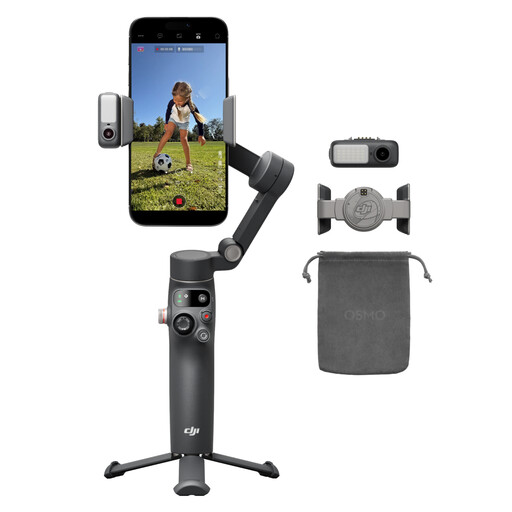
Why It Stands Out: The DJI Osmo Mobile 8 is an all-in-one powerhouse designed for serious content creators. It uniquely integrates native tracking with audio reception and lighting capabilities, meaning your subject stays in focus, well-lit and with clear audio without needing extra gear. Its seamless 360° pan rotation and direct phone connection make capturing complex, dynamic shots straightforward.
Pros:
Who is it for? Vloggers, live streamers and content creators who need a reliable, feature-rich gimbal for vlogging that consolidates multiple functions into one sleek package.
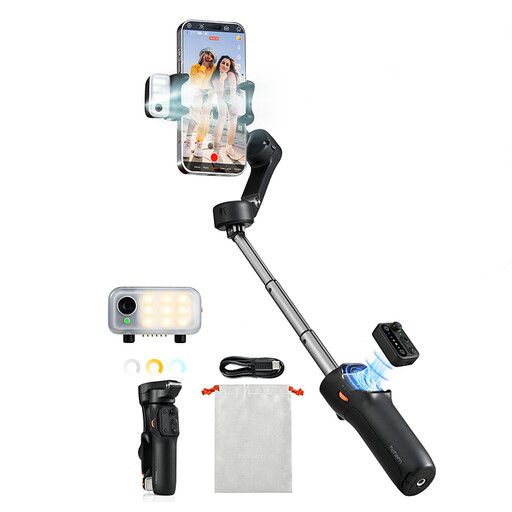
Why It Stands Out: This hohem gimbal prioritises convenience and portability. Its standout feature is the magnetic AI tracking module, which works with gesture controls without needing to be connected to an app. Combined with a detachable remote and a highly compact foldable phone gimbal design, it offers incredible flexibility for solo creators and travellers.
Pros:
Who is it for? Travel enthusiasts, social media content creators and anyone looking for a highly portable and user-friendly stabiliser that works straight out of the box.
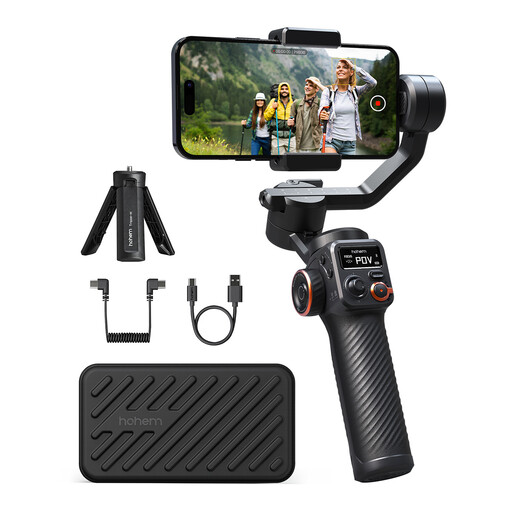
Why It Stands Out: Built for endurance and power users, this hohem model boasts an impressive 18-hour battery life and the ability to reverse-charge your smartphone. Its high payload capacity of 400g makes it suitable for larger phones or those with add-on lenses and microphones. The clear OLED screen provides at-a-glance status updates on battery, Bluetooth and shooting mode, putting you in complete control.
Pros:
Who is it for? Mobile filmmakers and advanced users who use heavier phone setups with accessories like an iPhone gimbal with an anamorphic lens and who require maximum battery endurance for all-day shoots.
If these recommendations aren't quite what you're looking for, don't worry. There is a wide world of stabilisation tools to explore. From entry-level models to professional rigs, you can find a device that fits your specific needs and budget.
Explore our full collection of mobile phone image accessories to find your perfect match.
Absolutely. A gimbal for vlogging is one of the most impactful investments you can make. It elevates the production quality of your videos by eliminating distracting shakes, making your content more engaging and professional for your audience.
A selfie stick is a simple pole that extends the reach of your arm for wider shots. A phone gimbal, on the other hand, is an electronic device with motors that actively stabilises your phone. It counteracts your movements to create smooth, flowing video. Many modern gimbals now include a built-in extension rod, offering the benefits of both tools in one.
Most gimbals today are designed with adjustable clamps to accommodate a wide variety of smartphones, including most models from Apple and Android manufacturers. However, it is always a good practice to check the product's specifications for supported phone weight and dimensions to ensure a secure and balanced fit, especially if you have a very large or heavy device.