
24/7 Customer Support

Free returns

Same-day & Next-day Delivery

Quality Guaranteed

Unlock Your Welcome Offers: FREE Delivery | Up to 80% OFF | Free 30-day JoyPlus trial
Download the APP
Shaky, jarring video can instantly make your content look amateurish, no matter how good your smartphone camera is. Whether you are a vlogger capturing daily life in London, a traveller documenting a trip to the Scottish Highlands or simply want smoother family videos, that tell-tale wobble can undermine your efforts. A phone gimbal stabiliser is the tool designed to solve this exact problem, transforming unsteady shots into smooth, cinematic footage.
Navigating the market for a smartphone gimbal can be confusing, with countless features and technical terms. This guide is here to help. We will walk you through the essential features to look for and present a few carefully selected options to help you find the right device for your video creation needs.
Before diving into specific products, it helps to understand the key features that separate a basic holder from a high-performance stabiliser.
The core function of a gimbal is to counteract unwanted movement. The gold standard for this is a 3-axis phone stabiliser. It uses motors to correct for motion on three separate axes:
This comprehensive stabilisation is what delivers that floating, professional look, even when you are walking, running or panning the camera quickly. While simpler stabilisers exist, a 3-axis model offers the most significant improvement for dynamic video.
For content creators on the move, convenience is key. Many modern gimbals now come with integrated features that reduce the amount of gear you need to carry. Look for a gimbal with a tripod and extension rod built directly into the handle. This allows you to switch seamlessly between handheld shooting, setting up a static shot on a table or capturing a wide-angle selfie without needing extra accessories. A lightweight, foldable design is also crucial for portability, making it easy to pack in a bag for a day out.
A good vlogging gimbal does more than just stabilise. Modern devices connect to your phone via an app, unlocking intelligent shooting modes like subject tracking, motion-lapse and dolly zoom effects. Active subject tracking is particularly useful, as it keeps you or your subject perfectly in frame automatically. Finally, check the battery life. A device that lasts for 8-10 hours on a single charge ensures you can get through a full day of shooting without interruption. Some models can even charge your phone while in use.
Here are our recommendations, chosen to suit different types of creators and use cases.
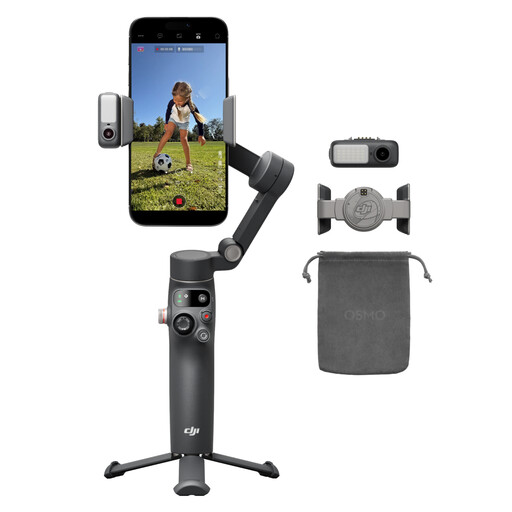
Why It Stands Out: The DJI Osmo Mobile 8 is a complete, all-in-one solution for serious mobile videographers. It combines robust 3-axis gimbal stabilisation with a suite of intelligent features designed for convenience and creativity. Its native tracking system works directly with your phone and the integrated lighting and audio reception capabilities help create a polished final product without extra gear.
Pros:
Who is it for? This is an ideal choice for dedicated vloggers, travel content creators and anyone who wants a powerful and reliable handheld gimbal for video that packs professional-grade features into a portable design.
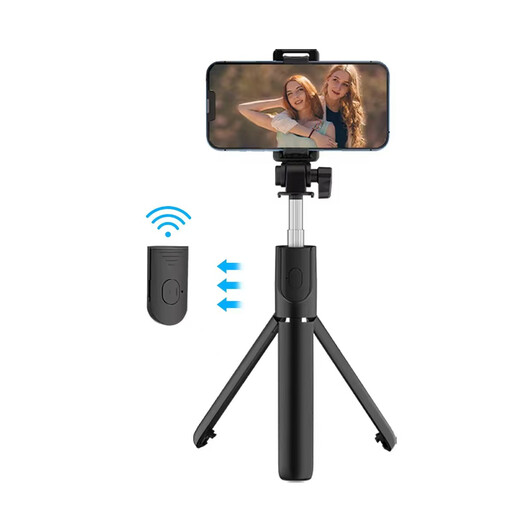
Why It Stands Out: While not a motorised gimbal, the Verbex K50 is a highly versatile tool that combines a selfie stick, tripod and lighting into one package. Its standout feature is the impressive 1.9-metre extension, allowing for high-angle shots or use as a floor stand for live streaming. The dual fill lights and Bluetooth remote add significant value for solo creators.
Pros:
Who is it for? This is a great option for live streamers, TikTok creators and casual users who need a stable, long-reaching tripod and selfie stick with integrated lighting, rather than the advanced motion stabilisation of a 3-axis gimbal.
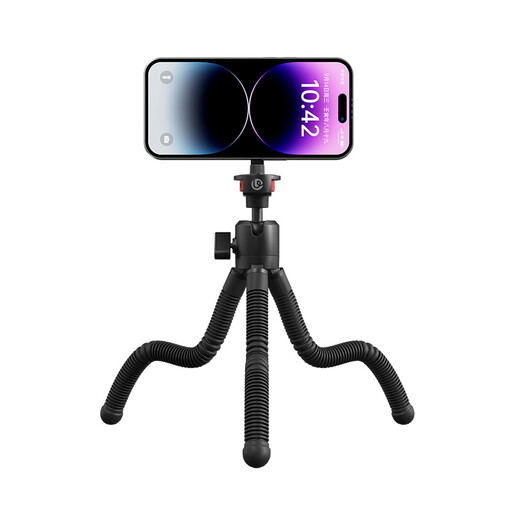
Why It Stands Out: The ULANZI MT30 offers a different kind of versatility. It is a compact, flexible tripod designed for creative static shots. Its "octopus" style legs can be bent and wrapped around objects like railings, branches or bike handlebars. For users with compatible iPhones (12 series and newer), the magnetic mount offers instant, secure attachment.
Pros:
Who is it for? This is perfect for photographers and videographers who want to capture creative, stable shots from unusual angles. It is not a gimbal for stabilising movement but rather a highly adaptable mount for static filming and time-lapses.
If these recommendations don't quite match what you are looking for or if you want to see a wider range of tripods, mounts and stabilisers, you can browse our full collection.
Explore our complete range of Photo stand accessories to find the perfect tool for your creative projects.
1. Is a phone gimbal stabiliser worth it? If your goal is to produce smooth, high-quality video, then yes. A gimbal is one of the most effective tools for eliminating shaky footage, giving your content a more professional and polished look. It makes a noticeable difference for vlogging, travel videos and action shots.
2. What is the difference between a 2-axis and a 3-axis gimbal? A 3-axis phone stabiliser compensates for movement on three axes: pan (left-right), tilt (up-down) and roll (rotation). This provides the most comprehensive stabilisation. A 2-axis gimbal typically only corrects for pan and tilt, which means it cannot smooth out the rotational shake that often occurs when walking. For the smoothest video, 3-axis is the recommended standard.
3. Can I use a gimbal with any smartphone? Most modern gimbals feature adjustable clamps designed to accommodate a wide variety of smartphone sizes and weights. However, it is always important to check the product's specifications for its maximum payload (weight) and supported phone dimensions to ensure your device is compatible.