
24/7 Customer Support

Free returns

Same-day & Next-day Delivery

Quality Guaranteed

Unlock Your Welcome Offers: FREE Delivery | Up to 80% OFF | Free 30-day JoyPlus trial
Download the APP
Shaky, jarring video can instantly undermine the quality of your content, whether you're capturing a family holiday, creating a travel vlog or producing content for social media. While modern smartphones have impressive cameras, they can't defy the natural tremor of a human hand. This is where a phone gimbal stabiliser comes in, transforming wobbly footage into smooth, cinematic shots.
Navigating the market for these devices can be confusing, with a wide range of features and price points. As a Joybuy Product Recommendation Officer, my role is to help you understand the key considerations and highlight some noteworthy options, so you can choose a device that fits your creative needs and budget. This guide will walk you through what to look for and present our top recommendations for 2026.
Before diving into specific products, it's helpful to understand the core features that differentiate one model from another. Focusing on these key aspects will ensure you find a stabiliser that works for you.
The most significant feature of a high-quality smartphone gimbal is its ability to stabilise movement on three axes:
A 3-axis phone stabiliser uses motors to counteract your movements on all three axes simultaneously. This technology is what produces the signature floating, ultra-smooth look in professional videos. While simpler stabilisers exist, a 3-axis model is the standard for anyone serious about capturing dynamic, high-quality footage while walking, running or panning.
A gimbal is only useful if you have it with you. Modern designs are often foldable and lightweight, making them easy to pack in a bag. Beyond basic stabilisation, many gimbals come with integrated features that can elevate your filming experience. Look for a gimbal with tripod legs built into the handle, which is invaluable for static shots, time-lapses or filming yourself. Other useful additions include built-in extension rods for wider selfie angles and intelligent subject tracking to keep your subject perfectly in frame.
There's nothing worse than a dead battery in the middle of a great shot. Check the device's stated battery life, especially if you plan to use it for long vlogging sessions or while travelling. Many gimbals can run for 8-10 hours on a single charge. Some even offer reverse charging, allowing you to top up your phone's battery directly from the gimbal itself—a very practical feature for creators on the move.
Here are a few standout options that cater to different types of users, from dedicated content creators to those seeking a simple, portable solution.
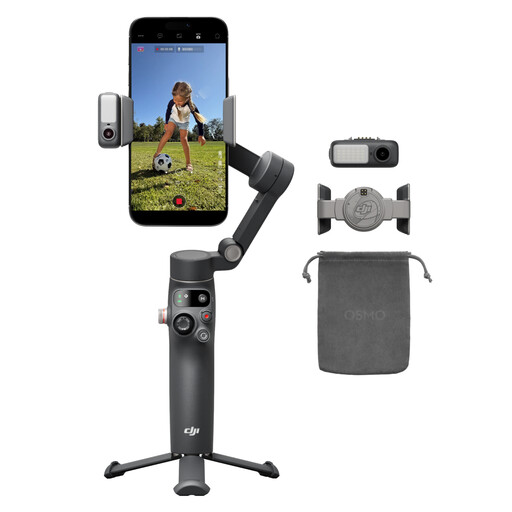
Why It Stands Out The DJI Osmo Mobile 8 is a comprehensive tool designed for creators who need a reliable, feature-rich vlogging gimbal. Its core strength lies in its robust 3-axis gimbal stabilisation, which delivers consistently smooth footage. What sets it apart is the integration of native tracking, audio and lighting capabilities, creating an all-in-one production powerhouse. The built-in extension rod and tripod mean you don't need to carry extra accessories, making it a highly practical choice for on-the-go filming.
Pros
Who is it for? This gimbal is well-suited for serious vloggers, social media influencers and travel enthusiasts who demand high-quality, stable video and appreciate the convenience of an all-in-one device.
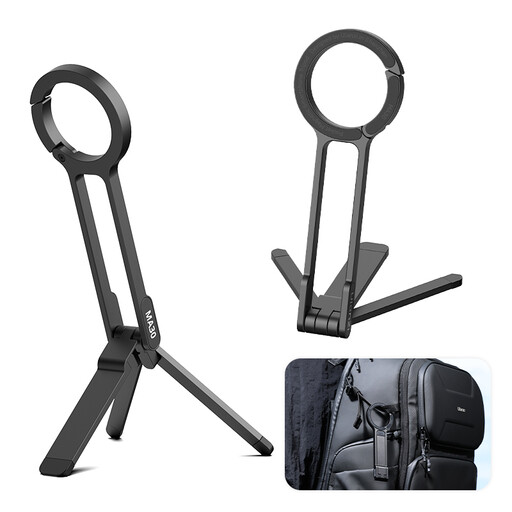
Why It Stands Out For those who prioritise portability above all else, the ULANZI MA30 offers a different approach. It is not a motorised gimbal but a highly compact magnetic tripod and selfie stick. Its standout feature is the Maglock carabiner design, allowing you to clip it to a bag or belt loop for ultimate convenience. Made from aluminium, it’s a durable and pocket-friendly tool for achieving static stability without the bulk of a full gimbal.
Pros
Who is it for? This is an excellent choice for minimalists, hikers or travellers who need a quick and simple way to set up static shots, time-lapses or video calls. It's a stabiliser for stationary filming rather than for smoothing out movement.
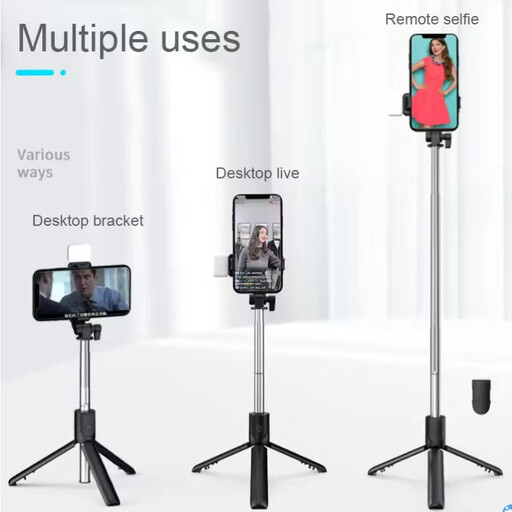
Why It Stands Out The Verbex S05S bridges the gap between a basic selfie stick and a more complex handheld video stabiliser. While it doesn't have motorised stabilisation, it packs in features that are highly useful for vloggers. With a 1-metre extension, a built-in tripod, a detachable Bluetooth remote and an integrated fill light, it provides the versatility needed to frame and light shots effectively.
Pros
Who is it for? This is a great starting point for aspiring content creators, families and anyone on a budget who wants a multi-functional tool for improving their smartphone photography and videography.
A motorised gimbal is a powerful tool, but sometimes a simpler device is all you need to get a steady shot. If you're after a more straightforward way to hold your phone for photos, video calls or watching media, a dedicated stand might be a better fit.
Explore our wider collection of portable phone stand options to find the perfect accessory for your needs.
What is the main benefit of a 3-axis phone stabiliser? The primary benefit is the dramatic reduction of shake and jitter in your videos. By using motors to counteract movement on the pan, tilt and roll axes, a 3-axis stabiliser allows you to walk, run or move the camera freely while maintaining a smooth, professional-looking shot that is impossible to achieve by hand.
Is a phone gimbal stabiliser worth it for casual use? For many, the answer is yes. If you enjoy capturing memories during holidays, family events or days out, a gimbal can significantly elevate the quality of your videos, making them far more enjoyable to re-watch and share. Many modern gimbals are user-friendly and compact, making them a practical accessory even for casual users.
Can I use a gimbal with a phone case on? This depends on the gimbal's clamp size and the weight capacity of its motors. Most modern gimbals are designed to accommodate standard-sized phones with slim cases. However, very thick or heavy-duty cases may need to be removed to ensure the phone fits securely and the gimbal can balance correctly. It's always a good idea to check the manufacturer's specifications for maximum phone weight and dimensions.