
24/7 Customer Support

Free returns

Same-day & Next-day Delivery

Quality Guaranteed

Unlock Your Welcome Offers: FREE Delivery | Up to 80% OFF | Free 30-day JoyPlus trial
Download the APP
Smartphone cameras have become incredibly powerful, but achieving that smooth, cinematic look seen in professional vlogs or travel diaries often remains just out of reach. The culprit is almost always shaky footage caused by natural hand movements, walking or panning too quickly. If you're a content creator, an aspiring vlogger or simply a traveller wanting to capture better memories, a phone gimbal is the tool that can elevate your videos from amateur to polished.
A smartphone stabiliser uses motors and sensors to keep your phone steady, eliminating jitters and bumps to produce fluid, professional-quality footage. However, the market is filled with options, from advanced 3-axis gimbals to simpler stabilised selfie sticks. This guide is designed to help you understand the key features to look for, so you can choose the right device for your creative needs.
Before diving into specific models, it helps to understand the core features that differentiate them. Considering these points will ensure you find a mobile gimbal that matches your filming style and budget.
The gold standard for smooth video is 3-axis stabilisation. A 3-axis gimbal counteracts movement on three planes: tilt (up and down), pan (left and right) and roll (rotational movement). This mechanical stabilisation is far superior to the electronic image stabilisation (EIS) built into most phones, especially when you are walking, running or capturing dynamic action shots. While simpler 1- or 2-axis stabilisers exist, a 3-axis model provides the most comprehensive solution for buttery-smooth video.
For vloggers and travellers, convenience is key. Look for a gimbal with a foldable, lightweight design that can easily fit into a backpack or even a large pocket. Many modern gimbals now function as a complete vlogging kit, integrating features that previously required separate accessories. A built-in extension rod turns your gimbal into a long-reach selfie stick with tripod legs, perfect for group shots or setting up a static camera angle.
Advanced features can significantly streamline your creative process. An AI tracking gimbal uses artificial intelligence to automatically follow a subject, keeping them perfectly in frame without you needing to manually adjust the camera. This is a game-changer for solo creators filming themselves. Another increasingly common feature is a gimbal with fill light. A small, built-in LED light can dramatically improve video quality in low-light conditions, ensuring your face is well-lit for vlogs or live streams.
Here are a few standout options that cater to different types of users, from dedicated content creators to casual videographers.
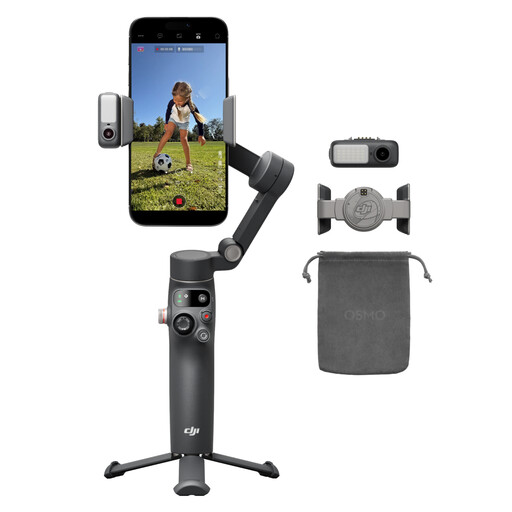
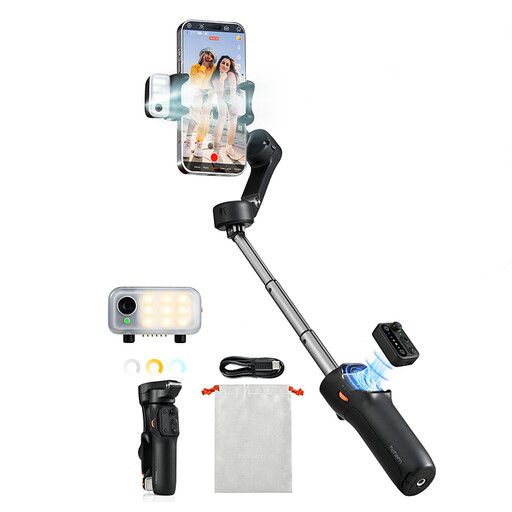
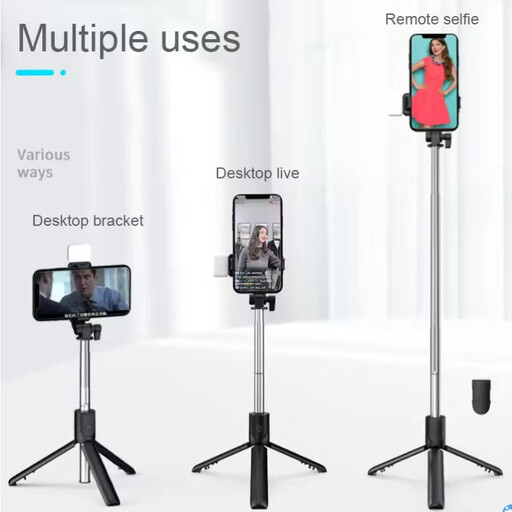
A phone gimbal is a fantastic starting point for improving your video production, but lighting is equally important for achieving a professional look. A good lighting setup can make the difference between a flat, grainy shot and a vibrant, clear one.
For a wider selection of lighting solutions, from portable LEDs to full-sized ring lights, explore our range of tripod light stands to complete your vlogging kit.
While not essential for every user, a 3-axis gimbal is the key to achieving truly smooth, cinematic video, especially when you are moving. It mechanically corrects for shakes and jitters on all three axes (pan, tilt and roll), providing a level of stability that in-phone software stabilisation cannot match for dynamic shots.
Most gimbals provide basic stabilisation functionality without needing a companion app. However, advanced features like AI tracking, hyper-lapse, dolly zoom effects and firmware updates typically require the manufacturer's dedicated app. Some newer models, like the hohem gimbal mentioned above, are innovating by offering core intelligent features like AI tracking that work independently of any app.
The main difference is the technology. A phone gimbal uses multiple motors to actively and intelligently counteract your movements in real-time, keeping the phone level. A device marketed as a "stabilised selfie stick" may have a single-axis motor for basic levelling or, more commonly, simply refers to the stability provided by its tripod function for static shots. For smooth video while walking or moving, a true phone video stabiliser with 3-axis motors is far more effective.