
24/7 Customer Support

Free returns

Same-day & Next-day Delivery

Quality Guaranteed

Unlock Your Welcome Offers: FREE Delivery | Up to 80% OFF | Free 30-day JoyPlus trial
Download the APP
A phone lanyard can make commuting, shopping, travelling and outdoor activities more convenient. It keeps your smartphone close for contactless payments, directions and quick photos while leaving both hands available.
However, not every strap offers the same practicality. Some products use vague claims such as “universal fit” without explaining case compatibility, while others focus on bright colours or anti-theft wording but provide little information about the connector. Before buying, check the attachment method, length, comfort and condition of the strap rather than relying on marketing language.
As the Joybuy Product Recommendation Officer, I have filtered the available options around everyday UK use, from crowded festivals and railway platforms to cycling routes and weekend travel.
Most phone lanyards do not attach directly to the smartphone itself. They usually connect to a phone case lanyard tab, loop or internal attachment pad. A case without a suitable opening may not be compatible, and forcing a connector into an unsuitable point can damage the case or reduce security.
Always confirm whether your existing case supports a lanyard. If it does not, look for a design supplied with a universal phone case lanyard attachment pad.
A lanyard may help reduce the chance of your phone falling to the ground, but it does not guarantee protection against every drop, collision or impact. The strap, connector and case attachment point can all be affected by sharp edges, heavy pulling or repeated wear.
For safer use, inspect the complete connection before heading out and pair the lanyard with a protective case.
A long strap may be convenient for crossbody wear but could catch on handles, bike components or crowded transport. A shorter smartphone wrist lanyard can be easier to manage for quick photos, shopping or short walks.
A 1.2m phone lanyard is a practical middle ground for many adults, but adjustability is still useful when switching between neck, crossbody and wrist wear.
Check whether the strap uses:
The attachment point should sit securely inside or on the case, without obstructing charging, cameras or buttons. Never rely on the lanyard alone to protect the phone from impact.
Look for a strap described as strong yet lightweight, with a soft or flexible surface for comfortable extended wear. The connector is equally important: a durable cord is not useful if the attachment loop is weak or difficult to lock.
Product descriptions should make clear how the strap connects and whether it is suitable for everyday handling. Avoid applying excessive force, attaching it to sharp objects or using it as a lifting handle.
An adjustable phone lanyard gives more flexibility for different situations:
For cycling, a phone lanyard for cycling should supplement—not replace—a suitable phone mount or secure pocket where appropriate.
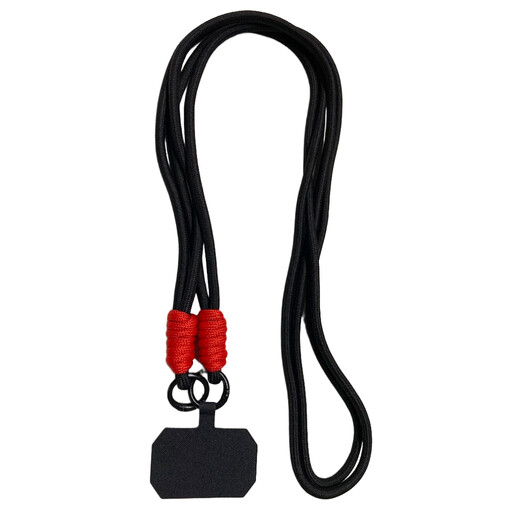
Why This Fits Their Persona: Its neutral black finish suits everyday commuting, shopping and travel, while the 1.2-metre format offers a straightforward crossbody option.
The description identifies the need for a compatible case attachment point and recommends checking the connection and strap regularly.
1.2m length; strong, lightweight, soft and flexible strap; designed for most smartphones with a suitable case.
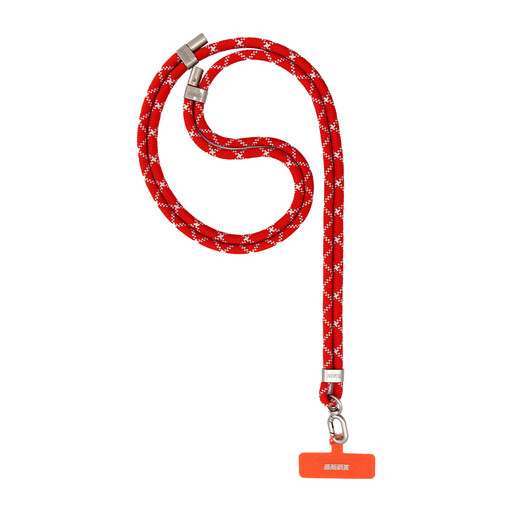
Why This Fits Their Persona: A suitable choice for shoppers who value a recycled-material design alongside adaptable wearing styles for commuting, travel and outdoor use.
Its description specifies a no-drill internal pad, helping address compatibility concerns for cases without a lanyard hole.
Recycled-PET yarn; adjustable length; supports hand, wrist, crossbody and neck wearing styles.
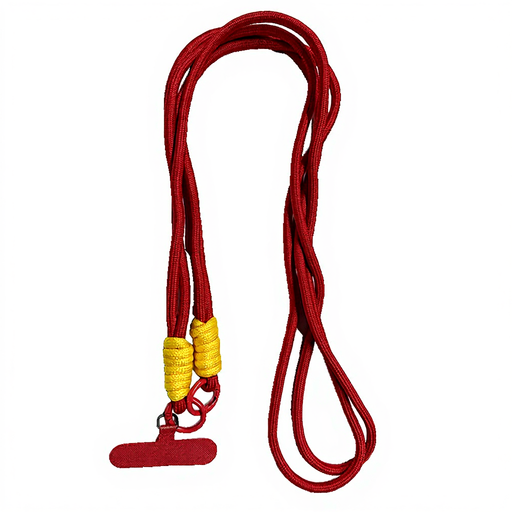
Why This Fits Their Persona: The bright red colour can be easier to spot during festivals, travel, outdoor events and busy daily routines where quick phone access matters.
It states that the anti-theft phone strap must be attached to a suitable case and checked for wear, rather than presenting the lanyard as complete protection.
1.2m strap; strong and lightweight construction; designed for wrist or neck wear with a compatible case.
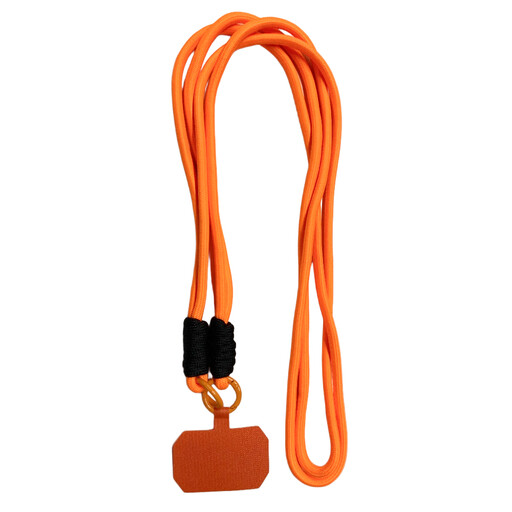
Why This Fits Their Persona: The light blue finish provides a visible everyday accessory for commuters, shoppers and festival visitors who want their phone close at hand.
The product information highlights connector checks and compatibility with a protective, lanyard-ready case.
1.2m length; soft, flexible strap; suitable for quick access during commuting, travel, festivals and cycling.
Before using a new lanyard:
A lanyard is a hands-free phone holder, not a substitute for a protective case or a dedicated cycling mount. Keep it away from sharp edges and moving bicycle parts, and avoid using it to carry anything heavier than the intended smartphone.
We have compiled a complete, real-time list of products that fully satisfy these strict selection criteria and UK safety regulations.
Not automatically. Compatibility usually depends on the phone case rather than the handset alone. Check whether your case has a lanyard tab or can accept an internal attachment pad. A case should close properly after installation and must not press against buttons, ports or camera lenses.
Lifespan depends on frequency of use, friction, moisture, storage and the weight of the phone and case. There is no universal replacement interval, so inspect it regularly. Replace it when the strap becomes frayed, the connector loosens or the attachment point shows damage.
You can use one for quick access when stationary or walking with a bicycle, but take care around handlebars, wheels and other moving parts. For regular cycling, a secure pocket or purpose-designed phone mount may be more suitable. A lanyard should not restrict steering, braking or safe visibility.