
24/7 Customer Support

Free returns

Same-day & Next-day Delivery

Quality Guaranteed

Unlock Your Welcome Offers: FREE Delivery | Up to 80% OFF | Free 30-day JoyPlus trial
Download the APP
A phone lanyard can make it easier to check directions, take photographs or keep your smartphone close while your hands are occupied. It can also reduce the chance of an accidental drop. However, not every strap suits every phone, case or activity.
The most common buying mistakes are usually caused by three overlooked details:
Before buying, check how the accessory attaches, how it will be worn and whether its dimensions fit your routine.
A universal phone lanyard normally means it works with many smartphone models when paired with a suitable case. It does not necessarily attach directly to a bare handset.
Common attachment systems include:
Check that the case remains fully closed around the attachment point. The pad or connector should not interfere with buttons, charging ports, wireless charging or camera access. If your case has no attachment point, look for a design that specifically includes a no-drill connecting pad.
A 1.2 m phone lanyard is a practical length for crossbody or neck-worn use. It generally provides enough slack to lift the phone for navigation, contactless payments or quick photographs without removing the strap.
An adjustable phone strap can be more versatile if several people use the accessory or if you switch between:
A longer strap may offer more movement but can catch on handles, railings or equipment. For cycling and outdoor activities, keep the phone close to the body and avoid loose loops that could snag.
Look for a strap that is strong yet lightweight, with a flexible section that sits comfortably against clothing or skin. The connector should lock securely to the case tab without excessive movement.
No strap should be considered maintenance-free. Before use, inspect:
A wrist phone lanyard used for everyday access may experience less movement than a crossbody phone lanyard used while travelling. Replace the accessory if any load-bearing part shows damage.
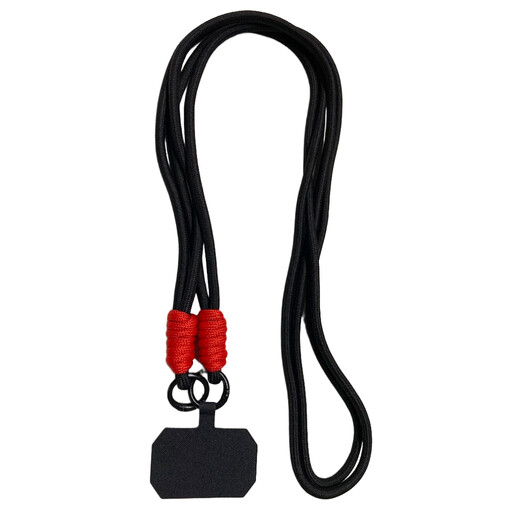
Why This Fits Their Persona: A straightforward black 1.2-metre option for commuters, shoppers and first-time users who want hands-free access without a visually distinctive finish.
The listing clearly states that it should be used with a case featuring a lanyard attachment point, helping buyers avoid an unsuitable case-and-strap combination.
1.2-metre length; strong, lightweight and flexible strap; suitable for neck or wrist wear.
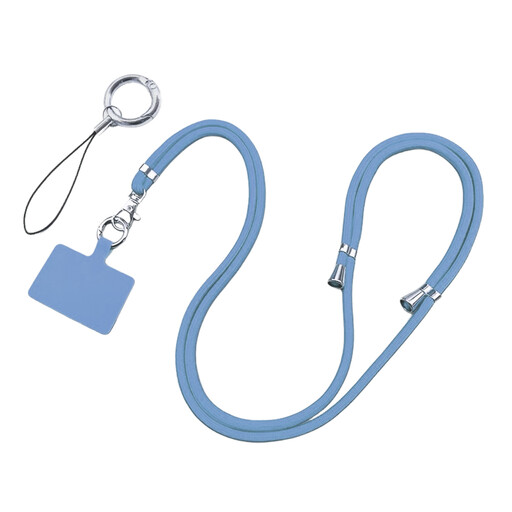
Why This Fits Their Persona: Suitable for users who value a softer-looking accessory for commuting, festivals, cycling or travel while still wanting a defined 1.2-metre format.
Its product information states that it is designed to aid drop prevention rather than guarantee complete protection, keeping expectations realistic.
Lightweight construction; soft, flexible strap; attachment system intended for a lanyard-ready case.
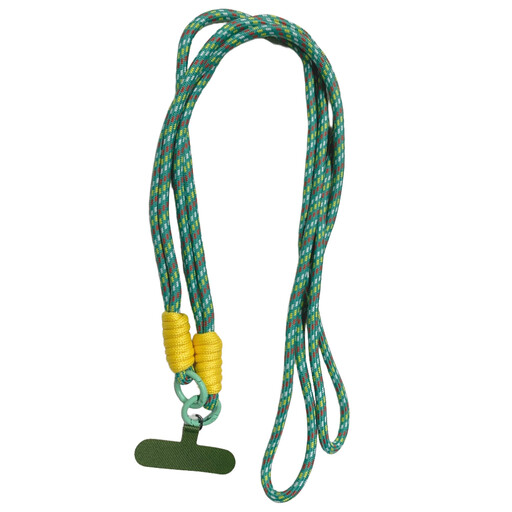
Why This Fits Their Persona: A visible green crossbody design for active days, including travel, outdoor activities, shopping and busy public events.
The “anti-theft” description should be understood as a tethering feature that helps keep the phone attached, not as a guarantee against deliberate theft.
1.2-metre strap; strong and lightweight construction; can be worn around the neck or wrist with a compatible case.
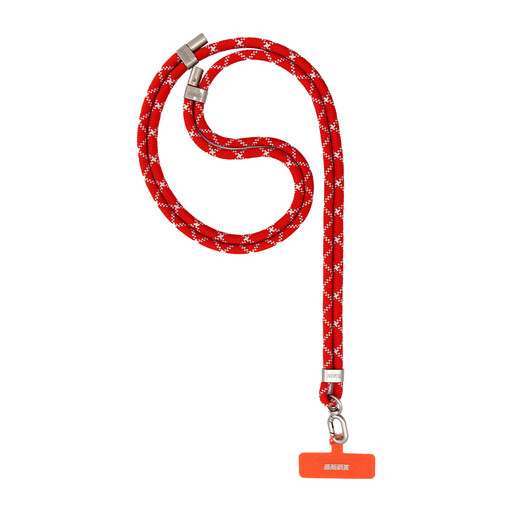
Why This Fits Their Persona: A flexible option for shoppers seeking recycled materials and several wearing styles, including hand grip, wrist, crossbody and neck use.
The listing specifies recycled-PET yarn and a no-drill connecting pad, so buyers can assess the material and attachment method rather than relying on vague eco wording.
Adjustable length; no pre-drilled case holes required; recycled-PET material stated in the product details.
We have compiled a complete, real-time list of products that fully satisfy these strict selection criteria and UK safety regulations.
Attach the connector or pad exactly as described by the product listing. Place the phone inside the case only after checking that the attachment section sits flat and does not press against the handset. Pull gently on the lanyard to confirm that the connection holds before wearing it outside.
For commuting or festivals, keep the phone where it can be seen and reached without letting the strap hang loosely. Do not attach a phone lanyard to a damaged case, expose it to sharp edges or use it to support other heavy items. An action-camera magnetic lanyard is not automatically suitable for a smartphone, so check the named camera model and mounting system before purchase.
Usually, compatibility depends more on the phone case lanyard attachment than on the handset model. A case with a secure tab is often required. Designs with an internal pad may fit more cases, but check thickness, port access and the manufacturer’s fitting instructions.
There is no fixed lifespan. Daily friction, moisture, stretching and contact with sharp surfaces can shorten service life. Inspect the strap and connector regularly, particularly before outdoor use. Replace it when you notice fraying, cracks, loose stitching or a weakened case attachment.
No accessory can guarantee that. An anti-theft phone lanyard creates a physical link between the phone and the wearer, which may help reduce accidental drops or make a phone harder to snatch quickly. Stay alert in crowded places and avoid placing unnecessary strain on the strap.