Fast top-up commuters
If you have only a short break to charge, check your phone’s connector and supported wired charging before comparing power-bank output ratings. A built-in cable may also suit you if carrying a separate one is inconvenient.


For a short opportunity to top up, start with a USB-C wired or built-in-cable power bank that matches your phone’s charging support; choose magnetic wireless charging when using the phone without a loose cable matters more to you. If you charge several devices, check their combined output rather than a headline wattage. For flights, check the bank’s watt-hour rating and your airline’s rules separately from your everyday charging needs.
If you have only a short break to charge, check your phone’s connector and supported wired charging before comparing power-bank output ratings. A built-in cable may also suit you if carrying a separate one is inconvenient.
If you want to navigate or read while charging, magnetic attachment may be more useful than an emphasis on wired output. Check the phone’s wireless standard, its charging limit and whether your case permits alignment.
If one bank must cover a phone and other small devices, look at capacity and output when devices charge together. Before flying, follow UK Civil Aviation Authority guidance on cabin carriage and check the watt-hour rating against your airline’s rules.
Match the charging method to your phone first, then consider how you will carry and use the bank. Capacity alone cannot tell you its charging rate, how it handles several devices or whether it fits your flight plans.
| Concern | What to check | Who this matters to |
|---|---|---|
| Quick wired top-ups | Check the phone’s connector, charging protocol and maximum wired input against the output of the relevant port or built-in cable. | If I have only a short stop, I want a compatible way to put charge back into my phone without assuming it will accept the bank’s maximum output. Around 36% of consumers would make a quick top-up their primary concern. |
| Cable-free handling | Confirm the phone’s wireless standard and limit, magnetic alignment with its case, and the bank’s stated certification level. | When I need to use my phone as it charges, I would rather keep a pack attached than manage a loose cable. Around 29% of consumers would put cable-free handling first. |
| Long-day energy and outputs | Compare capacity, the available connectors and the stated output when more than one device is connected. | If I am also carrying earbuds or another small device, I need to know how the bank serves them together. Around 21% of consumers would prioritise energy and multiple outputs. |
| Safety and flights | Check the exact model against UK product-safety recalls; for a flight, check its watt-hour rating and the airline’s current instructions. | Before I carry a bank on a flight, I want to know how to pack it and whether the exact item is subject to a recall. Around 14% of consumers would make safety and travel checks their primary concern. |
Capacity does not tell you which charging connection your phone can use, what output is available to several devices or how a bank will be assessed for air travel.
Compare the connections and stated single-device and combined outputs. If you plan to fly, check the watt-hour rating and your airline’s instructions rather than relying on capacity in mAh.
A magnetic attachment claim does not establish Qi2 certification or the wireless rate your phone can accept. Belkin, for example, distinguishes devices certified for Qi2 25 W from other Qi2-certified devices in its guidance for its 25 W model.
Check the exact bank’s certification, your phone’s wireless charging support and whether its case permits reliable alignment.
UK Office for Product Safety and Standards recalls have identified fire risks in particular power banks; a recall for one model is not a conclusion about every product bearing that brand.
Check the exact model and affected identifiers against current recall notices, use a trusted supplier and stop using a unit that is recalled, damaged, swollen or overheating.
The UK Civil Aviation Authority says power banks belong in the cabin, not checked luggage. The intended airline may give further instructions affecting what you can carry and do onboard.
Check the airline’s current rules and the bank’s watt-hour rating before departure; protect the bank from damage and short circuits while carrying it.
These examples illustrate product lines to compare, not a judgement about every model from each brand. Check specifications and recalls against the exact item you intend to buy.
Anker’s Nano Power Bank A1259 is an example of a USB-C wired bank with a built-in cable.
Belkin lists magnetic Qi2 power banks at 15 W and 25 W wireless charging levels.
UGREEN’s Zapix 10,000 mAh model combines magnetic wireless and USB-C wired charging features.
These choices cover built-in-cable banks for wired charging and magnetic banks for people who want a wireless option. Choose between them by your phone’s compatibility and how you expect to use it, not by capacity or an advertised wattage alone.
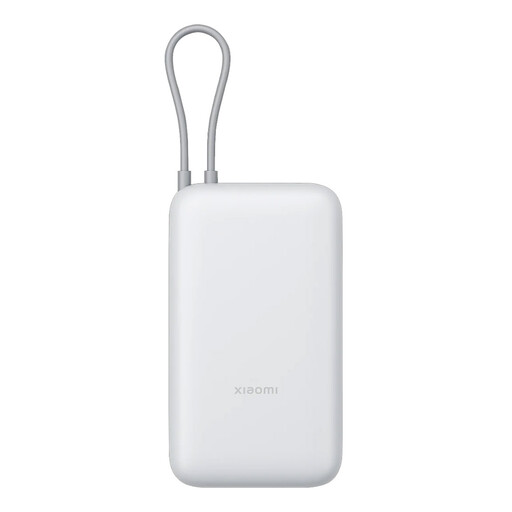 Image unavailable
Consider this built-in-cable option if you want to carry a stated 20,000mAh capacity without a separate charging cable. Check that the cable fits your phone and confirm the phone’s supported wired charging rate; for flights, check the bank’s watt-hour rating and your airline’s rules.
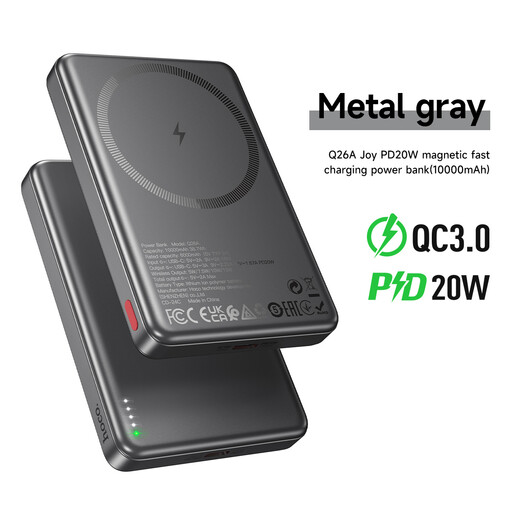 Image unavailable
This magnetic 10,000mAh option is worth considering if attached charging suits the way you use your phone. Confirm wireless charging and magnetic alignment with your phone and case; do not assume magnetic attachment establishes Qi2 certification or a particular charging rate.
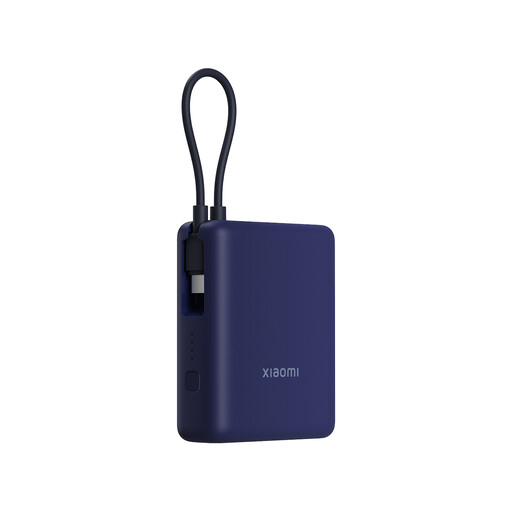 Image unavailable
This 10,000mAh built-in-cable model suits someone who wants a wired option without carrying a separate cable. Its stated 33W rating does not mean every phone will charge at 33W: check your phone’s connector, charging protocol and maximum input.
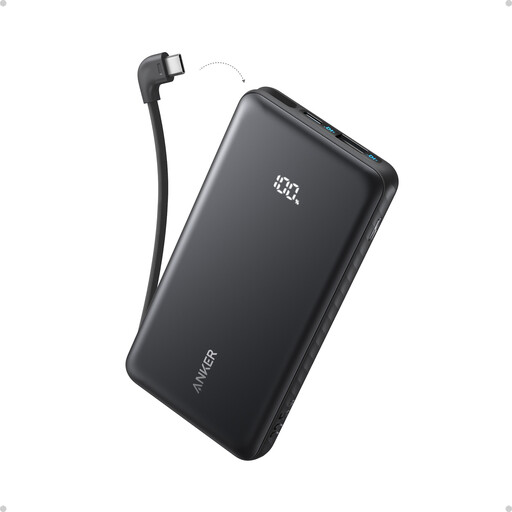 Image unavailable
The built-in USB-C cable may suit you if forgetting a separate cable is a concern. The title states 10,000mAh and 22.5W; check your phone’s accepted wired rate and the bank’s exact model identifier, including any applicable UK recall notice.
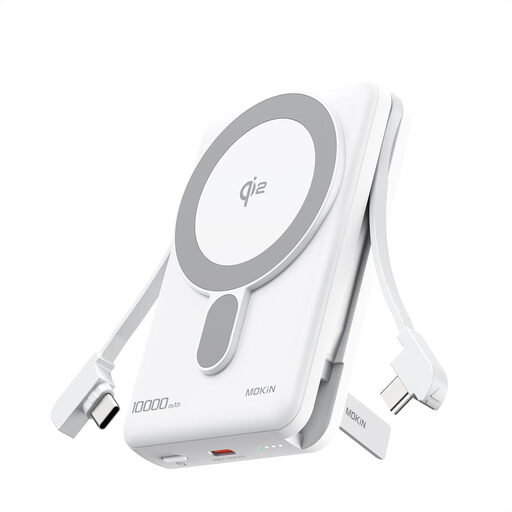 Image unavailable
Consider this 10,000 mAh model if a Qi2-labelled wireless route interests you. Check the exact product’s Qi2 certification, its stated wireless output and your phone’s supported wireless level before relying on a particular charging rate; the 20 W figure in the title does not identify that wireless rate.
No. UK Civil Aviation Authority passenger guidance says to keep power banks in the cabin and never put them in checked luggage. Check your airline’s instructions before travelling.
Check its watt-hour rating against the UK Civil Aviation Authority’s current passenger guidance and your airline’s rules for the specific itinerary. A capacity figure in mAh alone is not enough to make that decision; follow the carrier’s instructions on carriage and onboard use.
No. The phone needs compatible wireless charging, while magnetic attachment also depends on the phone or case and its alignment system. The Wireless Power Consortium says certified products can display the Qi or Qi2 logo; check the bank’s certification and your phone’s supported charging level.
Not necessarily. USB Power Delivery provides a framework for delivering power over a cable, but the rate your phone accepts depends on a compatible arrangement with the cable and power bank. Check the phone manufacturer’s charging specifications as well as the output of the connection you plan to use.
Check the exact model against the UK Office for Product Safety and Standards’ product-safety alerts and recalls, and use a supplier you trust. Stop using a recalled, damaged, swollen or overheating unit; London Fire Brigade warns that damaged, short-circuited, submerged or over-charged batteries can present a fire risk.