
24/7 Customer Support

Free returns

Same-day & Next-day Delivery

Quality Guaranteed

Unlock Your Welcome Offers: FREE Delivery | Up to 80% OFF | Free 30-day JoyPlus trial
Download the APP
Smartphone cameras have become incredibly powerful, but even the most advanced models can't defy the laws of physics. Shaky hands, footsteps and sudden movements can turn a potentially great video into a jarring, unwatchable clip. This is where a phone stabiliser comes in, transforming your mobile into a tool for creating smooth, professional-looking content.
Whether you're a vlogger capturing your daily life, a traveller documenting your adventures or simply want to record clearer family memories, the right stabilising tool is essential. This guide will help you understand the different types available—from a sophisticated phone gimbal to a versatile selfie stick tripod—and help you find a suitable option for your needs.
Navigating the market can be confusing. To make an informed decision, consider these key factors before you buy.
The term "phone stabiliser" covers a range of devices, each designed for different scenarios.
Consider where and how you'll be using your stabiliser. If you're a travel vlogger, a lightweight and foldable model that fits easily into a backpack is crucial. For studio-based work, a slightly heavier, more robust build might be preferable for its added sturdiness. Materials like aluminium offer a good balance of durability and low weight, while high-quality ABS plastics can also provide reliable performance.
For motorised gimbals and tracking mounts, battery life is a critical specification. Look for models that offer several hours of use on a single charge, ensuring they won't run out of power mid-shoot. Some advanced models can even charge your phone while in use.
Also, look for all-in-one solutions that might form a complete vlogging kit for phone. Features like a built-in extension rod, an included remote control or integrated lighting can add significant value and convenience, reducing the amount of extra gear you need to carry.
Here are a few standout options that cater to different types of users, from dedicated content creators to casual videographers.
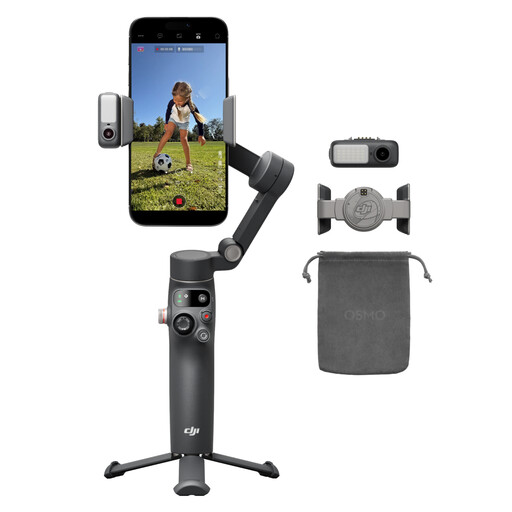
Why It Stands Out: This device is more than just a gimbal; it's a comprehensive filming tool. It integrates robust stabilisation with native tracking, audio reception support and lighting capabilities. Its ability to perform a seamless 360° pan rotation and the inclusion of a built-in extension rod and tripod make it an exceptionally versatile choice for creating dynamic content.
Pros:
Who is it for: Serious content creators, vloggers and travellers who require a high-performance phone gimbal that handles complex shots and demanding filming conditions with ease.
View the DJI Osmo Mobile 8 on Joybuy
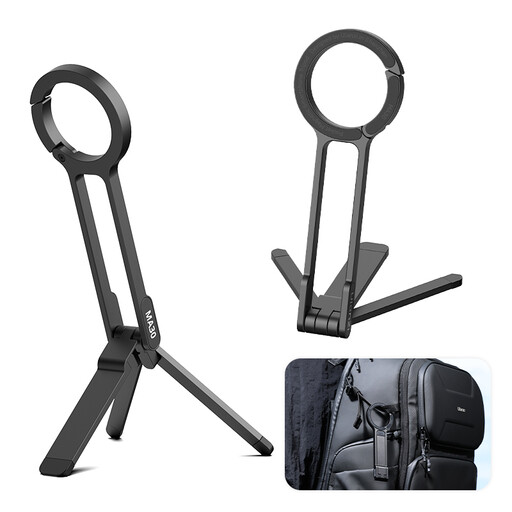
Why It Stands Out: The ULANZI MA30 prioritises portability and convenience above all else. Its clever design combines a magnetic quick-release system with a carabiner mount, allowing you to attach it to a bag or belt loop. Made from lightweight aluminium, this pocket-sized device unfolds into a mini phone tripod stand or a comfortable handgrip in seconds.
Pros:
Who is it for: Travellers, hikers and casual users who need a highly portable and quick-to-deploy solution for stable static shots and selfies without the bulk of a motorised gimbal.
View the ULANZI MA30 on Joybuy
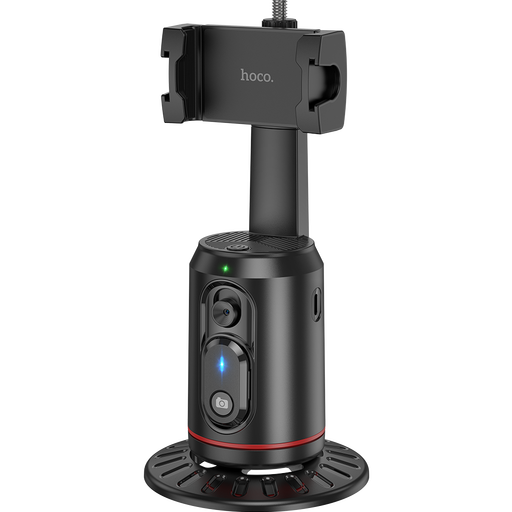
Why It Stands Out: This device is a dedicated auto tracking phone holder that operates without requiring a special app or Bluetooth connection, enhancing ease of use and privacy. It uses AI-driven face tracking and simple hand gestures—an "OK" gesture to start and a "PALM" gesture to stop—to keep you perfectly centred in the shot.
Pros:
Who is it for: Live streamers, online educators and solo video creators who need a simple, reliable hands-free solution to stay in the frame while presenting or demonstrating.
These recommendations cover some of the most popular use cases, but the world of phone stabilisation is vast. If you're looking for different features or want to compare a wider selection of models, there are many other tools available.
Explore our full range of tripod accessories to find the perfect match for your creative needs.
A 2-axis gimbal stabilises for tilt (up-down) and roll (side-to-side) movements. A 3-axis stabiliser adds a third motor to also correct for pan (left-right) movements. This makes 3-axis models significantly better at smoothing out footage while walking, running or performing deliberate camera pans, resulting in a more polished and professional video.
While built-in optical (OIS) or electronic (EIS) image stabilisation is effective at reducing minor hand tremors, it cannot match the performance of a mechanical phone gimbal. A gimbal physically isolates your phone from larger movements, delivering a level of smoothness for walking or action shots that internal stabilisation alone cannot achieve. The two can work together, but a gimbal provides a noticeable step-up in quality.
Most modern phone stabilisers use adjustable clamps designed to hold a wide variety of smartphone sizes and weights. However, it is always important to check the product's specifications for the supported phone dimensions (e.g., width range from 60-90 mm) and maximum weight capacity to ensure your device is compatible.