What to check before choosing
Start by deciding what must be preserved, then confirm the route works with your phone before clearing any local files.
| Priority |
What to check |
Your needs |
| Keep a verified copy |
Check that uploads or transfers have completed; open recent photos and videos from the backup destination; confirm the destination has enough free capacity. |
I want to recover usable phone space without removing the only accessible copy of important photos and videos. |
| Match the backup scope |
Identify whether you need photos only, selected documents, app data, settings or messages. Check exclusions for the exact backup method and phone. |
I need to know whether I am making a media copy or preserving a broader set of phone data. Apple Support distinguishes iCloud and computer backups from direct file copying. |
| Confirm device compatibility |
Check the handset model, connector, operating system, drive format, adapter and data-capable cable. Confirm the exact drive model supports the intended host device. |
I want a drive or cable that can actually transfer files with my phone and computer, rather than one that only shares the same connector shape. |
| Manage cloud capacity |
Calculate storage used by photos, email, files and backups; review renewal, downgrade and account-recovery options; keep secure sign-in details accessible. |
I want my cloud library to remain accessible without unexpectedly reaching a shared storage limit. Google One says its allowance is shared across Gmail, Drive and Google Photos. |
Joybuy product options
Joybuy options for copying phone photos, videos and selected files to portable storage. Check the stated phone compatibility, transfer method and backup scope before treating any drive as a complete device backup.
 No image available
SanDisk Phone Drive USB-C 128GB, Arctic White
A compact option for compatible USB-C iPhone or iPad users who want to copy photos and videos while freeing phone space.
Stated capacity: 128GB. The listing states USB-C compatibility with compatible iPhone, iPad and Mac devices, plus an iPhone and iPad app for backup and file management.
It is not presented for Lightning iPhones. Check whether the app covers the data you need and confirm restored access before deleting local files.
Joybuy
 No image available
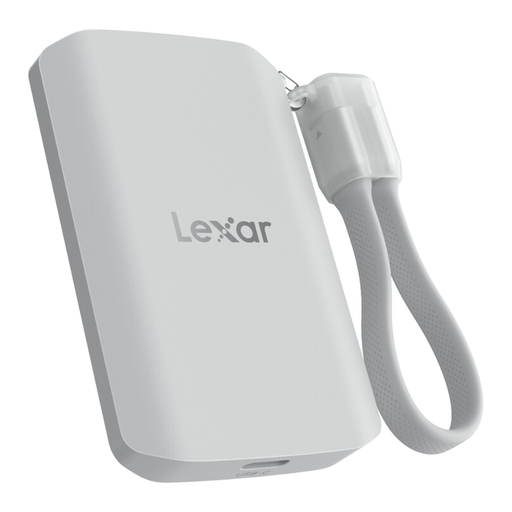
Lexar ES5 Portable SSD 1TB
Designed for users who regularly create large media files and want a compact external SSD for an offline media copy.
Stated capacity: 1TB. The listing states USB 3.2 Gen2x2 performance of up to 2000MB/s read and write, magnetic attachment, IP65 protection and Lexar App media auto backup.
Stated Apple recording support is for iPhone 15 and 16 Pro models, while the stated Galaxy scenario is Galaxy S25. The listing says iCloud backup is not supported.
Joybuy
 No image available
Lexar ES4 Portable SSD Magnetic Set 2TB
A larger local archive option for phone media that can also be moved to a computer.
Stated capacity: 2TB. The listing states USB 3.2 Gen 2 performance of up to 1050MB/s read and 1000MB/s write, compatibility with iPhone 15/16, Android, PC and Mac, and included USB-C and USB-A cables.
The listing says formatting may be required. Check the needed file system for your phone and computer, and do not assume file storage is a complete phone backup.
Joybuy
 No image available
Samsung MU-PE1T0S 1TB USB Type-C SSD
An offline media destination for Android users who also use a Mac or PC for regular transfers.
Stated capacity: 1TB. The listing states USB-C connectivity, Android, Mac and PC support, USB-C to USB-C and USB-C to USB-A cables, optional password software and reformatting guidance.
Check your exact Android handset, version and drive format before purchase. The listing describes file transfer rather than a confirmed complete device-backup workflow.
Joybuy
 No image available
MOVESPEED Dual USB-A and USB-C Flash Drive 512GB
A compact choice for occasional transfers of selected photos, videos and documents between a USB-C phone and a USB-A computer.
Stated capacity: 512GB. The listing states USB-A and USB-C connectors, USB 3.2 Gen 1, and compatibility with Android and USB-C iPhone 15/16 models.
It is not confirmed for Lightning iPhones. Check phone read/write support, the file-management app and drive format before relying on it for transfers.
Joybuy
Questions about phone backup
Should I buy storage before trying phone cleanup?
Not always. First identify what is using space, such as downloaded media, unused apps or cached data. If photos are the main issue, remove local copies only after checking they are backed up and accessible.
Does Google Photos free up Android phone storage?
Yes, Google Photos can remove device copies after they have been safely backed up. Google Photos says the files remain viewable there, but they may no longer appear in the phone's built-in gallery or be available offline.
Can a USB flash drive create a complete backup of my phone?
Do not assume so. Apple Support describes external storage as a way to copy files through supported apps, while Android Help describes USB transfer as moving files. Check the exact phone, app, drive format and cable before using a USB drive as a file-copy destination.
What should I check before buying an external SSD for a phone?
Check the exact phone connector, whether an adapter is needed, whether the cable carries data, the drive's supported file system, the phone operating system and the specific drive model's host compatibility. A USB-C connector alone does not confirm full compatibility.
How do iPhone iCloud and computer backups differ?
Apple Support states that iCloud backup is encrypted and stored in iCloud, while computer backup is stored on a Mac or PC and can be encrypted. Both methods have exclusions; for a computer backup to include Health, Activity and Keychain data, encryption must be enabled and its password retained.


