
24/7 Customer Support

Free returns

Same-day & Next-day Delivery

Quality Guaranteed

Unlock Your Welcome Offers: FREE Delivery | Up to 80% OFF | Free 30-day JoyPlus trial
Download the APP
Modern smartphones pack incredible camera technology, but achieving truly steady, professional-looking photos and videos often requires more than just a steady hand. Whether you're an aspiring content creator, a vlogger capturing daily life or simply want better family photos, a wobbly frame or an awkward angle can undermine your efforts.
Finding the right tool to hold your phone steady can feel overwhelming. The market is filled with everything from simple stands to complex stabilisers. This guide is designed to help you understand the key features to look for in a phone tripod stand and provide some practical recommendations to suit different needs and budgets.
Before diving into specific products, it's helpful to consider what features matter most for your intended use. Here are a few key points to guide your decision.
The first consideration is the balance between a sturdy base and a compact, travel-friendly design. A lightweight selfie stick tripod is excellent for carrying in a backpack on a day out, allowing for quick setup for group photos or vlogging on the go. Conversely, a more substantial camera and phone tripod with a wider base and heavier construction will offer superior stability, which is crucial for long-exposure photography, time-lapses or recording in windy conditions.
Think about the type of content you create. For static shots, such as live streaming from a desk, recording tutorials or taking timed family portraits, a standard extendable phone stand or phone holder for video recording is perfectly adequate. However, if you plan to film while walking, running or capturing action shots, a phone gimbal stabiliser is a worthwhile investment. These devices use motors to counteract your movements, resulting in exceptionally smooth, cinematic footage that a static tripod cannot achieve.
Consider the angles you want to capture. A simple tabletop tripod is fine for video calls, but for full-body shots or filming over a crowd, you'll need a stand with significant height adjustment. Look for models with a telescopic centre column and secure leg locks. Additionally, check the mounting system. Most use a standard 1/4-inch screw, which offers great versatility for attaching not just phone clips but also dedicated cameras, ring lights or microphones, effectively creating a complete vlogging kit for your phone.
Here are a few options we've selected that cater to a range of creative needs, from professional vlogging to versatile home use.
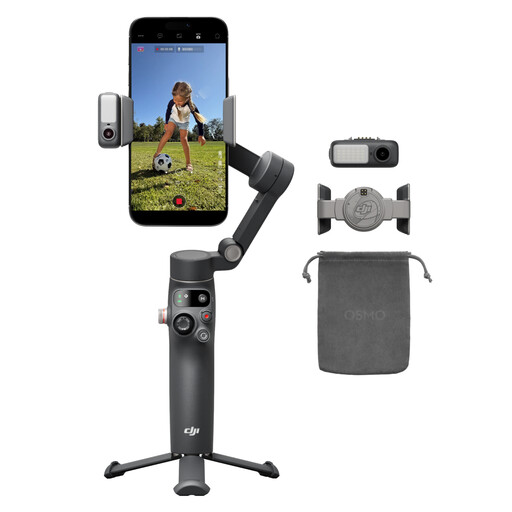
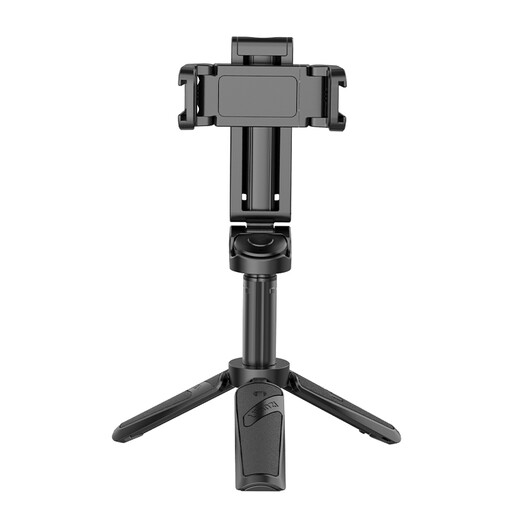
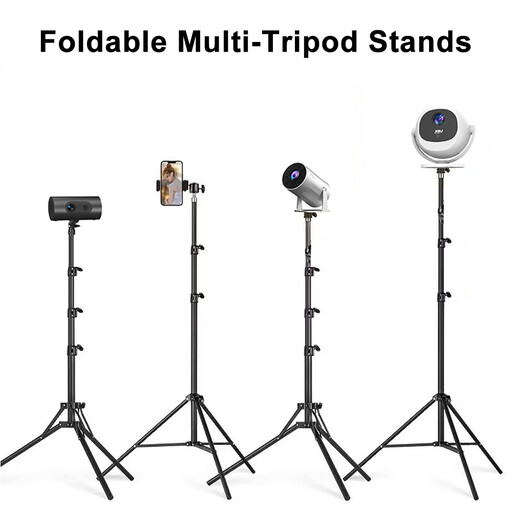
1.7 m (5.58 ft) Projector Mount with Phone Clip | 360° Rotating Gimbal, Foldable Stable Tripod
If these recommendations aren't quite what you're looking for, there are many other styles and models available. To see a wider selection of stands, mounts and other filming accessories, feel free to explore our full range of mobile phone with accessories.
A phone tripod is a static stand with three legs designed to hold your phone completely still. It is ideal for stationary shots, time-lapses or group photos. A gimbal is a motorised stabiliser that actively counteracts movement on multiple axes (pan, tilt, roll). It is designed for capturing smooth, shake-free video while you are walking or moving.
Not directly. Most traditional camera tripods use a 1/4-inch screw mount. To attach a phone, you will need a separate phone holder or clamp adapter that screws onto the tripod head. Many modern tripods designed for phones, like the ones featured above, come with this phone clip included.
For vlogging, consider your style. If you film mostly while walking ("walk-and-talk" style), a phone gimbal stabiliser is highly recommended for smooth footage. If you primarily film from a fixed position (e.g., at a desk or in a studio), a sturdy and extendable phone stand with good height adjustment will be more suitable. For travel vloggers, a lightweight and compact selfie stick tripod offers the best balance of portability and function.