Who this suits

Travel and family photographers hitting phone-camera limits

For people who value phone convenience but regularly photograph indoor family scenes, evenings, travel details or portraits where low-light image quality and background blur matter. Which? notes that dedicated cameras can offer more creative flexibility where phones struggle.

Wildlife and outdoor sport viewers who need reach

For photographers framing distant birds, animals or field sport who need optical reach and steadier handling instead of relying mainly on cropping or digital enlargement. PCMag UK identifies bridge cameras as one option for wildlife and field sports.

Hobbyists building a flexible camera system

For photographers willing to manage lenses, cards, spare power and protection in return for choosing focal length and aperture for different scenes.

Buying priorities

Compact camera

Choose it when: you want a dedicated camera that is easier to carry than a lens system and do not want to change lenses.

Consider: fixed-lens compacts differ widely in sensor size and zoom range, so compare the exact model rather than assuming every compact improves low-light results over a premium phone.

Bridge camera

Choose it when: wildlife, outdoor sport or travel viewpoints call for wide and distant framing from one body without lens changes.

Consider: a fixed superzoom is convenient, but long focal lengths do not replace a wide-aperture lens in dim scenes.

Mirrorless camera

Choose it when: evening events, moving subjects and deliberate control are recurring priorities, and you can select lenses for each task.

Consider: lenses, cards, spare power and carrying protection add to the system you need to manage.

Priority What to check Your needs
Low-light control Check the maximum aperture at the focal length you will use, plus exposure controls and whether the body and lens suit the intended scene. A wider aperture can pass more light and help support faster shutter speeds. I want to photograph family gatherings, evenings or dusk scenes without relying on a phone when light is limited.
Optical reach Compare optical zoom or telephoto focal length, handheld stabilisation and the exact model’s autofocus and burst capability for active subjects. I need to frame birds, wildlife, field sport or distant travel details through the lens rather than mainly by cropping.
Fixed lens or system Decide whether one built-in lens covers your usual scenes. For a system camera, confirm the body mount, compatible lenses and any adapter requirement. I want either a straightforward all-in-one camera or the freedom to use brighter and longer lenses for different subjects.
Working kit Check the approved memory-card format and recording requirements, compatible battery and charger, and a bag that fits the equipment you will carry. I need the camera to remain practical for travel, longer days out or repeated shooting rather than only occasional snapshots.

Common buying pitfalls

  • Treating maximum zoom as a complete answer to low-light photography

    Long optical reach helps frame distant subjects, but the maximum aperture can become smaller at the telephoto end. Canon UK explains that wider apertures pass more light and can support faster shutter speeds; Panasonic’s FZ82D specification, for example, lists an F2.8–5.9 aperture range across its zoom.

    For dusk wildlife, indoor sport or evening family scenes, check the maximum aperture at the focal length you expect to use. Consider whether a mirrorless body with a faster compatible lens better fits the scene.

  • Buying a lens before confirming mount compatibility

    Camera mounts are system-specific. Canon UK states that EF DSLR lenses require an adapter for use with EOS R mirrorless cameras.

    Record the exact body model, lens mount and any adapter before checkout, then confirm the pairing in the manufacturer’s current compatibility information.

    An incompatible lens may require a separately purchased adapter or may not work with the intended body.

  • Budgeting only for the camera

    Card speed and format can constrain burst shooting and 4K video, while power and carrying protection affect whether a camera remains practical on a full day out.

    Check the camera’s approved card formats and recording requirements, then plan the minimum usable kit rather than the camera alone.

    The working setup may include camera-matched memory cards, spare batteries, chargers and a protective bag or case.

  • Using damaged batteries or unsuitable chargers

    London Fire Brigade advises that lithium batteries, including those used in cameras, can present a fire risk if damaged, over-charged, short-circuited or submerged.

    Use the supplied or a genuine compatible charger, protect batteries from damage and extreme temperatures, stop charging a swollen battery, and follow manufacturer and airline instructions when travelling.

Relevant brand references

Canon

A relevant route for photographers considering EOS R mirrorless bodies and RF lenses, especially where aperture choice in low light and future lens expansion matter.

  • Canon UK explains that wider-aperture lenses pass more light and can support faster shutter speeds in low light.
  • EF DSLR lenses are not compatible with newer EOS R mirrorless bodies without an adapter, according to Canon’s lens guidance.

Nikon

A mirrorless-system option for photographers looking at Z-mount lenses, including faster lenses for darker scenes and telephoto options for distant subjects.

  • Nikon UK says a fast, wide-aperture lens can help address noise risk from high ISO and blur risk from slow shutter speeds.
  • Results still depend on the selected body, lens, subject movement and exposure settings.

Panasonic LUMIX

A fixed-lens and bridge-camera route for buyers who prefer all-in-one optical reach rather than building an interchangeable-lens kit.

  • Panasonic’s UK FZ82D specification lists a 20–1200 mm-equivalent 60x optical zoom and optical image stabilisation.
  • Its stated F2.8–5.9 maximum aperture means low-light suitability should be checked against the focal length and scene.

Sony

A relevant brand for buyers comparing fixed-zoom bridge cameras with Alpha interchangeable-lens systems.

  • PCMag UK’s July 2026 bridge-camera roundup selected the Sony RX10 V for its bridge-camera category, citing its Type 1 sensor, 24–600 mm F2.4–4 zoom, autofocus and 30 fps Raw capture.
  • Sony UK lists both full-frame and APS-C interchangeable-lens cameras; the suitable body and lens depend on the intended use.

Joybuy camera options

Joybuy product options for compact and mirrorless photography, including choices for travel, family scenes, creative shooting and daylight distant subjects.

Sony Alpha ZV-E10 II K APS-C mirrorless camera with 16–50 mm Power Zoom lens

Sony Alpha ZV-E10 II K APS-C with 16–50 mm f/3.5–5.6 Power Zoom lens

An interchangeable-lens option for family scenes, travel and creative shooting, with stated Eye AF for people, animals and birds and 11 fps continuous shooting.

  • 26 MP stills and 4K60p video are stated.
  • The supplied 16–50 mm f/3.5–5.6 lens is a general-purpose starter lens; check the focal length and aperture needed for low light or distant subjects.
  • A memory card is not included. Confirm the required SD-card specification for intended burst or video use.
Joybuy
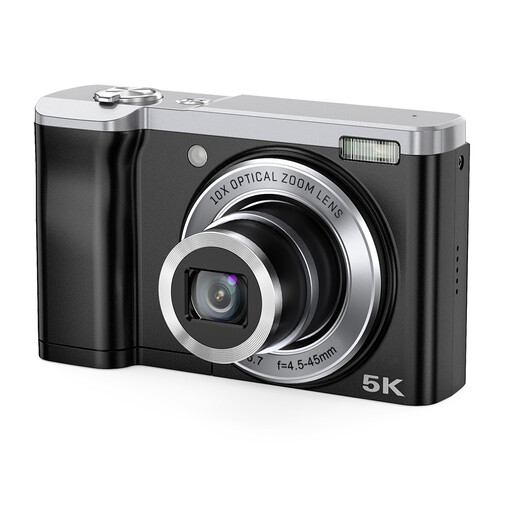
Songdian 5K digital camera with 10x optical zoom

Songdian 5K Digital Camera, 56MP, 10x Optical Zoom

A fixed-lens option for daylight travel details and outdoor subjects where the stated 10x optical zoom can help with framing.

  • The listing states 5K video at 30 fps, electronic image stabilisation and a built-in 6-axis gyro.
  • Check the lens aperture and sensor details if indoor, dusk or night photography matters.
  • Confirm autofocus, burst performance, compatible memory cards, battery runtime and charging requirements before a full-day outing.
Joybuy
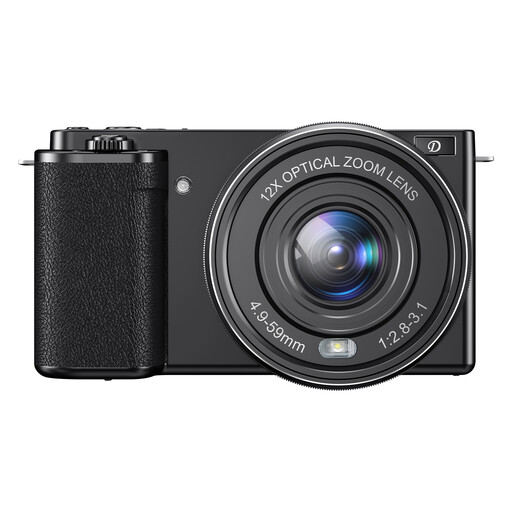
Komery W6 digital camera with 12x optical zoom and Wi-Fi

Komery W6 4K Digital Camera, 12x Optical Zoom, Wi-Fi

A fixed-lens choice for distant daytime subjects and everyday image sharing, with stated 12x optical zoom and Wi-Fi connectivity.

  • The listing states 4K video and 64MP.
  • Check whether stabilisation, lens aperture, sensor characteristics and autofocus fit handheld telephoto, low-light or moving-subject use.
  • Confirm memory-card requirements, battery runtime and the compatible charger before buying.
Joybuy

Frequently asked questions

Will a dedicated camera always beat a phone in low light?

No. A dedicated camera is most useful when you repeatedly need lower-noise low-light images, optical background blur, manual control or a lens suited to the scene. Which? notes that cameras can capture more light and show less noise in low light, but the exact body, lens aperture, shutter speed and subject movement still affect the result.

Should I choose a bridge camera or a mirrorless camera for wildlife and sport?

Choose a bridge camera when you want substantial optical reach in one fixed-lens body without swapping lenses. Choose mirrorless when you are prepared to carry compatible lenses so you can select a faster lens for darker scenes and a telephoto lens for distance; check autofocus performance on the exact model for fast-moving subjects.

What extras should I plan for before using a dedicated camera?

Confirm the required memory-card type and minimum speed in the exact camera manual, especially for burst shooting or 4K video. Plan for a compatible spare battery for longer days and a padded bag or case that fits the camera, lenses and accessories you will carry.

Can I use existing DSLR lenses on a new mirrorless body?

Sometimes, but not automatically. Canon UK says EF DSLR lenses are not compatible with EOS R mirrorless bodies unless you use a mount adapter. Check the exact body mount, lens version, adapter compatibility and any limitations before relying on older lenses.

Can I take a camera on a flight from the UK?

Usually, yes: GOV.UK says camera equipment can usually be taken in hand and hold luggage. Check restrictions for particular batteries and confirm requirements with your airline when you are unsure.