High-volume archive organisers
If you repeatedly rename files, add metadata and navigate folders at a desk, key access and shortcuts may shape your choice more than a small keyboard footprint.


For long sessions naming files and navigating an archive at a fixed desk, consider a full-size or extended keyboard if you rely on its key arrangement; choose a compact, programmable layout when space and custom shortcuts matter more. If comfort is the priority, assess the whole workstation rather than expecting a keyboard alone to resolve discomfort. Check the exact UK layout and device compatibility before choosing either route.
If you repeatedly rename files, add metadata and navigate folders at a desk, key access and shortcuts may shape your choice more than a small keyboard footprint.
If you move between a computer, tablet or phone, check switching and connection options against the devices you actually use. A compact board may also fit a smaller workspace.
If extended archive sessions bring discomfort, consider keyboard shape alongside your chair, screen, desk and work routine. The Health and Safety Executive advises assessing the wider display-screen workstation.
Start with the keys and shortcuts your photo software requires, then weigh desk space, device switching and comfort. Confirm the exact layout and compatibility of the model you choose.
| Concern | What to check | Who this matters to |
|---|---|---|
| Repeated archive commands | Check whether your photo application supports the shortcuts you want and whether the keyboard’s configuration software works with your operating system. | If I repeatedly name files and enter metadata, I want commands I can use without interrupting the task. Around 31% of consumers might put that workflow first. |
| Desk space and device switching | Compare the board’s dimensions and key arrangement; confirm its connection methods and the number of devices it can switch between. | With a small desk or archive tasks spread across devices, I need a keyboard that fits and switches conveniently. For around 31% of consumers, this could be the primary concern. |
| Long-session comfort | Consider keyboard shape and positioning alongside screen, chair and desk arrangement; allow for any adjustment to a split layout. | During extended sessions, I care about how the whole workstation fits me, not just the shape of the keys. Around 23% of consumers might prioritise comfort. |
| Layout and compatibility | Verify UK-ISO or British-English keys on the exact variant; for Apple Touch ID, check the Mac chip and macOS version. | If familiar symbol placement or Touch ID is essential, a mismatch could disrupt my usual workflow. This might be the leading need for around 15% of consumers. |
The physical Enter and left Shift keys differ, which can interrupt familiar typing during repeated filename entry.
Check that the exact variant is labelled UK-ISO or British English rather than relying on a generic model name.
Keyboard shape is only one part of a workstation. The Health and Safety Executive also addresses display-screen work in terms of the wider setup and work routine.
Review your screen, chair, desk and breaks as well as the keyboard. For UK employees who use display-screen equipment daily for continuous periods of an hour or more, the Health and Safety Executive says employers must assess the workstation.
A 75% layout and an extended layout arrange keys differently; the latter may offer dedicated navigation controls and a numeric keypad.
List the keys and shortcuts you use for ratings, filenames and navigation, then inspect the exact layout before choosing a smaller board.
Apple specifies a Mac with Apple silicon running macOS 15.1 or later for the Magic Keyboard with Touch ID discussed here.
Check your Mac and the precise keyboard variant if Touch ID is part of your decision.
Its MX Keys S and ERGO K860 illustrate different approaches to desk-based archive work: programmable actions and device switching, or a curved split layout.
The K3 Max UK-ISO is a compact option for consumers interested in remapping and multiple connection methods.
Apple offers British-English Magic Keyboard with Touch ID variants, including an extended model with a numeric keypad.
These keyboards cover split, full-size and compact layouts for different photo-archive setups. Compare their stated keys and connections with your own workflow; a similar shape does not establish the same shortcut or software support.
 No image available
Consider this split-layout option if keyboard shape is central to your desk setup; assess the rest of the workstation too.
The title specifies wireless operation and a padded wrist rest. Check the physical key layout and whether the configuration software supports shortcuts in your photo application.
 No image available
A full-size layout is worth considering if you organise files mainly at a fixed desk and prefer a larger key arrangement.
The title identifies a UK wireless model. Confirm the precise key shapes and any shortcut requirements before buying.
 No image available
Consider this model if you want a wireless keyboard for archive typing and plan to use Bluetooth.
The title identifies a white UK variant. Check its exact physical layout and the keys you use to navigate your photo software.
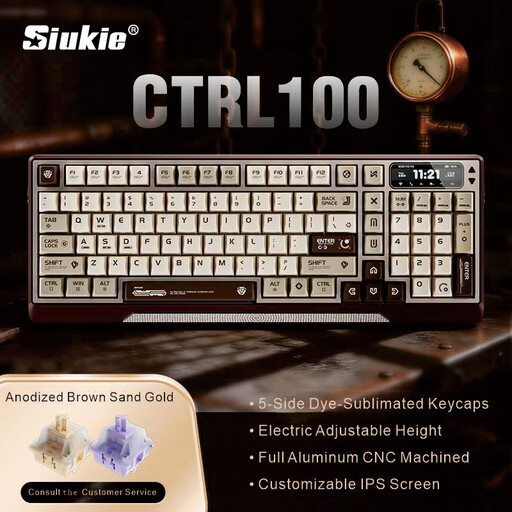 No image available
The 96% format may appeal if you want a different desk footprint from a conventional full-size board, but its stated US QWERTY layout needs particular attention if you expect UK keys.
The title specifies HMX Cream Taro switches, a motorised lift and wired, Bluetooth and 2.4 GHz connection modes. Keep fingers and loose objects clear while adjusting the lift, and check whether the model supports the shortcuts you need.
 No image available
Its 75% layout is an option to examine for a smaller desk, provided its key arrangement works for your archive navigation.
The title specifies wired, Bluetooth and 2.4 GHz connections, RGB backlighting and PBT keycaps. It also specifies a US layout; check symbol placement and shortcut support if you normally use UK keys.
Choose a full-size or extended layout if its key arrangement helps you navigate and enter metadata during desk-based sessions. If space matters more, a compact layout can suit the task as long as it retains convenient access to the keys you use.
Yes, when your photo application accepts the shortcuts you repeatedly use and the keyboard can be configured for them. Logitech describes Smart Actions for MX Keys S, while Keychron lists QMK/VIA remapping for K3 Max; check the relevant software and operating-system support for your setup.
Look for UK-ISO or British English on the exact variant, then inspect its physical keys and symbol placement. Logitech notes that ISO and ANSI differ in their Enter and left Shift key shapes, so a family name alone may not settle the question.
A split shape alone cannot establish that it will resolve discomfort. The Health and Safety Executive addresses display-screen risks through the wider workstation and work environment; assess your screen, chair, desk and work routine alongside keyboard fit.
For the Magic Keyboard with Touch ID models discussed here, Apple specifies a Mac with Apple silicon running macOS 15.1 or later. Check the precise model too, particularly if you want the extended numeric-keypad layout.