Choose a thumb-operated trackball if the main problem is too little room to move a mouse beside the keyboard. A compact conventional mouse still needs movement space but may suit frequent scrolling and portable use; consider a vertical mouse when you prefer an upright grip for long sessions, provided its size and shape suit your hand. Check connection, computer compatibility and scrolling controls before choosing.
Who is this for?
Small-desk photo organisers
If the keyboard and storage equipment leave little room to move a mouse, a stationary thumb trackball is worth considering. Logitech describes the ERGO M575S as a thumb-controlled option for small or busy setups; the different pointing technique still has to suit you.
Long-session archive curators
If tagging, renaming and reviewing images takes extended periods, hand fit and desk arrangement matter alongside mouse shape. The Health and Safety Executive advises considering the wider display-screen workstation and taking short, frequent breaks.
Multi-device photo workers
If you organise files across a laptop and another compatible device, consider how you will switch connections and move through long lists. Logitech describes the compact MX Anywhere 3S as offering multiple-device connection and two scrolling modes.
What matters when choosing?
Start with your main constraint: room to move, hand fit or navigation through the archive. Connection and power arrangements then help narrow down a particular model.
Thumb-operated trackball
Consider it: When the clear area beside your keyboard is too narrow for repeated mouse movements.
Trade-off: The device stays in place, but thumb-controlled pointing takes adjustment if you are used to moving a mouse.
Compact conventional mouse
Consider it: When you have some clear surface and regularly switch between detailed selections and long folder lists.
Trade-off: A compact body does not remove the need for movement space; check the wheel behaviour on the exact model.
Vertical mouse
Consider it: When long sorting sessions make an upright grip more appealing and the shape fits your hand.
Trade-off: Check its footprint, handedness and button reach; a different mouse does not replace a suitable workstation setup.
| Concern |
What to check |
Who this matters to |
| Movement space |
Measure the clear area beside the keyboard. If it is very narrow, consider whether thumb-controlled pointing would suit you. |
I need to reach folders and thumbnails without repeatedly shifting a mouse around other equipment; around 31% of consumers would put movement space first. |
| Long-session comfort |
Check hand size, handedness and button reach, as well as the position of the mouse within your workstation. |
When tagging images for long periods, I care most about how the grip and desk setup feel over time; comfort would lead the choice for roughly 25% of consumers. |
| Archive navigation |
Look for controllable pointer speed and scrolling that suits both individual filenames and long lists. |
I move between precise file selections and lengthy folders, so I want the controls to suit both tasks; approximately 25% of consumers would make navigation their primary concern. |
| Simple setup |
Confirm Bluetooth support or a suitable USB port, whether a receiver is included, the battery type and operating-system compatibility. |
For occasional sorting, I mainly want a mouse that connects to my computer without complicating its everyday use; setup would come first for around 19% of consumers. |
What should you avoid?
-
Choosing by DPI alone
A high sensitivity setting can reduce physical pointer travel, but a pointer that moves too quickly may make small controls and filenames harder to select comfortably.
Check whether you can adjust pointer speed, and consider grip and scrolling alongside the sensor figure. Logitech lists 8K DPI for the MX Anywhere 3S, but that is not a requirement for ordinary file sorting.
-
Assuming every vertical mouse fits the same hand
Shape and handedness affect whether the buttons and grip are comfortable to use. Logitech positions Lift for small-to-medium hands and offers a separate left-handed version.
Check the exact size and handedness before selecting a shaped mouse, rather than relying on its ergonomic description.
-
Overlooking the connection and power arrangement
HP explains that a 2.4 GHz wireless mouse uses a USB receiver, whereas Bluetooth connects through compatible built-in hardware. The receiver needs an available port; battery arrangements also differ by model.
Check your computer’s ports and Bluetooth support, whether the receiver is included, and whether you prefer replaceable batteries or charging.
For a mouse powered by replaceable batteries, keep replacements available if an archive session may run for a long time.
-
Treating the mouse as the whole workstation solution
The Health and Safety Executive considers workstation arrangement and work routines relevant to display-screen work; changing a mouse alone may leave an awkward desk setup unchanged.
For prolonged sessions, keep the mouse in line with your elbow where practicable and take short, regular breaks or change activity.
Brands to consider
Logitech
Its relevant lines cover a stationary thumb trackball, compact conventional mice and vertical shapes, giving small-desk photo organisers different ways to prioritise movement space, navigation or grip.
- Logitech lists thumb control for the ERGO M575S, two scrolling modes for the MX Anywhere 3S, and a 57° vertical shape for Lift.
- Check the precise model and variant for hand fit, connection and computer compatibility; a manufacturer’s description of shape does not establish personal comfort.
HP
A reference point for a straightforward wireless mouse when photo sorting is occasional and specialised controls are not the main priority.
- HP lists the 235 Slim Wireless Mouse with a 2.4 GHz USB-A connection and sensitivity of up to 1600 DPI.
- Check that the exact model’s receiver, port requirement and operating-system compatibility suit your computer.
Dell
Its Mobile Wireless Mouse MS3320W is another named option to consider alongside a Dell computer.
- Check the MS3320W specification sheet, included receiver and compatibility against your archive computer before choosing it.
Joybuy product choices
These conventional mice are options to assess if you have enough clear surface to move one. Compare their connection requirements, shape and controls against your photo-archive routine; a small footprint alone does not make a mouse stationary.
 No image available
Logitech MX Master 3S Ergonomic Mouse, Black
Consider this conventional mouse if you have room for mouse movement and want to assess its shape and scrolling controls for long archive lists. Check hand fit and the clear surface available beside your keyboard.
View on Joybuy
 No image available
HOFOTEK M311 2.4G+BT Silent Office Mouse, White-Grey (1×AA)
Consider it if your computer can use its stated 2.4G or BT connection and you want adjustable DPI for pointer control while sorting files. Its name specifies one AA battery; check the exact connection accessories and wheel controls before ordering.
View on Joybuy
 No image available
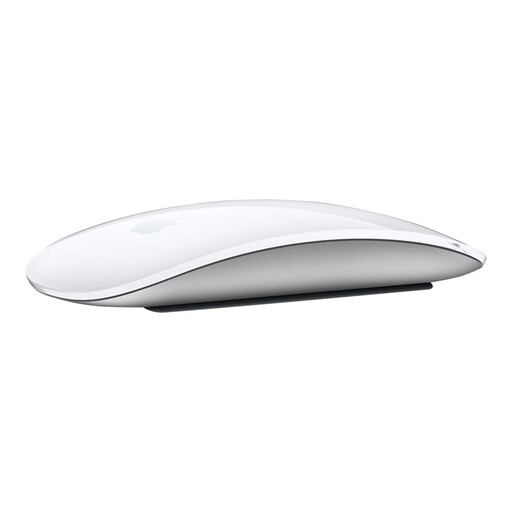
Apple Magic Mouse, White Multi-Touch
Consider its Multi-Touch surface if touch-based navigation appeals to you for photo folders. Check compatibility with your archive computer and whether its low-profile shape suits your grip; it still needs space to move.
View on Joybuy
 No image available
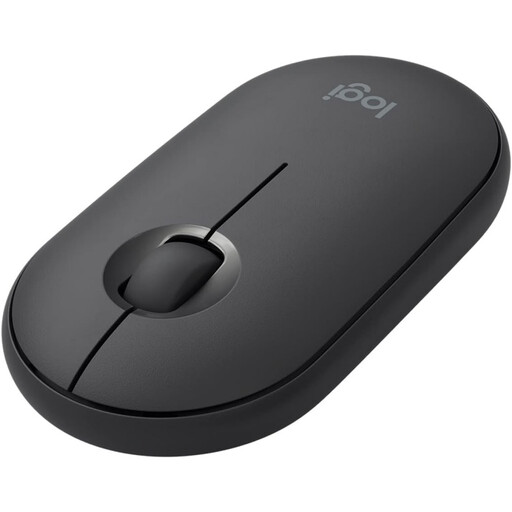
Logitech Pebble Mouse, Black
Consider this conventional mouse if you want to assess a simpler option for occasional file sorting. Confirm the connection method for this exact variant, its dimensions and its wheel controls if ports, desk space or long-list scrolling are important to you.
View on Joybuy
Questions about choosing
Is a trackball useful when there is barely room for a mouse?
Yes, a thumb-operated trackball is worth considering when movement space is the main constraint. Logitech says the ERGO M575S can stay in place while you control the pointer with your thumb; allow time to get used to pointing differently.
Should I choose Bluetooth or a USB receiver?
Choose according to your computer’s connections and the exact mouse model. HP explains that Bluetooth uses compatible built-in hardware, while a 2.4 GHz wireless mouse uses a receiver that occupies a USB port; check whether the required receiver is included.
Will a vertical mouse address discomfort during long sorting sessions?
A vertical mouse may suit someone who prefers an upright grip, but it is not a complete answer to discomfort. Logitech describes Lift’s 57° shape for small-to-medium hands; the Health and Safety Executive also advises considering the whole workstation and taking breaks or changing activity.
What should I do with an old mouse?
Check the electrical-equipment collection or take-back arrangements available for your old mouse. GOV.UK describes the UK Waste Electrical and Electronic Equipment rules as measures intended to reduce electrical waste sent to landfill or incineration through recovery, reuse and recycling.


