What matters when choosing?
Choose how the copies will be made and recovered before comparing drive capacity or connection types. Cloud storage, removable media and a combination of the two address different parts of that decision.
Cloud backup
Choose it when: You want recent copies made automatically and can use the service on the devices you intend to restore.
Keep in mind: Uploads depend on connectivity and account access, while a synchronised photo library may carry deletions across devices.
Removable storage
Choose it when: You need a local copy, whether on an external drive for a larger library or on USB or SD media for selected files.
Keep in mind: You must make the copies, check that they can be restored and store the media safely between uses.
Cloud plus a disconnected copy
Choose it when: Photos or documents are irreplaceable and you need both recent copies and a separate recovery route.
Keep in mind: Both routes need occasional checks, and the removable copy must be disconnected between backup sessions to provide that separation.
| Concern |
What to check |
Who this matters to |
| Automatic, recent copies |
Check which files are backed up automatically and how to restore them on a replacement device. |
If my photos are mainly on my phone, I need new ones copied without remembering a manual task. Around 36% of consumers put automatic, recent copies first. |
| Recovery after deletion or damage |
Check whether deletions reach the stored copy and whether you can restore a test file; keep removable media disconnected between uses. |
For family photos I cannot replace, I need a copy that survives a mistaken deletion or a problem with the original device. Roughly 29% of consumers make recovery resilience their primary concern. |
| Capacity and device fit |
Allow room for the library to grow, then check the intended device's port, cable and file-system requirements. |
With a large computer library, I need space for the files and a drive that works with the computer I use. Around 21% of consumers prioritise capacity and compatibility. |
| Offline copies of selected files |
Decide which files need copying and check that the intended device can read the USB or SD media. |
When dependable uploads are not available, I need a separate local copy of selected documents or photos. About 14% of consumers put this offline, selected-file need first. |
External drives on Joybuy
These portable SSDs and hard drives offer local-copy options for phone or computer files. Match the capacity, connection and backup routine to your devices; a drive does not by itself provide the cloud copy discussed above.
 No image available
Samsung MU-PG4T0B 4 TB portable SSD
Consider this for a large local copy of photos, videos and documents. It has 4 TB of stated capacity and a USB Type-C, USB 3.2 Gen 2x2 connection; check the intended device and cable before relying on the interface's rated speed.
View on Joybuy
 No image available
Western Digital My Passport Ultra for Mac 5 TB portable hard drive
Consider this for a Mac-centred local archive or computer backup routine. The stated capacity is 5 TB; if it will also be used with Windows, check the file-system and driver requirements before buying. Configure the backup and test a restore.
View on Joybuy
 No image available
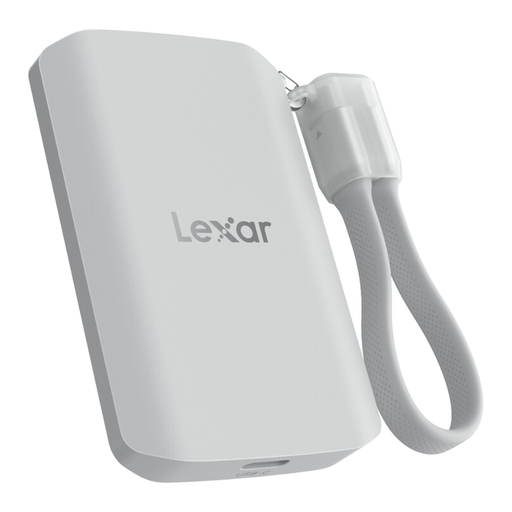
Lexar ES5 1 TB portable SSD
Consider this for an additional local copy in a compatible phone or computer workflow. The stated capacity is 1 TB. Check the exact phone and case fit, the required format, and what the backup app copies and restores before relying on it.
View on Joybuy
 No image available
Samsung MU-PG2T0B 2 TB portable SSD
Consider this for a portable local copy of a computer or compatible Android-device library. It has 2 TB of stated capacity and a USB Type-C, USB 3.2 Gen 2x2 connection. Check host and cable support, then set up and test the backup routine you intend to use.
View on Joybuy
 No image available
Western Digital Elements Portable 4 TB USB 3.0 hard drive
Consider this for a local computer archive of photos, videos and documents. The stated capacity is 4 TB and the connection is USB 3.0. Check the intended computer's connector and format requirements, particularly if it is not a Windows device, and keep the drive protected from physical shocks.
View on Joybuy
Common questions
Is cloud photo syncing the same as a separate backup?
No, not when changes or deletions can reach the only stored copy. Apple says iCloud Photos items are not duplicated in iCloud Backup, while Apple and Google describe deletion behaviour affecting connected devices; keep another recoverable copy of irreplaceable files.
How much cloud storage should a household allow for?
Start with the space already used by photos, videos, documents and any device backups, then allow room for growth. Check what the intended account includes and which files will actually be uploaded before choosing its storage capacity.
Can an iPhone copy files to an external drive or SD card?
Yes, an iPhone can access supported external storage through a compatible connection or adapter. Apple specifies a supported file format and a single data partition, and notes that an external hard drive may need its own power or a powered hub; check the exact iPhone and storage setup before buying.
How can a Windows user make external-drive backups regularly?
Windows File History can make regular copies to an external drive or network location, according to Microsoft. Configure it for the files you need, check whether important folders outside the selected locations are included, and test restoring a file.
Should an external backup drive stay plugged in?
Disconnect it between backup sessions if you rely on it as a separate copy against malware affecting the computer. The National Cyber Security Centre cautions that connected backup devices can also be affected, so safely eject the drive after copying and store it separately.


