Who needs which approach?

Space-limited gallery builders

If your keyboard, laptop stand or photo materials leave little clear surface, compare a compact mouse with a stationary trackball. The deciding question is whether there is still enough room to move a conventional mouse.

Frequent gallery browsers and organisers

If you move through long albums or wide image layouts, consider how the scroll wheel and controls work in your gallery software. Extra navigation controls may come with a larger mouse.

Comfort-first desk users

If repeated mouse use makes hand fit a priority, compare shapes as well as your desk setup. A vertical mouse or trackball changes how you control the pointer, so check whether that technique suits your work.

What matters when choosing?

Compact conventional mouse

Choose it when: You want familiar pointer movement and have a small but usable clear area beside the keyboard.

Trade-off: A smaller body still has to travel across the desk.

Stationary trackball

Choose it when: Keeping the device in one place matters more than retaining conventional mouse movement.

Trade-off: Thumb- or finger-controlled pointing takes adjustment, particularly for detailed placement.

Vertical mouse

Choose it when: The shape fits your hand and you want to assess a different grip for repeated desk use.

Trade-off: It still needs a clear surface for movement and does not replace a suitable workstation setup.

Full-size productivity mouse

Choose it when: Frequent movement through horizontal image strips makes a dedicated thumb wheel useful.

Trade-off: Check its larger body against both your available space and your hand size.

ConcernWhat to checkWho this matters to
Desk space Measure the clear area beside your keyboard with photo materials and cables in place. If mouse movement is obstructed, consider stationary control. With prints and a keyboard taking up the surface, I need space for the work itself rather than for sweeping a mouse around. Roughly 29% of consumers put desk space first.
Gallery navigation Check for controlled and fast scrolling; consider horizontal scrolling if your software uses wide strips or timelines. When moving through long albums, I want to browse quickly but still stop at the right image. About 36% of consumers prioritise navigation and control.
Hand fit and comfort Check handedness, hand-size guidance, reach and desk height. Assess a new mouse alongside the rest of your workstation. During repeated desk use, I need a shape I can handle comfortably without overlooking my chair, screen and work routine. Around 21% of consumers place hand fit and comfort first.
Connections Confirm device compatibility, available USB ports and whether the exact package includes any receiver you need. If I switch between computers on a crowded desk, I need a connection method that works with each one. Roughly 14% of consumers make connection flexibility their primary concern.

Mistakes to avoid

  • Assuming a smaller mouse solves a cramped workspace

    A compact conventional mouse occupies less space when parked, but it still needs room to move. A trackball stays in place and uses a different pointing technique.

    Set out your keyboard, cables and photo materials before measuring the usable mousing area. If movement is restricted, compare how a trackball feels to control.

  • Choosing extra controls without checking the mouse body

    The MX Master 3S offers separate horizontal and vertical scroll wheels, according to RTINGS.com, but its full-size shape may be awkward on a small desk. Logitech lists its business version at 124.9 × 84.3 × 51 mm and 141 g.

    Decide whether you regularly navigate sideways in your gallery software, then check the mouse’s footprint and your hand fit before giving the thumb wheel priority.

  • Expecting an ergonomic shape to fix the whole workstation

    Mouse shape is only one part of repeated computer use. The UK Health and Safety Executive advises assessing display-screen work in the context of the workstation and work routine.

    Check desk height, chair, screen position, reach and breaks as well as the mouse. If you use display-screen equipment for work, follow your employer’s workstation-assessment process where it applies.

Brands to consider for these mouse designs

Logitech

Logitech offers examples of the compact, stationary-trackball, vertical and full-size productivity designs relevant to this decision.

  • Its MX Anywhere 3S is a compact conventional mouse; its MX Ergo S is a thumb trackball, giving you two different ways to address limited desk space.
  • Its MX Master 3S adds a horizontal wheel but takes more room than a compact design. Check the fit of individual models rather than treating one shape as suitable for every hand.

Kensington

Kensington’s trackball range provides a point of reference when mouse-travel space is the main obstacle.

  • Kensington explains that its trackballs remain stationary, so the device itself does not have to travel across the desk.
  • Stationary operation does not establish whether a particular trackball’s control method will suit your detailed gallery work; check the model and your preferred pointing technique.

Razer

Razer’s Pro Click V2 is a reference point for buyers considering a larger ergonomic mouse with productivity controls.

  • Razer describes free-spin scrolling and multi-device connection options for the Pro Click V2.
  • Check its physical fit, connection requirements and any software needed for your preferred controls before choosing it for a small desk.

Joybuy mouse choices

These choices cover conventional and vertical mice for a small-desk gallery setup. Decide how much room you can give the mouse before weighing extra controls against a smaller shape.

Logitech MX Master 3S mouse in black

Logitech MX Master 3S (Black)

Consider this model if frequent horizontal navigation matters more to you than keeping the mouse body small. RTINGS.com identifies separate horizontal and vertical scroll wheels on the MX Master 3S; check that its full-size shape fits your hand and workspace.

View on Joybuy
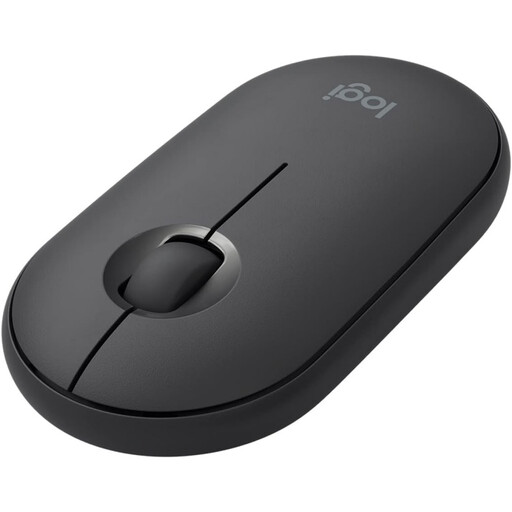
Logitech Pebble Mouse in black

Logitech Pebble Mouse (Black)

Consider this conventional mouse if you prefer familiar pointer movement on a crowded desk. Make sure you have enough clear surface to move it, and confirm the dimensions and connection method of the exact variant before buying.

View on Joybuy

HP 920 Ergonomic Wireless Mouse in black with detachable wrist rest

HP 920 Ergonomic Wireless Mouse (Black), with detachable wrist rest

Consider this option if hand fit and a detachable wrist rest are priorities. Check how the mouse and rest fit your available desk space and confirm that its shape suits your hand before choosing it for repeated gallery work.

View on Joybuy

V7 MW500BT Bluetooth Vertical Ergonomic Mouse

V7 MW500BT Bluetooth Vertical Mouse (2.4GHz, 1600 DPI)

Consider this vertical-grip option if its shape fits your hand and you still have room to move a mouse. The named variant has six buttons and an adjustable sensor; confirm whether the package includes the receiver needed for a 2.4GHz connection.

View on Joybuy

Common questions

Is a compact mouse or a trackball better for a very small desk?

Choose a trackball when there is too little clear surface to move a mouse; choose a compact mouse when you have movement space and prefer conventional pointing. Kensington notes that trackballs remain stationary, but check whether thumb or finger control suits the detailed placement you do.

Do I need a horizontal scroll wheel for a photo gallery?

A horizontal wheel is most relevant if you regularly move through wide image strips or timelines. RTINGS.com identifies a separate horizontal wheel on the Logitech MX Master 3S; if sideways navigation is occasional, weigh that control against the space taken by a full-size mouse.

Will a vertical mouse resolve wrist discomfort on its own?

Do not rely on mouse shape alone to resolve discomfort. Check hand fit and the wider workstation setup; the UK Health and Safety Executive treats display-screen work as a workstation and work-routine issue, not just a choice of mouse.

What should I check if I build galleries for work?

Assess the mouse as part of your whole display-screen workstation. The UK Health and Safety Executive says employers must assess workstations and reduce risks under the applicable display-screen equipment rules; use your employer’s assessment process if it applies to your work.

Should I choose Bluetooth or a USB receiver?

Choose a connection that works with your devices and available ports. Bluetooth can avoid occupying a USB port, while a receiver needs a compatible port; check the exact mouse variant and package contents before assuming either connection option or an included receiver.