Large photo-library archivists
You want room for a growing collection of photos, videos and documents, with a separate local copy rather than a drive chosen primarily for daily editing.


Choose an external HDD for a sizeable photo or file archive that you access less often, or a portable SSD if you repeatedly move large files or work from the drive. A USB flash drive is more suited to carrying a defined batch of files, while cloud storage can complement a separate local copy. Before relying on any option, check its capacity, connection, file format and backup setup.
You want room for a growing collection of photos, videos and documents, with a separate local copy rather than a drive chosen primarily for daily editing.
You regularly copy large folders, work with files on an external drive or carry it between places. Transfer speed, the computer connection and how you transport the drive matter to your choice.
You need to share files between computers or set up a dedicated Time Machine backup. Check the file format and connectors before moving existing files or reformatting a drive.
Choose it when: Your priority is a sizeable local archive rather than repeated fast transfers; Which? describes HDDs as suited to long-term computer-file backup.
Trade-off: Which? notes that SSDs offer faster transfers. An HDD still needs a backup routine to make regular copies.
Choose it when: You repeatedly move large files, work from the drive or carry it regularly; Which? identifies faster transfers as an SSD advantage.
Trade-off: Which? says SSDs are usually pricier than HDDs, and any rated speed depends on the drive and computer connection.
Choose it when: You need to carry a defined batch of files between compatible devices; Which? discusses smaller flash drives for regular file transfers.
Trade-off: Check its capacity against your whole archive before treating a transfer drive as your backup destination.
Choose it when: You want files available across devices while keeping a separate local copy of important photos and documents.
Trade-off: Synced files and an offline copy serve different recovery needs. The National Cyber Security Centre recommends isolated offline backups in its guidance for organisations.
| Concern | What to check | Who this matters to |
|---|---|---|
| Archive capacity and a separate copy | Compare the space needed for your files and future additions; decide where the separate copy will be kept. | As a photo library grows, I need space to keep it without relying on the laptop as my only copy. Around 31% of consumers would put archive capacity and a separate copy first. |
| Backup setup and file format | Check your chosen backup tool and the drive format before use, particularly for a dedicated Time Machine disk. | If my household uses both Windows and Mac, I need a setup that fits the files and backup method I actually use. Backup compatibility would come first for around 25% of consumers. |
| Repeated large-file transfers | Compare the drive’s connection standard with the computer port and cable; distinguish rated speeds from transfer results. | When I move large folders often or work from external storage, waiting for file copies matters more to me. Around 25% of consumers would prioritise transfer speed. |
| Portability and connections | Check connector fit and any protection rating for the exact model if you regularly carry the drive. | Moving files between devices means I need a drive I can connect and carry without complicating each transfer. Portability and device-to-device use would lead the decision for around 19% of consumers. |
A drive can hold only a one-time copy unless you set up a repeatable process. Microsoft Support says Windows File History needs to be enabled and covers selected libraries.
Choose a backup method, check which folders it includes and try finding or restoring a file before relying on it.
Changing a drive’s format can erase its contents. Apple Support says a Windows-formatted disk must be reformatted for Time Machine; Seagate also warns that formatting erases files on the drive.
Decide whether the drive is for shared files or a dedicated Time Machine backup, and copy anything already on it elsewhere before changing its format.
A computer port or cable can limit the speed available from a drive. Samsung says the T7 Shield’s maximum rated speeds require USB 3.2 Gen 2 support and UASP.
Check the laptop’s USB specification as well as its connector shape, and confirm that you have a suitable cable.
A copy that stays accessible from the laptop is not isolated in the same way as a disconnected one. The National Cyber Security Centre recommends isolated offline copies in its guidance for organisations.
For important personal files, consider keeping more than one copy and disconnecting or separately storing a completed local backup between updates.
The T7 Shield line is relevant if you want a portable SSD for frequent transfers and are considering model-specific protection features.
The Backup Plus Portable line offers a documented starting point for shared Windows-and-Mac files.
The My Passport line is relevant to consumers considering a portable HDD for a local file archive.
The DataTraveler Duo line is relevant to compact file transfers between devices with USB-A or USB-C ports.
These portable HDDs and SSDs are choices for keeping local copies of photos and laptop files. Compare the capacity you need with how often you transfer files, then check the connection and backup setup for your computer.
 No image available
Consider this portable SSD if you need 4TB for a growing local file collection and regularly move files.
The product name specifies USB Type-C and USB 3.2 Gen 2. Check your computer’s connection and the drive’s format before setting up a backup, particularly for Time Machine.
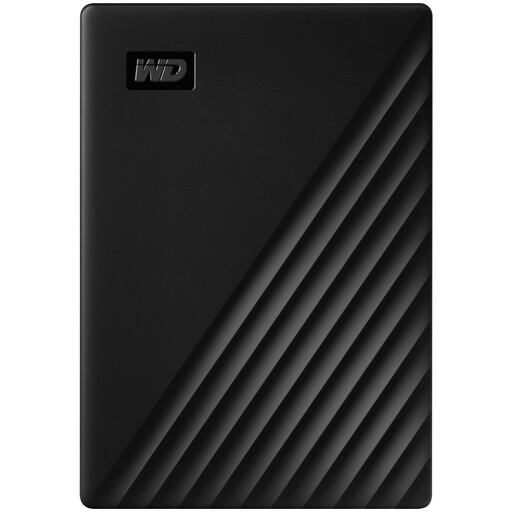 No image available
Consider this portable HDD if a 4TB local archive matters more to you than frequent fast transfers.
Check the exact drive format and your computer’s backup-software requirements before setting up regular copies.
 No image available
Consider this portable SSD if you frequently carry and transfer files, provided 1TB is enough for the copies you plan to keep.
Samsung UK rates the T7 Shield at up to 1,050 MB/s read and 1,000 MB/s write; reaching those maximums requires a compatible USB 3.2 Gen 2 host and cable, with UASP enabled. Samsung’s IP65 and three-metre drop claims come from controlled internal testing and do not mean the drive can be submerged.
Check its format against your intended backup method before use.
 No image available
Consider this portable SSD if you want a 2TB local copy that you can also carry between places.
Check that its connector fits your computer and that its format suits your chosen backup method before relying on it for regular copies.
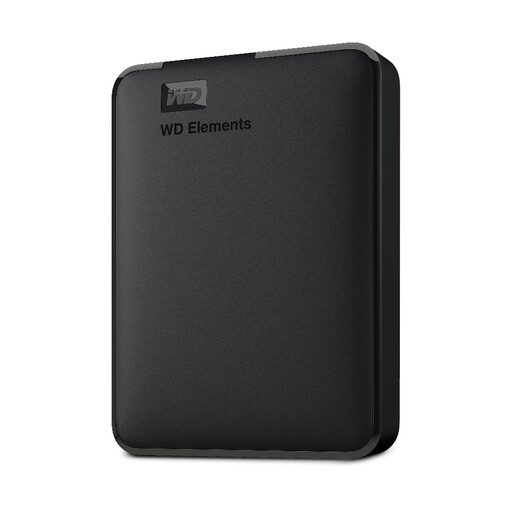 No image available
Consider this portable HDD if 2TB meets your needs for a separate photo and laptop-file archive.
Its product name specifies USB 3.0. Check the connection and the format required by your computer and backup method; copy existing files elsewhere before any reformatting.
Yes, a suitable file format can allow ordinary file sharing between the two; Seagate says its exFAT-formatted Backup Plus Portable works with Windows and Mac. A dedicated Time Machine backup has different requirements: Apple Support says Time Machine cannot back up to a Windows-formatted disk. Decide how you will use the drive before formatting it, and copy off existing files first.
No. You need to select and configure a backup method. Microsoft Support says Windows File History must be enabled to make regular copies to an external drive or network location; on a Mac, you must set up a Time Machine destination. Check that your photo and document folders are included.
Cloud storage can help with access and syncing, but it need not be your only copy of important photos. The National Cyber Security Centre recommends isolated offline copies in its guidance for organisations; for personal files, consider how you would recover them if a synced or accessible copy were lost or changed.
The drive, computer port and cable must support the relevant connection standard. For the T7 Shield, Samsung says its maximum rated read and write speeds require USB 3.2 Gen 2 host and cable support with UASP enabled; actual transfers can vary with the setup.