Choose a postcard-format printer if families mainly take a small print home after a session, a refillable A4 photo printer for regular album and display prints, or an A3+ photo printer if large framed portraits are a routine deliverable. Settle the required print size first, then check the paper and ink system and how each photographer will send images to the printer.
Who is this for?
Studios with frequent family sessions
If group portraits regularly become album pages or display prints, a photo-focused printer with a manageable refill routine may fit better than a printer chosen chiefly for occasional handouts. Canon and Epson both specify refillable photo-printer routes, but the available print sizes differ.
Studios offering prints after a session
When families should leave with a small physical keepsake, postcard-format printing and a connection method that works with the studio’s devices matter. Canon specifies 100 x 148 mm media and smart-device or computer printing for the SELPHY CP1500.
Studios making large display portraits
If framed A3 or A3+ group photographs are a regular deliverable, check large-format support before comparing smaller printers. Epson specifies A3+ output for the EcoTank ET-18100, while Canon specifies A3+ media support for the PIXMA PRO-200S.
What matters when choosing?
Start with the largest print families will actually receive. Once the format is settled, consider how often the studio prints, whether handouts must be ready during a session and which devices need access.
| Concern |
What to check |
Who this matters to |
| Regular print volume |
Compare refill arrangements and consumables for the intended photo size. Canon specifies refillable dye inks for the PIXMA G650; Epson specifies a six-colour refillable system for the ET-18100. |
If I print family sessions regularly, I want fewer interruptions to replace ink or reload supplies; around 30% of consumers put recurring output first. |
| Large portraits |
Confirm the maximum size and borderless support for the chosen paper. Canon specifies A4 borderless photos for the PIXMA G650 and A3+ support for the PRO-200S; Epson specifies A3+ output for the ET-18100. |
When families expect a large framed group portrait, postcard output will not meet the brief; roughly 30% of consumers prioritise display size. |
| Immediate handouts |
Check print time for the intended medium and the required paper, ink and cassette. Canon specifies approximately 41 seconds for a 100 x 148 mm SELPHY CP1500 postcard print. |
If visitors should take a print away soon after their session, I care more about a straightforward small-print workflow than enlargement options; around 20% of consumers make immediate handouts their priority. |
| Shared-device access |
Check the exact model against the studio’s phones, computers and network. Epson lists wireless printing for the ET-18100 and Wi-Fi Direct and Ethernet for the ET-8550. |
When several photographers send images from different devices, I need a connection method that works for each of them; approximately 20% of consumers put shared-device access first. |
Buying pitfalls
-
Choosing a handout printer for framed enlargements
A postcard-format printer can serve families who want a small print after a session, but it cannot produce the A4 or A3+ portraits required for larger displays.
Write down the largest regular deliverable before comparing printer speed or connection options.
-
Comparing photo-yield figures as though they measure the same job
Canon and Epson publish yields for different printers under their stated conditions. A figure for one print size does not establish how many of the studio’s own portraits another printer will produce.
Check each claim’s photo-size basis, then consider the ink, paper and maintenance supplies needed for the intended output.
Keep replacement ink, compatible photo paper and maintenance consumables in the studio’s supply plan.
-
Assuming Wi-Fi covers every photographer’s workflow
Printers differ in their support for mobile apps, direct device connections, Ethernet and removable media. A Wi-Fi specification alone does not establish that every studio device can submit a print as intended.
List the devices and transfer methods in use, then check compatibility on the exact printer model.
-
Overlooking model-specific print supplies
The Canon SELPHY CP1500 uses compatible paper-and-ink sets and requires the appropriate cassette for the selected medium.
Check the intended paper format, matching supplies and cassette requirements before setting up a handout station.
A different print format may require an additional cassette as well as its matching paper-and-ink set.
Brands to consider for these print formats
Canon
Canon has distinct options for postcard handouts, refillable A4 photo printing and A3+ presentation prints.
- Canon specifies 100 x 148 mm media for the SELPHY CP1500, six refillable dye inks and A4 borderless output for the PIXMA G650, and eight dye inks with A3+ support for the PIXMA PRO-200S.
- The CP1500 cannot make A4 portraits, the G650 is limited to A4 borderless photos, and the PRO-200S uses cartridges rather than refillable tanks.
Epson
Epson’s EcoTank photo models are relevant when a studio wants refillable ink alongside A3+ output.
- Epson specifies A3+ output and a six-colour refillable system for the ET-18100. Its ET-8550 also offers connection options including Wi-Fi Direct and Ethernet.
- Check the selected model’s device compatibility, paper handling and replacement supplies rather than assuming all EcoTank photo printers share the same workflow.
HP
The HP Sprocket Studio is a small-format alternative for a mobile-led handout workflow.
- HP’s support specifications describe dye-sublimation printing, Bluetooth 5.0, app printing and a 20-sheet input tray.
- Those small-format specifications do not make it an A4 or A3+ portrait printer. Check current device compatibility before choosing it for a shared studio.
Joybuy product choices
These choices cover two different family-photo jobs: recurring A3+ portraits with a refillable printer, and small prints handed out after a session. Match the format to the studio’s deliverables before comparing their device connections and supplies.
 No image available
Epson EcoTank ET-18100
Consider this model when A3+ family portraits are a regular studio output. Epson specifies A3+ printing and a six-colour refillable ink system for the ET-18100.
Check the photo paper and replacement supplies the studio plans to use, and confirm that its devices can use the intended wireless connection.
View on Joybuy
 No image available
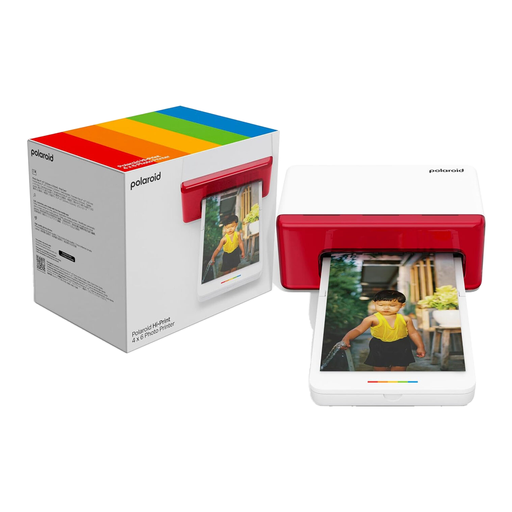
Polaroid Hi-Print Bluetooth 4x6 Photo Printer – White
Consider this small-format option for family-photo handouts sent from compatible phones. Its listing specifies 4 x 6 inch prints and Bluetooth printing.
It does not replace an A4 or A3+ portrait printer. Check the dedicated paper cartridge and compatibility with the phones used in the studio.
View on Joybuy
Common questions
Should a shared studio choose postcard, A4 or A3+ printing?
Choose postcard-format printing for small handouts, A4 for albums and standard displays, or A3+ when large framed family portraits are a routine deliverable. Canon specifies 100 x 148 mm media for the SELPHY CP1500 and A4 borderless photos for the PIXMA G650; Epson specifies A3+ output for the ET-18100.
Can several people send photos to one studio printer?
They can if the exact printer supports the devices and connection method each person will use. Canon specifies smart-device and computer printing for the SELPHY CP1500, while Epson lists wireless printing for the ET-18100; check the studio’s operating systems, network and app requirements before choosing.
Does a refillable photo printer remove the need for other supplies?
No. A refillable printer still needs compatible ink and photo paper, and its maintenance arrangements matter during regular use. When comparing manufacturer photo-yield figures, check that they refer to the same print size and relevant conditions.
What should a studio do with an old photo printer?
Check an appropriate electrical-equipment recycling or collection route rather than treating the printer as general waste. GOV.UK’s guidance on waste electrical and electronic equipment explains that these products are regulated to reduce disposal through landfill or incineration.


