Large scenic-print hobbyists
If displaying railway landscapes, stations or rolling stock at A3 or A3+ is part of the hobby, start with the largest paper size you will use and the space needed to handle it.


Choose an A3+ photo printer if larger scenic railway prints are central to the hobby; choose an A4 model if most prints are for albums or reference and room for the printer is limited. For glossy hobby photos, consider a dye-ink route; if fine-art papers, dark tones or longer-term display matter more, consider a pigment-ink route. Check the working space, paper compatibility and ink supplies for the exact printer before buying.
If displaying railway landscapes, stations or rolling stock at A3 or A3+ is part of the hobby, start with the largest paper size you will use and the space needed to handle it.
Dark railway subjects, tonal gradation and a choice of fine-art papers make ink type and media handling more important than a simple snapshot workflow.
For regular 10 × 15 cm or A4 photographs, albums and reference images, refillable ink and scan or copy functions may matter more than A3+ output.
Decide on your largest intended print first, then choose the ink and paper workflow; finally, check whether the printer can be used comfortably in the space available.
| Concern | What to check | Who this matters to |
|---|---|---|
| Display size | Check the largest supported photo-paper size, borderless options and paper-loading clearance. | If I want a scenic railway photograph on the hobby-room wall, A4 may be smaller than I had in mind. Around 36% of consumers put larger display prints first. |
| Ink and media | Check whether the printer uses dye or pigment ink and supports your intended glossy or fine-art paper. | For dark locomotive scenes or monochrome prints I intend to keep on display, tonal handling and paper choice take priority; around 29% of consumers put this need first. |
| Frequent printing | Check the correct replacement inks and preferred paper rather than treating a manufacturer yield as your cost per photograph. | When I regularly print album or reference photographs, replenishing ink becomes part of the decision. Roughly 21% of consumers prioritise that printing routine. |
| Room and functions | Check working clearance and whether scanning, copying or wireless printing is needed. | If one hobby-room device also has to scan reference material, its everyday usefulness matters as much as its print function; around 14% of consumers make that their primary concern. |
Canon specifies photo output up to A4 for the PIXMA G650, while its PIXMA PRO-200S and Epson's EcoTank ET-8550 support A3+. An A4 printer cannot make an A3+ display print at home.
Choose the largest size you expect to print before comparing ink systems or multifunction features.
Canon and Epson publish photo-yield figures for particular refillable models under their own test conditions. Your image coverage, paper size and settings can differ.
Check the replacement ink and paper you intend to use, and try a representative railway image before settling on a frequent-printing routine.
Epson's photography guide distinguishes dye ink for vibrant glossy hobby prints from pigment ink for archival and fine-art priorities. That distinction does not make either ink type the answer for every finish or paper.
Decide what you want to print on and how you intend to display it before choosing an ink route.
Canon lists the PIXMA PRO-200S at approximately 639 × 379 × 200 mm. Its installed position also has to let you load larger sheets and collect prints.
Measure the usable work area and paper path, not just the space occupied by the closed printer.
Canon has distinct routes here: the print-only PIXMA PRO-200S for A3+ photographs and the refillable PIXMA G650 for A4 photographs with scanning and copying.
Epson's SureColor SC-P700 represents a specialist pigment-ink and fine-art route; its EcoTank ET-8550 combines A3+ photo output with refillable ink and multifunction use.
HP's ENVY 6132e is an A4 multifunction option for occasional mixed household and hobby printing rather than an A3+ railway-display workflow.
These choices address different hobby-room jobs: consider the Epson model when larger scenic prints are the aim, or the Canon model when A4 photographs and scanning or copying are more relevant. Check the intended photo paper and working clearance for either setup.
 No image available
Consider this model for larger scenic railway prints or a refillable printing routine. Confirm that it accepts your preferred photo paper and that you have room to load and collect prints.
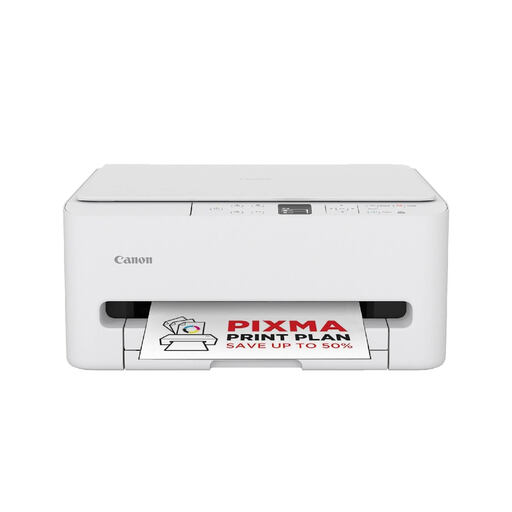 No image available
Consider this model if you mainly want A4 railway photographs alongside scanning and copying. It is not a choice for A3 or A3+ display prints; check photo-paper compatibility and ink type for your intended finish.
No: the ink choice depends on the finish and display plans. Epson's UK photography guide positions dye ink for vibrant glossy hobby prints and pigment ink for archival and fine-art priorities; check that the exact printer supports the paper you want to use.
Choose A4 if photographs will mainly go into albums or serve as references; consider A3+ if larger scenic display prints are a central use. Canon specifies A3+ output for the PIXMA PRO-200S, and Epson specifies it for the EcoTank ET-8550. Either way, measure the space needed to load paper and collect prints.
Check that the paper is supported by your printer and select the corresponding media setting. Where a profile is available for the exact printer and paper, it can form part of a colour-consistent workflow; Epson says its Media Installer supplies ICC profiles and media settings for supported combinations.