What matters when choosing?
Decide first whether you need to hear a digital piano as you play or simply listen to recordings. Then weigh the needs that take priority in your shared lounge:
Wired powered speakers or compact monitors
Choose when: You need to hear live digital-piano notes promptly through a compatible analogue connection.
Allow for: Mains power, space for a pair and the cable that matches the piano’s output.
Powered bookshelf pair
Choose when: Recordings and other lounge sources will play from a settled left-and-right speaker arrangement.
Allow for: Two speaker positions, mains power and the pair’s cabling.
Home Wi-Fi speaker
Choose when: The speaker will stay in the lounge and wireless playback or app control matters for recordings.
Allow for: Permanent power and any setup or adapter required for a wired source.
Portable Bluetooth speaker
Choose when: You mainly play recordings and regularly take the speaker to another room.
Allow for: Charging and a single-unit format rather than the physical separation of a speaker pair.
| Concern |
What to check |
Who this matters to |
| Live-playing response |
Match the digital piano’s actual output to a wired speaker input and check the required cable. Yamaha warns that wireless delay can vary by equipment. |
If I play a digital piano through external speakers, I need each note to reach me promptly rather than follow the key press. Around 36% of consumers put live-playing response first. |
| Shared-space control |
Look for accessible volume control and, where useful, bass adjustment; consider placement and listening times with other occupants. |
When other people share the lounge, I want to adjust the music without making their space uncomfortable. Shared-space control comes first for roughly 29% of consumers. |
| Fixed listening setup |
Decide whether one unit or a separated pair fits the furniture, then check the inputs needed for your recording sources. |
I usually listen in the same place and want my phone, computer or other source to fit that routine. About 21% of consumers make a fixed setup their primary need. |
| Portability |
Check charging, carrying arrangements and whether a wired input is available if you may need one. |
I move recorded piano music between rooms and do not want every listening session tied to one socket. For around 14% of consumers, portability takes priority. |
Joybuy choices for recorded piano music
These single-unit tabletop and portable speakers are choices for listening to piano recordings in the lounge, with some suited to being moved around the home. If your main purpose is hearing a digital piano while you play, check its wired connection and the complete setup’s response before choosing one of these models.
 No image available
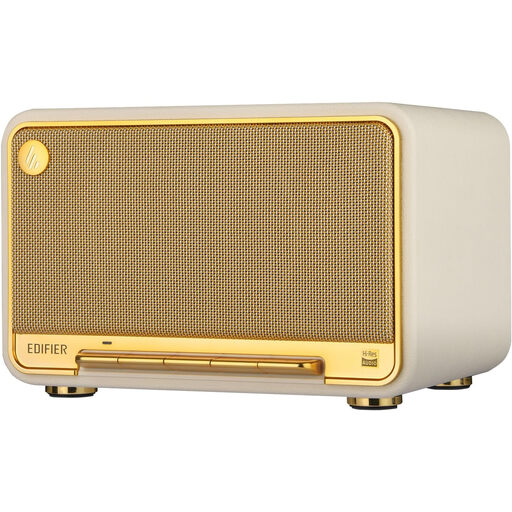
Edifier D32 Tabletop Wireless Speaker
Consider this tabletop model if you want several ways to play recordings in the lounge. Its listed connections include Bluetooth 5.3, AirPlay 2, USB-C and AUX, and the title states 11 hours of playtime. For a digital piano, confirm the output socket, required cable and response of the complete wired setup rather than relying on Bluetooth for live playing.
View on Joybuy
 No image available
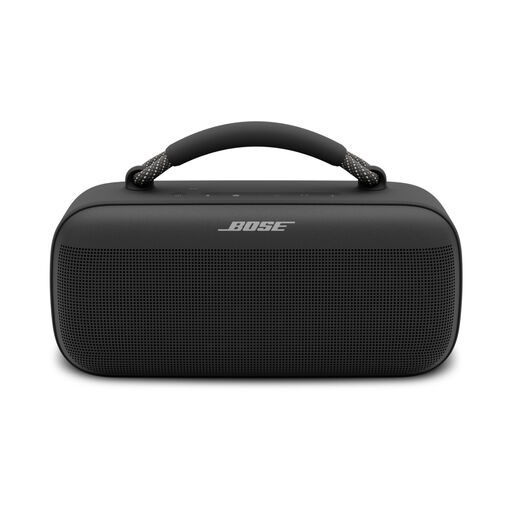
Bose SoundLink Max Portable Bluetooth Speaker, Black
This portable model suits recorded piano listening when you want to move the speaker between places. Bose lists a removable handle, an AUX input and up to 20 hours of battery life; actual battery life varies with use. Check the cable needed for any wired source, and do not assume its Bluetooth connection is suitable for monitoring live piano playing.
View on Joybuy
 No image available
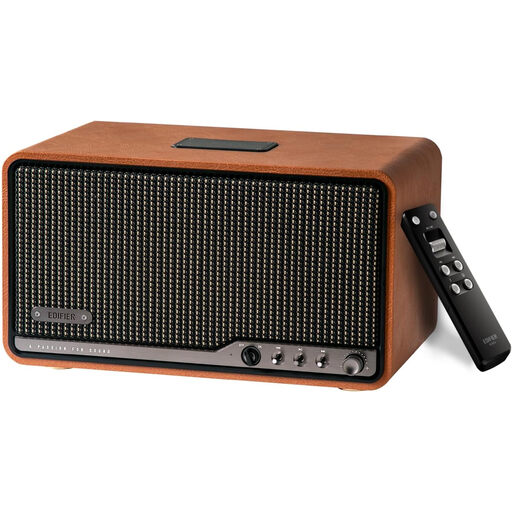
Edifier S300 Hi-Fi Wireless Multi-Room Tabletop Speaker, Brown
Consider this tabletop model for recorded music in a regular lounge position. Before ordering, check its power arrangement and the connections required by your music source. If you plan to connect a digital piano for live playing, confirm the wired input, cable and complete setup’s response.
View on Joybuy
Common questions
Can I use Bluetooth for live digital-piano playing?
A compatible wired connection is the safer starting point for immediate response. Yamaha warns that wireless transmission can delay the sound heard after a note is played; check the piano’s output and the speaker’s input, or test your complete wireless setup before relying on it.
Which sockets should I compare before buying speakers?
Start with the actual output on your piano or other source, then check the exact speaker model’s input list and the cable needed between them. Yamaha lists XLR/TRS combo, RCA and stereo-mini inputs for HS3/HS4, while Edifier lists dual RCA, optical and coaxial inputs for R1280DBs; those lists do not mean every source connects without an appropriate cable.
Does Sonos Era 100 need an adapter for a wired source?
Yes. Sonos says connecting an external analogue source through line-in requires its Sonos Line-In Adapter and a suitable auxiliary cable, so check both parts before ordering for that use.
How should I manage piano-speaker volume in a shared lounge?
Use a level that takes other occupants into account and agree suitable listening times where practical. GOV.UK says councils in England investigate complaints about noise that could be a statutory nuisance; elsewhere in the UK, check your local authority’s guidance rather than assuming the England process applies.
What should I check before ordering a speaker for my setup?
Check the exact model’s power arrangement, included cables, required adapters and compatibility with your source. Read the seller’s applicable returns process and warranty terms for that product rather than assuming they are identical across models or sellers.


