People organising a mixed-age picnic
Decide whether to take ready-to-drink cartons or bottles, or bring water and cups for squash. Check portions, storage instructions and ingredients for the people you are serving.


Choose 100% apple juice if pure juice matters most, a no-added-sugar juice drink if its labelled sugars per comparable serving better suit your plans, or squash if you can bring water and dilute it. No added sugar does not mean sugar-free: check fruit content, sweeteners, allergens, serving size and storage instructions. For children and adults, the NHS advises no more than 150ml of fruit juice and smoothies combined per day, kept to mealtimes.
The practical choice changes with the people sharing the picnic, the serving size and whether you can keep bottles chilled or prepare drinks on site.
Decide whether to take ready-to-drink cartons or bottles, or bring water and cups for squash. Check portions, storage instructions and ingredients for the people you are serving.
A no-added-sugar label does not tell you how much sugar a drink contains. The NHS advises that children and adults have no more than 150ml of fruit juice and smoothies combined per day, and have them with meals; check the pack size before packing a carton or bottle.
Compare ingredient lists as well as sugars per serving. The Tesco and Sainsbury’s juice-drink examples list sweeteners, while the Sainsbury’s and M&S squash examples list sulphites.
Start with the format you can serve at the picnic, then compare fruit content and sugars on the same serving basis. A squash’s prepared serving is not the same thing as an equal volume of concentrate.
| Priority | What to check | Your needs |
|---|---|---|
| Sugar claim and portion | Read the sugars line per serving, not just the front-of-pack claim. The Advertising Standards Authority’s September 2025 guidance on the GB Register explains that a no-added-sugars claim concerns added sugars and foods used for sweetening. The NHS advises a combined daily limit of 150ml for fruit juice and smoothies, with meals. | I want to know how much sugar is in the portion I serve, even when no sugar has been added. |
| Juice content | Check whether the ingredients describe 100% juice or a juice drink. Tropicana lists 15g sugars per 150ml for Orchard Apple; Tesco lists 3.1g per 150ml for a drink containing 20% apple juice from concentrate. Sainsbury’s apple-and-pear drink lists 3.9g per 150ml and 25% juice in total. | Pure apple juice matters to me, or I would accept a juice drink with a different fruit content and sugar figure. |
| Pack and storage | Compare the pack volume with the portion you intend to pour. Asda describes its 300ml Copella Cloudy Apple bottle as two servings; its label says to keep it refrigerated and consume it within four days of opening. | I need a pack size that works for the group and a way to follow the bottle’s storage instructions after opening. |
| Dilution and ingredients | Check the dilution directions and nutrition values for the prepared drink. Sainsbury’s Apple High Juice Squash contains 50% fruit juice and lists sucralose and sulphites; its label gives 2.5g sugars per 250ml serving. M&S Apple and Elderflower High Juice also lists sucralose and sulphites. | If I take squash, I can bring water and something to mix it in. I also need to check ingredients for the people sharing it. |
Juice still contains sugars when none have been added. Tropicana Orchard Apple and Copella Cloudy Apple each list about 15g sugars per 150ml.
Check both the ingredients and the sugars line for the portion you plan to serve. Choose 100% juice for its juice content, not on the assumption that it contains no sugar.
A lower listed sugar figure may come with a different fruit content and sweeteners: Tesco’s no-added-sugar apple juice drink contains 20% apple juice, while Sainsbury’s apple-and-pear drink contains 25% juice in total.
Decide whether 100% juice or the drink’s labelled sugars per serving matters more, then compare fruit percentages and ingredient lists.
High-juice squash is concentrated. It needs water and a suitable bottle or cup, and its prepared-serving nutrition figure should not be read as a figure for the undiluted concentrate.
Take squash when mixing drinks at the picnic is practical; otherwise consider a ready-to-drink format.
Copella Cloudy Apple is labelled for refrigeration and use within four days of opening. The Sainsbury’s and M&S squash examples list sulphites, and the juice-drink and squash examples include sweeteners.
Plan how to follow chilled-storage instructions, and read the current ingredient and allergen information before serving guests.
These named products illustrate different drink formats; each ingredient list, nutrition panel and storage instruction applies to the product described, not every drink under the same brand.
Orchard Apple is a 100% pressed apple juice option for a picnic meal.
Cloudy Apple is a pressed-juice example available in a 300ml bottle as well as larger formats.
Its no-added-sugar apple juice drink is a juice-drink example rather than 100% apple juice.
Its apple-and-pear juice drink and apple high-juice squash offer two different no-added-sugar formats.
Apple and Elderflower High Juice is a concentrated squash to prepare with water.
These options cover an apple-and-pear fruit water in 200ml cartons and a lightly sparkling 100% apple juice in 250ml packs. Compare the current pack labels with your plans for portions and ingredients.
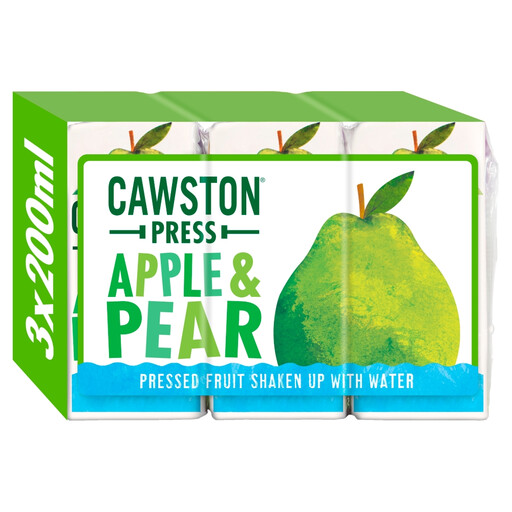 No image available
The three individual 200ml packs offer a ready-to-drink format for a picnic. Check the carton’s ingredients, no-added-sugar wording and sugars per serving if those details determine your choice.
 No image available
This lightly sparkling 100% apple juice comes in six 250ml packs. A whole pack is larger than the NHS advice of no more than 150ml of fruit juice and smoothies combined per day for children and adults, so consider how much you intend to serve at the meal.
No. The Advertising Standards Authority’s September 2025 guidance on the GB Register describes a no-added-sugars claim in terms of sugars or foods used for sweetening that have been added; it does not describe the drink’s total sugar content. Tropicana Orchard Apple and Copella Cloudy Apple each list about 15g sugars per 150ml.
For children and adults, the NHS advises no more than 150ml of fruit juice and smoothies combined per day, kept to mealtimes. Check the volume of each pack: a 300ml Copella bottle is described as two servings.
Choose 100% juice if juice content is the priority; compare juice drinks if you would accept a different fruit content in exchange for their labelled sugars per serving. Tesco’s no-added-sugar apple juice drink lists 20% apple juice, sucralose and 3.1g sugars per 150ml, while Tropicana Orchard Apple lists 15g sugars per 150ml as 100% juice.
Yes, if you can bring water and prepare it at the picnic. Sainsbury’s Apple High Juice Squash and M&S Apple and Elderflower High Juice are concentrated products, not ready-to-drink apple juice; both examples list sucralose and sulphites. Follow the dilution directions and compare nutrition on the prepared-serving basis.
Follow the bottle’s refrigeration and post-opening instructions. Retailer labels for Copella Cloudy Apple say to keep it refrigerated and consume it within four days of opening, so plan how to maintain the required storage during and after the picnic.