Picnickers watching the snack portion
If one bar will sit alongside lunch, compare calories per bar and the bar’s weight. A smaller portion can have fewer calories without being a like-for-like alternative to a larger bar.


For a picnic lunch, start with the calories in the bar you will eat, then check its weight, sugars and allergens. Weetabix Cereals lists Alpen Light Summer Fruit at 65 kcal for a small 19 g bar, while nākd. lists Blueberry Muffin at 131 kcal for 35 g; a larger portion or a protein-focused bar may suit a different lunch, but should not be treated as an equivalent low-calorie choice.
If one bar will sit alongside lunch, compare calories per bar and the bar’s weight. A smaller portion can have fewer calories without being a like-for-like alternative to a larger bar.
Vegan, gluten-free and dairy-free claims answer different questions from nut, milk or soya allergen statements. Check both the ingredients and any “may contain” wording on the exact pack, particularly when sharing food.
If protein or fibre matters more to you than minimising calories, compare those amounts alongside calories for the same bar. A protein label alone does not establish that it is a low-calorie snack.
Choose the portion you expect to eat, compare its nutrition figures, then check whether its ingredients suit everyone who may have it.
| Priority | What to check | Your needs |
|---|---|---|
| Calories and portion | Read kcal per bar and its weight. Use kcal per 100 g for a like-for-like comparison of bars of different sizes. | I want to know what one bar adds to my lunch, rather than comparing a 19 g bar with a 40 g bar as though the portions were equal. |
| Sugars | Check “of which sugars” for the bar you will eat, then read the ingredients. Nature Valley UK explains that this figure includes sugars from all sources, not just added sugar. | A fruit-and-nut bar appeals to me, but I do not want “no added sugar” to stand in for the total-sugars figure. nākd. lists 17 g sugars in its 35 g Blueberry Muffin bar. |
| Protein and fibre | Compare grams per bar alongside kcal per bar. Nature Valley UK lists 10.2 g protein, 4.4 g fibre and 196 kcal for its 40 g Protein Peanut & Chocolate bar. | I may choose a bar for its stated protein or fibre, provided its calorie contribution also fits the role I want it to play in lunch. |
| Allergens and dietary claims | Read the exact pack’s ingredients, allergen declaration and “may contain” statement. Check any vegan, gluten-free or dairy-free claim on that product, not across a brand. | If the picnic is shared, I need a bar that meets the relevant dietary requirements without overlooking nuts, peanuts, milk, soya or gluten-containing cereals. |
Weetabix Cereals lists Alpen Light Summer Fruit at 65 kcal for 19 g. The other product examples here weigh 35–40 g per bar, so their per-bar totals describe larger portions.
Check kcal per bar for the portion you plan to eat, and kcal per 100 g when comparing the products on the same weight basis.
nākd. describes its Blueberry Muffin bar as having no added sugar, but lists 17 g total sugars per 35 g bar. Dates and raisins are among its ingredients.
Use the “of which sugars” figure and ingredient list together rather than relying on the front-of-pack phrase.
Nature Valley UK lists 196 kcal for its 40 g Protein Peanut & Chocolate bar; Eat Natural UK lists 220 kcal for its 40 g Dark Chocolate & Peanut Protein Bar.
If protein is your priority, compare its stated amount with kcal per bar. If keeping the snack portion lower in calories matters more, compare other formats too.
The compared bars include products containing nuts, peanuts, milk, soya or gluten-containing cereals, and precautionary statements differ between products.
Check each current pack’s allergen declaration and “may contain” wording before packing a bar for someone else.
These examples describe particular bars or ranges; a brand name alone does not tell you the portion, nutrition values or allergen information of every flavour.
Weetabix Cereals lists Alpen Light Summer Fruit at 65 kcal and 3.8 g fibre per 19 g bar.
nākd. lists its 35 g Blueberry Muffin fruit-and-nut bar at 131 kcal and 17 g sugars.
Nature Valley UK lists 196 kcal, 10.2 g protein and 4.4 g fibre per 40 g Protein Peanut & Chocolate bar.
Eat Natural UK lists its Dark Chocolate & Peanut Protein Bar at 220 kcal, 7.8 g protein and 2.4 g fibre per 40 g bar.
Graze includes oat-based snack formats in its range and makes brand-level statements about nutrients in its snacks.
TREK protein flapjacks are another format to consider when comparing a snack’s portion and stated nutrients.
These Joybuy listings cover oat, cereal, fruit-and-nut and protein bars that you might consider for a picnic lunch. Compare each pack’s portion and label against your own calorie and allergen requirements.
 No image available
For an oat-based picnic snack, the listing identifies four 30 g bars. Check the pack’s per-bar nutrition and allergen information before choosing it for a calorie target or shared lunch.
 No image available
A fruit-and-nut option if a 35 g bar suits your lunch. nākd. lists 131 kcal, 17 g sugars and 3.3 g fibre per Blueberry Muffin bar; it contains cashews and almonds, so check the current pack’s allergen statement.
 No image available
This cereal-bar listing specifies six 21.5 g portions. When comparing it with larger picnic bars, check both kcal per bar and kcal per 100 g on the pack.
 No image available
Consider this bar when its stated protein and fibre matter to your choice as well as calories. Nature Valley UK lists 10.2 g protein, 4.4 g fibre and 196 kcal per 40 g bar; it contains peanuts, soya and milk and may contain tree nuts.
 No image available
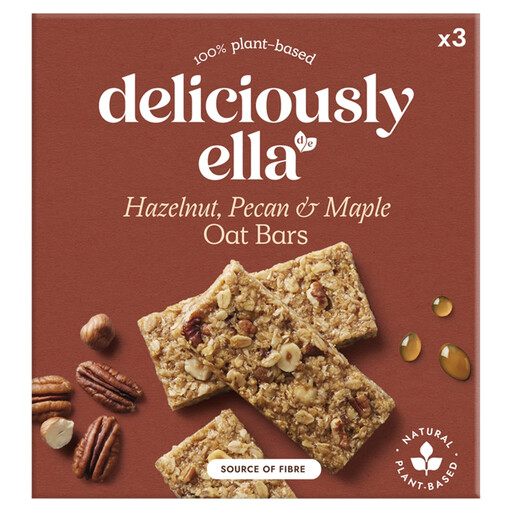
A hazelnut, pecan and maple oat-bar multipack for shoppers considering a nut-led flavour. The listing gives a 150 g pack weight; check the individual bar weight, nutrition panel and allergen statement before comparing portions.
Use kcal per bar to assess the portion you plan to eat, then check its weight. Kcal per 100 g helps you compare formulations when bar sizes differ; it does not replace the per-bar total for your lunch.
No. nākd. calls its Blueberry Muffin bar “no added sugar” but lists 17 g total sugars per 35 g bar. As Nature Valley UK explains, “of which sugars” includes sugars from all sources, so read that figure alongside the ingredients.
It can if its per-bar calories fit the portion you have chosen, but the protein label is not a calorie measure. Nature Valley UK lists 196 kcal and 10.2 g protein for its 40 g Protein Peanut & Chocolate bar; Eat Natural UK lists 220 kcal and 7.8 g protein for its 40 g Dark Chocolate & Peanut Protein Bar.
Follow the storage instructions for the bars and keep any foods normally refrigerated in the wider lunch cool. The Food Standards Agency advises a cool box or cool bag with ice or frozen gel packs; Food Standards Scotland also advises a cool box or bag and says to eat ready-to-eat chilled foods within four hours of taking them out of the fridge.
No. Check the exact product’s ingredients and precautionary statements. For example, nākd.’s Blueberry Muffin bar is described as vegan and gluten free but contains cashews and almonds, while Nature Valley’s Protein Peanut & Chocolate bar contains peanuts, soya and milk.