Regular multi-tray picnic bakers
If you repeatedly bake cookies for family events or larger picnics, compare usable tray space and any stated multi-level baking capability. Cleaning arrangements also matter when the oven will see regular use.


For regular batches of picnic cookies, consider a built-in fan oven if you have suitable cabinetry; a double oven makes more sense when you also want separate cooking cavities. For smaller, occasional batches without a fitted installation, a countertop oven is another option, provided its trays fit your batch and you can meet its placement and electrical instructions.
If you repeatedly bake cookies for family events or larger picnics, compare usable tray space and any stated multi-level baking capability. Cleaning arrangements also matter when the oven will see regular use.
If you make smaller batches and do not want to alter fitted cabinetry, a countertop oven may suit your setup. Check the space it occupies, the clearance it needs and its electrical instructions before choosing one.
If this oven will replace or become your everyday fitted appliance, match its installation dimensions and electrical requirements to your kitchen. Consider its cooking modes and cleaning features for meals beyond picnic cookies, too.
Decide how many cookies you need to bake and where the oven can go before comparing cooking modes or cleaning features.
Choose when: You bake regularly and want the oven to serve everyday cooking in a fitted kitchen.
Allow for: Permanent installation and the exact model’s cabinet and electrical requirements.
Choose when: Separate cooking cavities would help you prepare cookies alongside other picnic food.
Allow for: A taller installation space; check multi-level claims for the particular model rather than assuming they apply to every double oven.
Choose when: You bake occasional smaller batches and need a worktop appliance rather than a fitted one.
Allow for: Worktop space and the manufacturer’s air-circulation clearance; a countertop oven must not be treated as a built-in model.
| Concern | What to check | Who this matters to |
|---|---|---|
| Batch capacity | Check tray dimensions, usable shelf positions and whether the exact model specifies multi-level baking. | If I need enough cookies for a picnic without baking tray after tray, usable space comes before extra functions; around 50% of consumers put batch capacity first. |
| Kitchen fit | Compare a built-in model’s installation drawing with your aperture, or a countertop model’s placement and clearance instructions with your worktop. | When cabinet space or worktop room is limited, I need an oven I can place and connect as instructed; kitchen fit is the primary concern for around 30% of consumers. |
| Baking and cleaning | Compare the selected model’s cooking modes, controls and cleaning instructions, including what its cleaning system covers. | If I bake repeatedly, I want controls I can use consistently and an interior I can maintain afterwards; around 20% of consumers place baking control and clean-up first. |
Appliance dimensions do not by themselves establish that an oven fits your cabinet opening, and connection requirements vary by model.
Measure the aperture and compare it with the exact installation drawing before ordering.
A mismatch may mean cabinet alterations or arranging the specified electrical installation.
Multi-level baking is a model-specific capability. Neff states that its U1ACE2AG3B can bake on up to three levels, but that claim should not be transferred to other ovens.
Check the chosen model’s multi-level instructions, shelf positions and tray arrangement.
De’Longhi says its countertop electric ovens need space for air circulation and should not be enclosed in a unit.
Follow the exact model’s placement and clearance instructions; choose an oven designed for built-in installation if it needs to sit within cabinetry.
North Yorkshire Fire & Rescue Service warns that overloaded sockets can overheat and advises against using appliances with worn or damaged cables.
Follow the oven’s electrical instructions, avoid overloading sockets or adapters, and stop using damaged electrical equipment.
These examples illustrate different fitted and countertop options. Compare the exact model and installation instructions rather than assuming a feature applies across a brand’s range.
A reference point for standard-width built-in single ovens used for regular home baking.
Relevant if you are considering a built-in double oven and model-specific multi-level baking.
An example of a built-in oven combining fan cooking with additional cooking and cleaning features.
A countertop route for someone who does not want a fitted oven.
Another countertop electric-oven route for a kitchen without suitable built-in housing.
These single built-in ovens are options for baking picnic cookies in a fitted kitchen. If you need a countertop oven or separate cooking cavities, use the format and installation checks above rather than treating this selection as covering those options.
 No image available
Consider this fitted oven if you regularly bake cookies and want to compare its stated multi-level cooking arrangement with your trays.
Check the shelf positions, tray compatibility, housing dimensions and installation instructions for your kitchen.
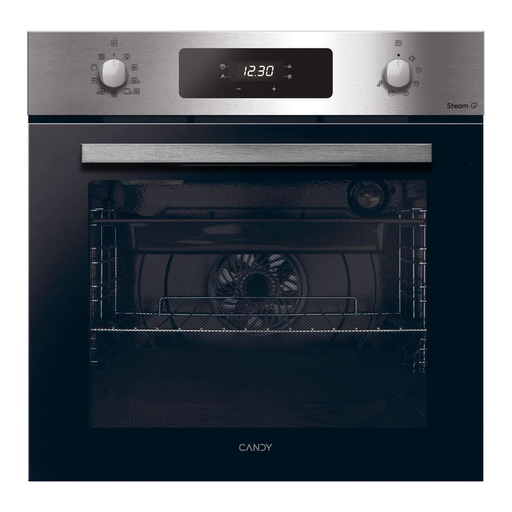 No image available
Consider this fitted oven if post-bake cleaning is an important part of your choice.
It is identified as having pyrolytic cleaning. Check tray dimensions and shelf use for your cookie batch, and follow the cleaning and installation instructions for this model.
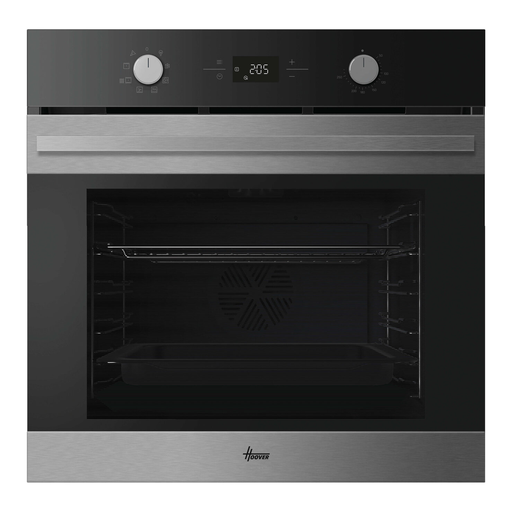 No image available
Consider this fitted oven for regular baking if its tray arrangement works for the number of cookies you plan to make.
The stated capacity is 70 L. Confirm shelf positions and any multi-level baking instructions, and match the installation opening and electrical setup to your kitchen.
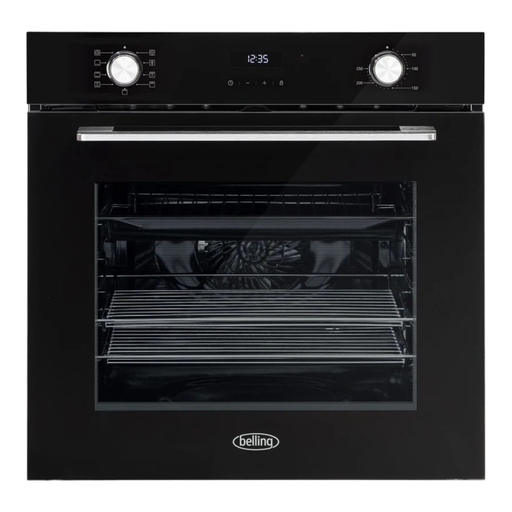 No image available
Consider this fitted single oven if you want to compare a fan-assisted cooking option for everyday baking.
Before planning simultaneous trays of cookies, check the manual’s shelf arrangement and tray compatibility. Match its cut-out dimensions and required electrical connection to your kitchen.
A built-in fan oven is worth considering for regular larger batches if your kitchen can accommodate it; a countertop oven can suit smaller, occasional batches without fitted installation. In either case, check the exact tray space and any stated multi-level capability rather than relying on the oven’s exterior size.
Do not enclose one unless its manufacturer expressly permits that installation. De’Longhi says its countertop electric ovens need air-circulation clearance and should not be enclosed in a unit; follow the placement instructions for your exact model.
Check the installation instructions for the oven you choose. Bosch lists the HBS534BB0B without a plug and with connection by an electrician, and the cited Neff U1ACE2AG3B also requires electrician connection; those model-specific requirements should not be assumed for every oven.
Follow the selected oven’s connection and placement instructions, and do not use damaged plugs or cables. North Yorkshire Fire & Rescue Service warns that overloaded sockets can overheat, so avoid overloading sockets or adapters.