Picnic hosts making several parcels
If you need multiple wrapped portions to sit in one layer, compare the usable tray and shelf space before considering another appliance. An existing fan oven may already give you the flat-tray space you need.


If you already have a fan oven with room for several fish parcels on a flat tray, start there rather than buying another appliance for an occasional picnic. A countertop oven makes more sense if you will use its other cooking functions regularly; a convection microwave is worth considering if you also need microwave functions and your parcels fit its cooking area. Whichever format you choose, check usable dimensions and recipe settings, then plan how the cooked fish will be chilled and transported.
If you need multiple wrapped portions to sit in one layer, compare the usable tray and shelf space before considering another appliance. An existing fan oven may already give you the flat-tray space you need.
If the appliance will also handle everyday reheating, defrosting or other cooking, a combination model may earn its worktop space. Check its tray or turntable shape against the dishes you actually use; Panasonic and Sage describe convection microwave models with additional cooking modes.
If your current oven accommodates the parcels, a new oven may not address your main concern: handling the fish after cooking. The Food Standards Agency identifies cooking, chilling and avoiding cross-contamination as connected food-safety practices.
Choose when: You already have room for the required parcels on a flat tray and do not need another appliance.
Check: Tray fit and shelf spacing still determine how many parcels can cook in one layer.
Choose when: You expect to use its baking and other cooking functions regularly and have a suitable place for it.
Check: The supplied tray and clearance above the parcels may limit a batch even when the stated capacity sounds sufficient.
Choose when: You need convection baking alongside microwave functions and your cookware fits the cooking area.
Check: A round turntable may not accommodate the same parcel arrangement as a rectangular baking tray.
| Concern | What to check | Who this matters to |
|---|---|---|
| Parcel fit | Measure your parcels or dish against the usable tray, rack or turntable, including clearance above folded edges. | I need several portions to sit in one layer rather than stacking them. Around 36% of consumers choosing for this picnic task would put usable parcel space first. |
| Everyday functions and space | Check the cooking modes you would use beyond picnic baking and the appliance’s worktop footprint. | In a small kitchen, I would want the appliance to handle regular meals as well as this picnic. Roughly 29% of consumers would make that multi-function need their main priority. |
| Cooking and cleaning | Check the recipe’s required oven setting against the model’s controls, plus the instructions for cleaning its accessories. | I want settings I can follow for wrapped fish and a practical way to clean up afterwards. For around 21% of consumers, cooking control and cleanup would come first. |
| Electrical setup | Check the installation instructions, power requirements, socket arrangement and required clearances. | If the available socket or installation space is uncertain, I need to resolve that before ordering. Electrical suitability would be the primary concern for roughly 14% of consumers. |
Cavity volume does not tell you whether your parcels fit in one layer. Panasonic lists a 34-litre cavity and a 360 mm turntable for its NN-CD88 combination microwave; neither figure is a substitute for measuring your dish or parcel layout.
Measure the layout you intend to cook, then compare it with the usable tray, rack or turntable and the available height.
Wrapped fish parcels call for a recipe-appropriate cooking setting and enough space around the parcels. An air-fry function alone does not establish either.
Check the exact model’s baking instructions, temperature controls and usable cooking area; treat other modes as useful only if you expect to use them.
Electrical Safety First warns that extension leads have different current ratings and can be overloaded. A high-heat appliance needs an electrical arrangement suitable for its stated requirements.
Follow the appliance’s connection instructions and check the socket and circuit before use. If the arrangement is uncertain, ask a qualified electrician.
Cooking the fish is only one part of picnic food handling. The Food Standards Agency also identifies chilling, handwashing, cross-contamination and use-by dates as relevant food-safety practices.
Before the picnic, plan how you will handle, pack, chill and transport the cooked fish in line with applicable food-safety guidance.
Panasonic’s NN-CD88 illustrates the convection microwave route for buyers who also want microwave and other cooking functions.
Sage describes its Combi Wave 3 in 1 as combining air-fryer, convection-oven and microwave functions.
Ninja’s Foodi 10-in-1 Large Countertop Oven DT200UK illustrates a countertop format with baking, roasting and air-frying functions.
These choices cover worktop air-fryer-style appliances with baking functions and combination microwaves with convection cooking, including one built-in model. Compare each model’s usable cooking area and installation needs with your parcel layout before choosing.
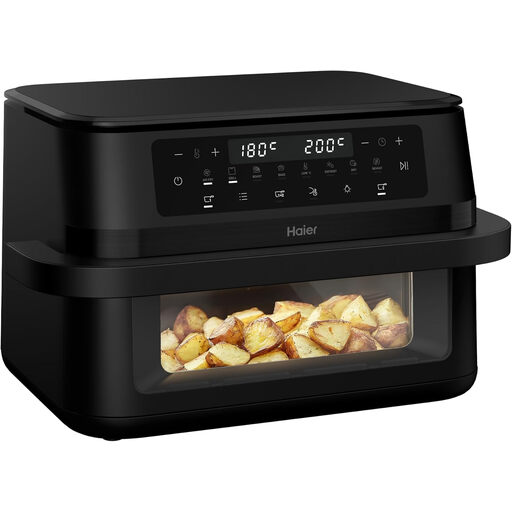 No image available
Consider this worktop model if you would use its bake function alongside its other named cooking modes. The title specifies an 11L capacity, divider, viewing window and eight functions; check the usable basket area for your parcels and confirm that its baking settings suit your recipe. Check the electrical instructions for your intended socket arrangement.
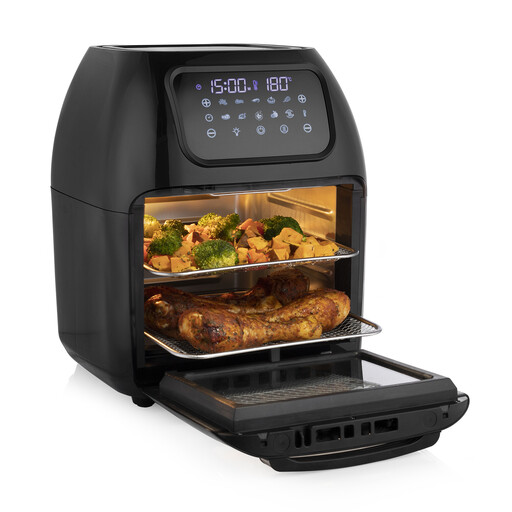 No image available
Consider this countertop oven if baking parcels is one of several cooking tasks you have in mind. Its title states 10L, 1800W, ten programmes and dishwasher-safe parts. Check which supplied accessory gives your parcels a suitable single-layer layout, as well as the model’s electrical instructions.
 No image available
Consider this model if you want convection cooking and microwave use in one appliance. Its title states a 28L capacity, 900W microwave rating and convection cooking. Check the convection temperature settings, usable space for your dish and electrical requirements; the microwave wattage is not a convection-oven temperature or power rating.
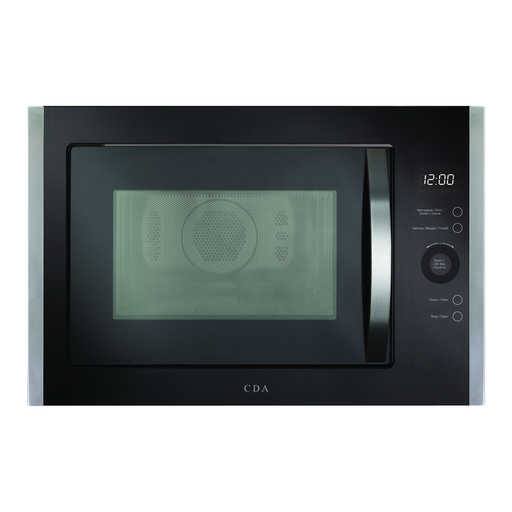 No image available
Consider this built-in model only if a fitted appliance suits your kitchen plans. Its title identifies grill and convection functions, a 25L capacity and a 900W microwave rating. Check cabinet fit, installation requirements, convection settings and the usable area for your parcel layout before ordering.
Use an existing fan oven if its tray and shelf arrangement accommodate your parcels in one layer; consider a countertop oven if you also expect to use it regularly for other cooking. Electrical Safety First describes fan ovens as distributing heat evenly, but the number of parcels that fit depends on the exact appliance and tray.
Yes, if the model has a convection-bake setting suitable for your recipe and your dish fits its cooking area. Panasonic lists convection baking at 40°C and 100–220°C for its NN-CD88, which uses a 360 mm turntable; follow the instructions for the model you choose.
Plan how you will handle, chill, pack and transport the fish, not just how you will bake it. The Food Standards Agency identifies cooking, chilling, handwashing, cross-contamination and use-by dates as connected food-safety practices.
Check the exact appliance’s connection and power requirements against the socket and circuit you intend to use. Electrical Safety First warns that extension leads can have different current ratings and must not be overloaded; seek qualified electrical advice if your setup is uncertain.
It may: Electrical Safety First notes that some ovens use a standard plug while others require hardwiring. Check the exact model’s cabinet, clearance and electrical installation instructions before ordering rather than assuming it connects like a plug-in countertop appliance.