Small groups sharing out separate portions
Four-pot multipacks let each person take a sealed pot without passing round a serving spoon. Check the weight and flavour of each pot, and leave room for the pack in a cool bag.


For a summer picnic, choose individual pots when people need separate portions without a serving spoon; choose a larger tub for dips or toppings when you can serve it cleanly and keep it cool between servings. The Food Standards Agency advises keeping yoghurt in a cool box or cool bag with ice or frozen gel packs. If “4 pint” means four portions, compare four-pot packs by their stated weights rather than assuming it describes a yoghurt pack size.
Four-pot multipacks let each person take a sealed pot without passing round a serving spoon. Check the weight and flavour of each pot, and leave room for the pack in a cool bag.
A larger natural or Greek-style tub can be spooned onto fruit or served with savoury food. Take a clean serving utensil and return the tub to the cool bag between servings.
If organic production, lactose-free yoghurt, fat content or an ingredient matters to your group, compare the exact products. A claim on one flavour or range does not establish what is in another pot.
Decide how the yoghurt will be served, then check that the pack suits your group’s labels and your plan for keeping it cool.
| Priority | What to check | Your needs |
|---|---|---|
| Keeping it cool | The Food Standards Agency advises carrying yoghurt in a cool box or cool bag with ice or frozen gel packs. Plan how to keep it cool during serving, too. | I need enough cool-bag space for the yoghurt throughout the outing, not just for the journey there. |
| Portions and serving | Compare the number of pots and their individual weights with a tub’s total weight. Allow for a clean serving spoon if choosing a shared tub. | Separate pots suit our group if everyone will take one portion; a tub makes more sense if we will spoon yoghurt onto other food. |
| Ingredients and allergens | Read the exact variant’s ingredients and highlighted allergens. The Food Standards Agency identifies milk as a common ingredient in yoghurt; check lactose-free claims separately from milk-allergen information. | Someone in our group needs the ingredients checked before I choose a flavour or pack. |
| Product labels | Compare nutrition per 100g and per serving where shown. Check whether claims such as fat free, no added sugar or organic apply to the particular product. | I care about a stated product feature, rather than assuming every yoghurt from the same brand has it. |
The named products include four-pot packs and larger tubs labelled by weight. “Four pots”, “four servings” and “one tub to share” lead to different purchases.
Decide which you mean, then compare the pot count, total weight and serving method on the pack.
Yoghurt needs to stay cool at a picnic, according to the Food Standards Agency. A pack that fits the basket may still be impractical if it will not fit in the cool bag with ice or frozen gel packs.
Check your cool-bag capacity before choosing the pack, and take yoghurt out when it is needed.
Brands offer different recipes and formats. An organic, lactose-free or fat-free claim on one product does not establish the ingredients or nutrition of another.
Read the selected pack’s ingredients, allergens, nutrition and storage instructions, particularly when buying for someone with a specific requirement.
A tub used for dips or toppings needs a clean utensil and a way to stay cool between servings.
Serve the amount needed and return the tub to the cool bag. If that will be awkward, consider sealed individual pots instead.
These examples show formats and labels to compare; check the particular product you intend to buy.
Müller describes its Light Greek Style Strawberry yoghurt as a four-pack, making it a reference for separate picnic portions.
Onken describes its Natural 1kg yoghurt, made with whole milk, as suitable for dips.
Yeo Valley lists Natural Yogurt sizes including 4 x 110g, 450g and 950g, allowing a choice between pots and a shared tub.
Rachel’s lists Luscious Fruits 4 x 110g multipacks and a 450g Greek Style Natural Lactose Free yoghurt.
Activia lists Natural Yogurt 400g and other large-pot formats; Tesco lists Activia 4 x 115g multipacks.
Tesco is a retailer reference rather than a yoghurt brand in this comparison. Its multipack category lists products including Müller Light 4 x 115g and Yeo Valley 4 x 100g.
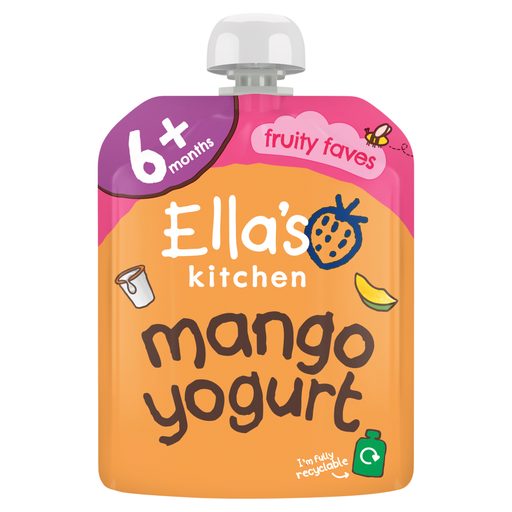
This option is a single yoghurt-containing pouch for a young child at a picnic, not a four-pot multipack or a tub for sharing.
 No image available
This 90g pouch is an individual option for a child aged 6+ months, rather than a pack for the whole group. Its stated instructions say to serve the contents into a bowl or onto a spoon and warn that the cap can be a choking hazard for children under 36 months. Keep the yoghurt cool at the picnic.
Yes, if you can keep it cool. The Food Standards Agency advises putting yoghurt in a cool box or cool bag with ice or frozen gel packs; take it out when needed and keep it cool between servings.
Choose individual pots for separate portions without a serving spoon. A larger tub suits a shared dip or topping when you can serve it with a clean utensil and keep it cool between servings.
Clarify whether you need four pots, four servings or one larger tub. Named-brand examples include 4 x 110g and 4 x 115g packs and tubs labelled by weight, so compare the actual quantity and format rather than relying on “4 pint”.
Do not assume it is. The Food Standards Agency identifies milk as a common yoghurt ingredient; check the selected product’s ingredients and allergen statement rather than treating a lactose-free label as a milk-allergen-free claim.
Yes. Follow the pack’s storage instructions and keep it cool at the picnic. The Food Standards Agency distinguishes a use-by date, which relates to food safety, from a best-before date, which relates to quality; neither replaces chilled transport and serving.