
24/7 Customer Support

Free returns

Same-day & Next-day Delivery

Quality Guaranteed

Unlock Your Welcome Offers: FREE Delivery | Up to 80% OFF | Free 30-day JoyPlus trial
Download the APP
A Pilates reformer board can make home workouts more varied without requiring a full studio setup. However, product listings often use broad claims such as “full-body training” or “adjustable resistance” without explaining what is included, how much floor space is needed or whether the equipment suits your routine.
Before buying, UK shoppers should look beyond the headline features. The right Pilates exercise board should match your available space, experience level and preferred exercises, while offering clear specifications and practical storage.
A compact Pilates board may support resistance-band exercises, sliding movements and floor-based strength work. It is not necessarily equivalent to a large studio reformer with a carriage, springs, foot bar and tower.
Check the product images and description carefully. A foldable Pilates reformer is generally designed for convenience and storage, while a traditional reformer requires considerably more floor space and may need permanent positioning.
“Adjustable resistance” can mean different things. Some products use interchangeable bands, while others include a fixed resistance system or several attachment points. Look for information about:
A Pilates board with resistance bands can support upper-body, lower-body and core exercises, but the training feel will depend on the band arrangement and your body position.
A board may be compact when folded but still need enough space for arms, legs and band tension during use. Measure the workout area, including clearance around the equipment. For UK homes with limited spare room, consider whether the item can be stored under a bed, behind a door or in a cupboard.
Also check the listed dimensions. The referenced Pilates board measures 42 inches deep by 16 inches wide and 1.5 inches high, giving you a useful starting point for planning your space.
A useful adjustable resistance Pilates machine should allow you to select a level that matches your current ability and the movement being performed. Beginners may prefer lighter resistance for learning form, while regular users may want stronger bands for controlled strength exercises.
Consider whether the board supports the activities you actually plan to do, such as:
If you want to add targeted exercises, a Pilates ring can complement a reformer board by creating resistance between the thighs, arms or hands.
Look for clearly stated materials and inspect product images for the board surface, handles, band anchors and foot supports. A stable base is important because movement can become uncomfortable if the equipment shifts across a hard floor.
A non-slip exercise mat may improve positioning and help protect flooring. Always follow the manufacturer’s instructions, particularly when attaching bands or increasing resistance.
For accessories such as a Pilates ring, check the material and dimensions. The listed lightweight ring is approximately 40–42 cm in diameter and uses PP and PE materials. Its compact format may suit home storage, travel or supplementary inner-thigh, arm and core exercises.
Before buying, look for accessible instructions, assembly details and care guidance. Where applicable, check whether the product information identifies relevant UKCA or CE marking, load guidance and responsible-supplier details. These markings should not be treated as a substitute for reading the instructions or checking that the product is suitable for your intended use.
Inspect resistance bands regularly for cracking, stretching, fraying or other visible damage. Wipe hard surfaces clean with a soft, damp cloth and allow them to dry fully before storage. Do not use damaged bands.
The following options are organised by practical user profile rather than broad marketing promises. Product availability, specifications and pricing can change, so review the individual listing before ordering.
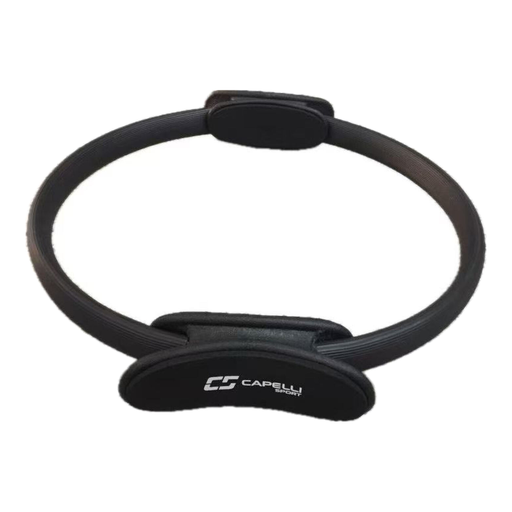
Why This Fits Their Persona: Its compact format suits beginners building a simple home Pilates equipment collection, renters with limited storage and anyone who wants portable Pilates equipment for travel or occasional workouts.
The stated 40–42 cm diameter and lightweight PP and PE construction make its format clearer than vague “compact” claims. It is an accessory rather than a falsely presented full reformer.
Lightweight, no installation required and suitable for targeted inner-thigh, arm and core exercises.
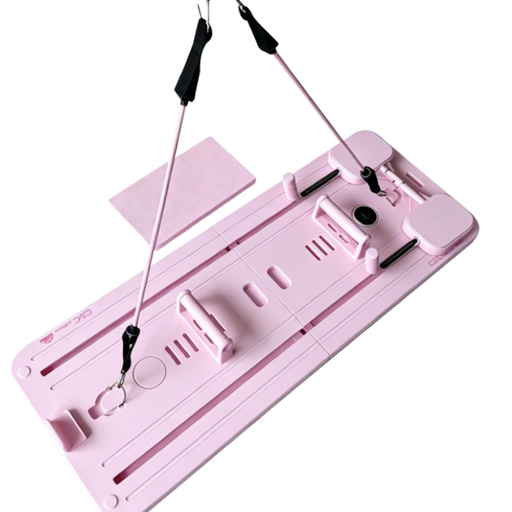
Why This Fits Their Persona: This option is suited to users who want a more structured home setup with a board, resistance system, smart timer and phone holder for guided sessions.
The listing provides stated dimensions and identifies adjustable resistance rather than leaving the board size and training method unclear.
Foldable format, adjustable resistance, a smart timer and phone holder are listed features.
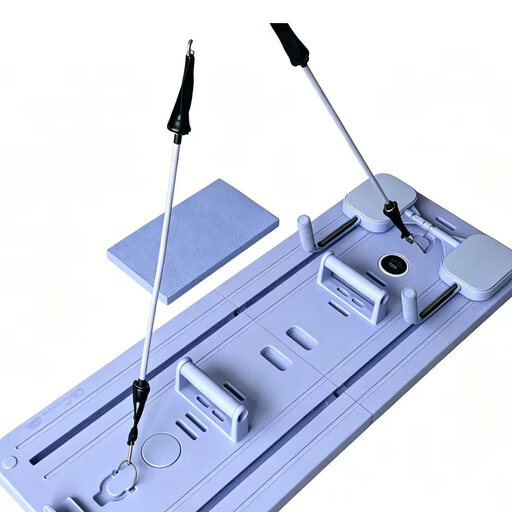
Why This Fits Their Persona: Regular users seeking a repeatable full-body Pilates workout may value the combination of resistance-band training, a foldable board and accessories for session tracking.
Its stated 42-inch length and 16-inch width help heavy users plan their exercise area instead of relying on an unspecified “space-saving” description. Check the listing for current load information before purchase.
Foldable storage format, multi-function resistance bands and a phone holder for following digital workout content.
We have compiled a complete, real-time list of products that fully satisfy these strict selection criteria and UK safety regulations.
It can be, provided you start with low resistance, follow the instructions and use controlled movements. Choose a model with clearly described resistance adjustment and avoid increasing tension until you are comfortable with the basic exercises.
Measure the equipment’s stated dimensions and add clearance for your arms, legs and resistance bands. The referenced board is 42 inches long and 16 inches wide, but your active workout area will need to be larger than the stored footprint.
Most compact boards do not require electricity for basic resistance exercises. Potential ongoing costs may include replacement resistance bands, a suitable exercise mat or optional accessories. Inspect bands regularly and replace them when they show visible wear rather than continuing to use them.