
24/7 Customer Support

Free returns

Same-day & Next-day Delivery

Quality Guaranteed

Unlock Your Welcome Offers: FREE Delivery | Up to 80% OFF | Free 30-day JoyPlus trial
Download the APP
Pilates and resistance bands can support strength, mobility and lower-body workouts without taking up much space. However, choosing the wrong style may leave you with equipment that rolls, smells strongly, stretches unevenly or does not suit your training routine.
Before buying, look beyond bright colours and claims about “maximum resistance”. The useful questions are simpler: What material is used? How much resistance do you need? Will the band stay in place during your preferred exercises?
Colours are not standard across every manufacturer. A red band from one set may not provide the same level of resistance as a red band from another. Check whether the product clearly identifies the levels as light, medium and heavy, or provides another measurable specification.
A resistance band set with several levels is usually more adaptable than a single band, particularly if more than one person will use it or if your training changes over time.
Thin elastic exercise bands can move during squats, side steps or glute exercises. Loop bands made from smooth latex may also roll when placed around the thighs. Fabric hip bands are often selected by shoppers who prefer a wider, textured surface.
Still, no band is suitable for every movement. A fabric loop may be practical for lower-body training, while a flat band may offer more versatility for stretching, yoga and Pilates exercises.
Natural rubber latex is flexible, but it is not the right option for everyone. If you prefer a latex-free product, check the material carefully. TPE bands can provide a soft-touch, latex-free alternative.
Also consider maintenance. Bands should be checked for cracks, thinning, tears or other damage before use. Keeping them away from sharp objects, direct sunlight and excessive heat may help preserve their condition.
For beginners, a light band can make it easier to learn movement control. Medium and heavy options may be more suitable for users who already perform resistance training or want a greater challenge during glute and leg workout band routines.
A set containing three levels gives you more control over progression. You can also use a lighter band for warm-ups and mobility work, then select a stronger option for suitable lower-body exercises.
Mini loop bands are closed loops designed for exercises such as lateral steps, glute bridges and squats. The loop size should fit comfortably around the thighs or legs without cutting into the skin.
Flat resistance bands are open-ended strips. A 120 cm length, for example, can be useful for Pilates, yoga, stretching and physical therapy band exercises, although the exact suitability depends on the movement and the user’s height.
A Pilates ring provides a different type of resistance. Rather than stretching like a band, it is compressed between the hands, thighs or knees. A lightweight ring can be convenient for core, arm and inner-thigh exercises.
Look for a clearly stated material, such as cotton fabric, TPE or natural rubber latex. Cotton fabric may offer a textured grip, while TPE is listed as latex-free on some products. Natural rubber latex generally provides flexible stretch but requires consideration from shoppers who avoid latex.
Follow the supplied care instructions. Flat TPE bands can be wiped with a damp cloth and mild soap, while a Pilates ring can be cleaned with a soft, damp cloth. Allow equipment to air dry before storing it.
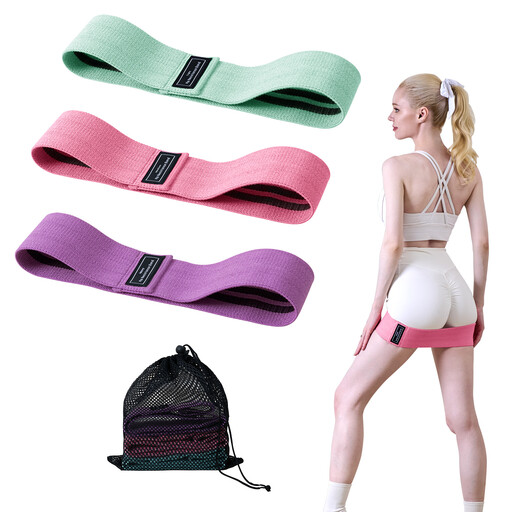
Why This Fits Their Persona: A compact three-band option for people starting home fitness, Pilates or yoga without buying several different types of equipment.
The set identifies light, medium and heavy levels, while the fabric loop design is described as non-slip and intended to resist rolling.
Three cotton fabric loop bands, a storage bag and a listed 350 g item weight.
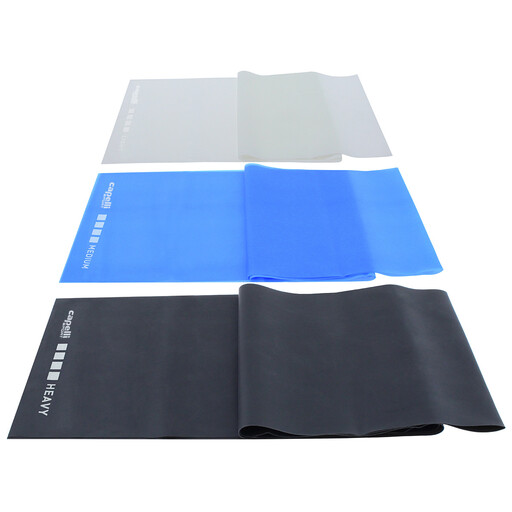
Why This Fits Their Persona: Suitable for shoppers who want a latex-free, multi-purpose set for Pilates, yoga, stretching and general resistance work at home or away.
The material is stated as latex-free and the three resistance levels are clearly separated rather than relying on colour alone.
Each flat band measures 15 cm by 120 cm and is described as odourless, soft-touch and portable.
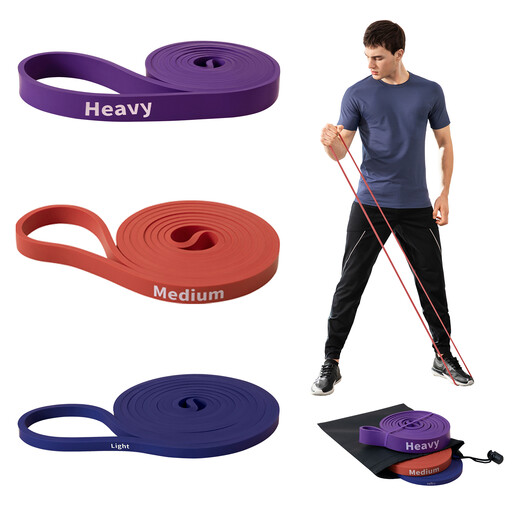
Why This Fits Their Persona: A longer band format for users combining strength training, yoga, Pilates and gym-style exercises, including routines that need more reach.
It provides three stated resistance levels and a carrying bag, helping users avoid being restricted to one intensity or one location.
Natural rubber latex construction, 208 cm length and an exercise guide are listed in the product details.
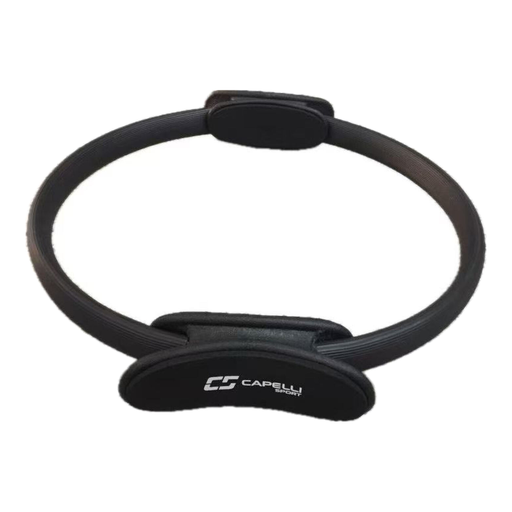
Why This Fits Their Persona: A focused choice for Pilates and yoga users who prefer a ring for controlled pressing exercises rather than a stretchable band.
Its ring format avoids the rolling issue associated with some loop bands and provides a clearly different resistance method.
The lightweight ring has a listed diameter of 40 cm and is made from PP and PE materials.
We have compiled a complete, real-time list of products that fully satisfy these strict selection criteria and UK safety regulations.
Yes, but place them on a clear, stable surface and remove nearby furniture or sharp objects. Carpet may reduce slipping, although it does not prevent a damaged band from breaking. Inspect the equipment before each session and follow the supplied instructions.
Lifespan depends on material, frequency of use, stretching range and storage. Replace a band if you notice cracks, tears, thinning, sticky areas or permanent distortion. Store bands clean and dry, away from direct sunlight and heat.
Not necessarily. Choose a ring if you mainly want controlled pressing exercises for Pilates routines. Choose loop resistance bands for glute and leg training, or flat bands for more flexible stretching and upper-body movements. A combination can broaden your home fitness equipment, but starting with the format that matches your regular routine helps avoid unnecessary spending.