
24/7 全天候客户支持

免费退货

当日/次日达

品质保障

开启新人专享福利: 全场免邮 | 低至 2 折 | 免费试用 30 天 JoyPlus 会员
下载 Joybuy
A pill organiser can make daily routines easier, but choosing one based only on compartment count or attractive packaging can lead to wasted money. The right format depends on how often medication is taken, the size of tablets and capsules, who will open the box and where it will be stored.
Before buying a weekly pill organiser, daily pill box or travel pill organiser, watch for three common pitfalls.
A box with many sections may look practical, but small compartments can be unsuitable for bulky fish oil capsules, larger vitamins or several tablets taken at the same time. A nominal “large capacity” label should be checked against the actual compartment layout and whether each section is intended for one dose or one day.
Some products are described as waterproof or moisture-resistant, but this does not automatically mean they can be submerged or placed in a bathroom where condensation is common. Look for a sealed lid, silicone ring or clearly described moisture-protection design. Even then, medicines should generally be kept dry and stored according to the instructions supplied with the medication.
A snap-shut lid may reduce accidental opening in a bag, but it can be inconvenient for people with arthritis, reduced grip strength or long nails. A pill organiser for arthritis should balance closure security with an easy-open mechanism. Push-button lids, ergonomic tabs and smooth hinges are practical details worth prioritising.
Start by matching the organiser to the routine:
If a routine changes regularly, removable daily boxes or separate compartments can make sorting easier. Always check labels carefully when filling a medicine organiser and follow the dispensing instructions provided by a pharmacist or prescriber.
Capacity should be considered in relation to pill shape, not just the number of sections. Capsules and fish oil supplements take up more room than small tablets. A large-capacity pill dispenser may be preferable for multiple supplements, while a compact portable pill case is more convenient for a handbag, coat pocket or travel washbag.
Check the listed dimensions and whether the organiser has individual compartments. A box that combines a week’s supply in one container may be easier to store, while separate daily cases can reduce the need to carry the entire organiser.
Look for practical construction details such as BPA-free plastic, secure hinges, clearly printed or etched day labels and a lid that closes consistently. Printed labels may become less readable over time, while etched markings are designed to remain visible.
A waterproof pill case or sealed pill organiser can help reduce exposure to everyday moisture, but it should not be treated as a substitute for proper medicine storage. Keep compartments clean and completely dry before refilling. Avoid storing tablets loose with unrelated products and do not use a pill box for liquid medicine unless its instructions specifically allow this.
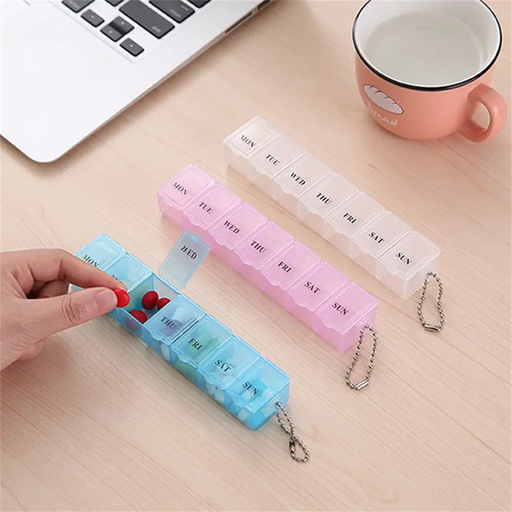
Why This Fits Their Persona: A two-piece format is a straightforward starting point for separating supplies or keeping one organiser at home and another in a bag.
The pack format avoids relying on one container for every situation, helping separate home and portable use.
Two organisers are included, giving flexibility for daily medication, vitamins or backup storage.
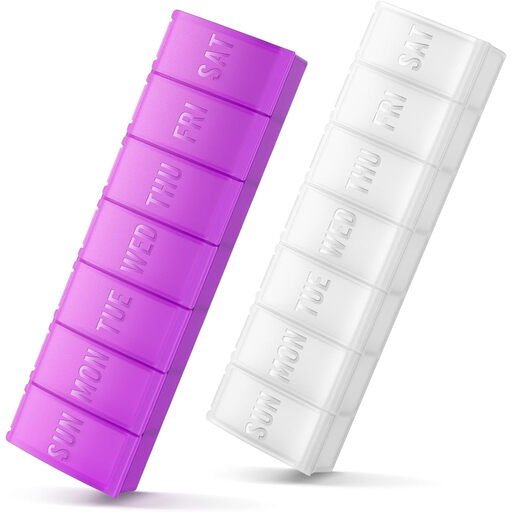
Why This Fits Their Persona: This option is suited to users who want a weekly medicine organiser with larger sections for vitamins, fish oil and daily supplements.
The product details specify large compartments, smooth hinges and ergonomic easy-open lids rather than relying only on a secure closure claim.
BPA-free plastic, permanently etched day labels and a two-pack format are specified.
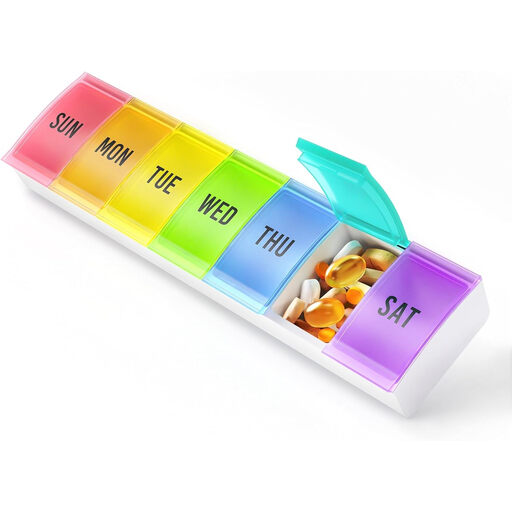
Why This Fits Their Persona: The ergonomic lids and seven-day layout are designed for older users, people with arthritis or anyone who finds small catches difficult.
Its stated easy-open lid design addresses the risk of choosing a box that is secure but awkward to handle.
Seven compartments, colour covers and stated capacity for up to 8 fish oils or 17 capsules per compartment.
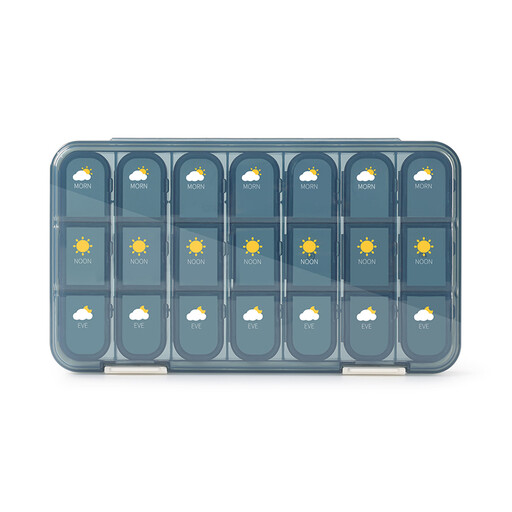
Why This Fits Their Persona: A 21-compartment layout suits people organising three daily doses across seven days, including carers preparing a structured weekly routine.
The specified silicone sealing ring and snap-lock lid address moisture exposure and accidental opening more directly than a basic loose-fit box.
Food-grade PP plastic, 21 compartments and a sealed design intended for home, office or travel storage.
We have compiled a complete, real-time list of products that fully satisfy these strict selection criteria and UK safety regulations.
There is no fixed lifespan because it depends on the material, frequency of opening and cleaning. Replace it when labels become unclear, lids stop closing securely, hinges loosen or seals show damage. A product’s stated cycle rating can provide useful context, but it is not a guarantee of performance in every household.
Not necessarily. Some medicines are sensitive to moisture, light or air and may need to remain in their original packaging. Ask a pharmacist before transferring prescription medication and follow the storage instructions on the label. A pill organiser is generally more suitable for products that can safely be stored in compartments, including some vitamins and supplements.
For short trips, a compact travel pill organiser with separate compartments can reduce bulk. For longer journeys or several daily doses, choose a 7-day pill box or sealed organiser with enough capacity for your routine. Check the closure, dimensions and moisture protection rather than relying on the word “portable” alone.