
24/7 Customer Support

Free returns

Same-day & Next-day Delivery

Quality Guaranteed

Unlock Your Welcome Offers: FREE Delivery | Up to 80% OFF | Free 30-day JoyPlus trial
Download the APP
A pill organiser can make daily routines easier, but choosing one based only on appearance or compartment count can lead to avoidable problems. The right design depends on how often medicines are taken, the size of the tablets, who will open the lids and where the organiser will be stored.
Before buying, look beyond phrases such as “large capacity”, “waterproof” or “easy open”. These descriptions can mean different things across products. Check the actual layout, closure and material details instead.
A compact pill box may look convenient but fail to hold larger capsules, fish oil softgels or several supplements together. If you take multiple items at the same time, check the compartment dimensions or the stated capacity where available.
A large-capacity pill dispenser is more suitable for several tablets per dose, while a small daily pill case may be sufficient for occasional vitamins or a short trip.
A snap closure can help prevent accidental opening, but it does not automatically make a pill container airtight. Moisture protection depends on the lid design, sealing ring and how securely the case closes.
For storage in a handbag, suitcase or bathroom cabinet, look for a clearly described silicone seal, moisture-resistant construction or sealed lid. Even then, medicines should be stored according to the instructions on the packaging and kept away from excessive heat and humidity.
A stiff hinge or small latch can be frustrating for older users, people with arthritis or anyone with reduced grip strength. Conversely, a lid that opens too easily may not be suitable for carrying in a pocket or travel bag.
An arthritis-friendly pill box should have a push-button, broad tab or ergonomic lid that can be operated without excessive force. Always check that ease of opening does not compromise secure closure.
Start with the number of doses required each day:
Clear day markings reduce mix-ups, but labels should remain readable after repeated cleaning and use. Permanently etched or fade-resistant markings may be preferable to labels that can peel.
Count the number of tablets and capsules taken at each dose, then allow some extra room. A compartment that is packed tightly can make tablets difficult to remove and may prevent the lid from closing properly.
Large compartments are helpful for vitamins, supplements and fish oil capsules. However, a larger organiser may take up more room on a bedside table or in luggage. Compare capacity with portability rather than assuming that a bigger case is automatically more practical.
Food-grade or BPA-free polypropylene and plastic are common materials for pill containers. Look for smooth internal surfaces that are easy to wipe clean. Before refilling, compartments should be completely dry.
A pill organiser is not a replacement for the original medicine packaging in every situation. Some medicines may require specific light, moisture or temperature protection. Check the medicine label or ask a pharmacist before transferring tablets or capsules. Do not mix different medicines in one compartment unless you have confirmed that this is appropriate.
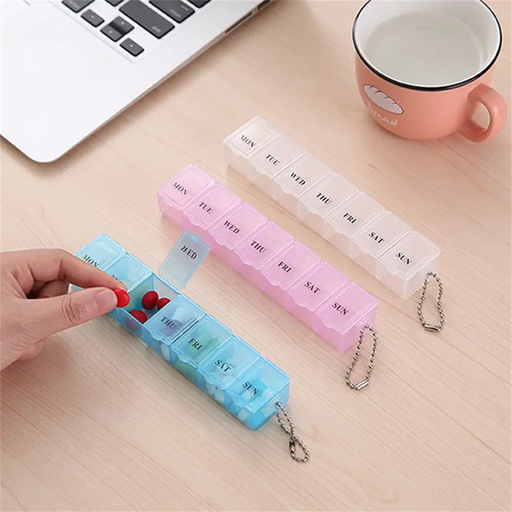
Why This Fits Their Persona: A two-piece option can suit someone starting a simple medication or vitamin routine, or anyone wanting a spare pill container for a handbag or bedside table.
The two-piece format avoids committing to a bulky weekly organiser before you know which layout suits your routine. Check the compartment size before ordering.
Two organisers are included; the compact format is suitable for basic daily storage and keeping a spare to hand.
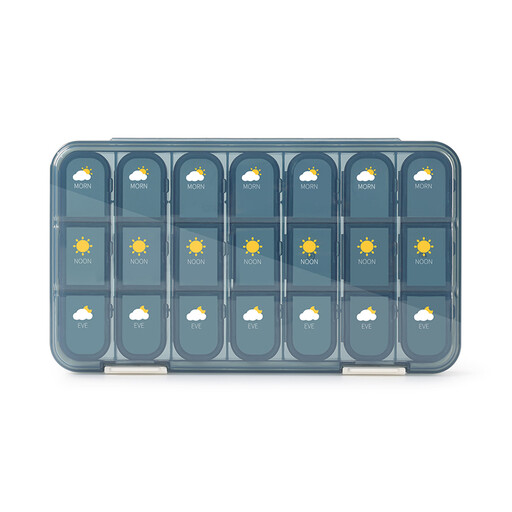
Why This Fits Their Persona: This suits users who want a structured weekly system with separate daily sections and additional protection for storage at home, work or while travelling.
Its product description specifies a snap-lock lid, silicone sealing ring and seven removable daily boxes, rather than relying only on a general moisture-resistant claim.
Food-grade PP plastic; seven removable Monday-to-Sunday compartments; stated large capacity for tablets, fish oil capsules and supplements.
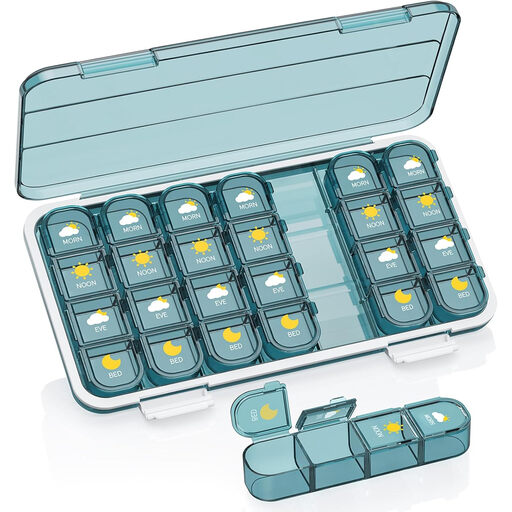
Why This Fits Their Persona: A four-dose-per-day layout is designed for users whose routine cannot be covered by a simple AM/PM pill case, including carers preparing a more detailed schedule.
The clearly separated four-times-a-day format helps avoid squeezing several doses into one undivided compartment.
Seven-day arrangement; four daily sections; separate-case design supports preparation and portability.
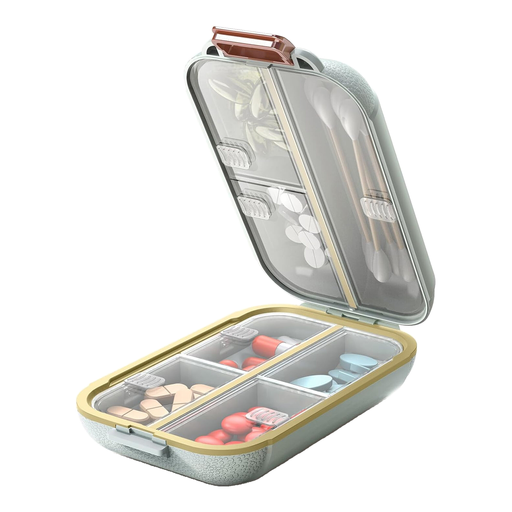
Why This Fits Their Persona: The compact seven-compartment format is suitable for short breaks, work commutes or carrying a week of a simple daily routine without a large case.
The stated seven compartments provide a defined daily or travel layout, while the airtight lid description addresses the common mistake of assuming every small case protects against humidity.
Seven compartments; BPA-free material stated in the product description; compact portable pill case format.
We have compiled a complete, real-time list of products that fully satisfy these strict selection criteria and UK safety regulations.
When filling a medicine organiser, use a clean, dry surface and check each label carefully. It can help to prepare the organiser at the same time each week, then compare it with the original packaging or prescribed schedule.
Keep the organiser:
Do not use a tablet cutter on medicines unless the tablet is suitable for splitting. Modified-release, enteric-coated and specially formulated tablets may not be appropriate for cutting. Ask a pharmacist if you are unsure. A tablet cutter pill case is a storage convenience, not a guarantee that every tablet can be divided safely.
Replace it when hinges, lids, seals or compartments become cracked, loose, stained or difficult to clean. There is no universal replacement interval because lifespan depends on daily use, cleaning and the material. Inspect it regularly, particularly if it is carried in a bag.
No. Some medicines require their original packaging or particular protection from moisture, light or temperature. Check the storage instructions and speak with a pharmacist before transferring prescription medicines into a weekly medicine organiser.
A travel pill organiser should close securely, fit inside your luggage or personal bag and provide enough compartments for the length of the trip. A portable pill case with separate daily sections can make checking doses easier, while a smaller four- or six-compartment case may suit a short journey. Keep prescription information and original packaging available when required, especially for international travel.