
24/7 全天候客户支持

免费退货

当日/次日达

品质保障

开启新人专享福利: 全场免邮 | 低至 2 折 | 免费试用 30 天 JoyPlus 会员
下载 Joybuy
Choosing a pill organiser should make routines simpler, not create another source of confusion. UK shoppers may be comparing a weekly pill organiser, daily pill case or portable pill box based on appearance and price, but the practical details matter more: can you open each compartment easily, will it hold the required dose and does the closure suit travel?
Before buying, watch for three common pitfalls.
A pill organiser is for organising doses, not for changing how medicine should be taken. Keep medicines in their original packaging when required, follow storage instructions and ask a pharmacist whether a particular medicine can be removed from its packaging or stored together with others.
Start with the routine you need to organise. A daily pill case with three or four sections may suit a few doses during the day, while an AM PM pill organiser separates morning and evening use. If your schedule includes several medicines or supplements, a large capacity pill dispenser with multiple sections may be more practical.
Check:
A seven-day design is not automatically suitable for every prescription. Some users may need a pill organiser 3 times a day or 4 times a day, depending on their prescribed schedule.
An easy-open lid is valuable if finger strength, dexterity or eyesight is limited. Users searching for a pill organiser for arthritis should look for broad tabs, push-button mechanisms or ergonomic lids rather than tiny snap points.
However, “easy open” should still mean secure when carried. A lid that opens too readily can spill contents into a handbag or suitcase. Compare the closure type, hinge design and whether individual sections remain shut if the organiser is dropped.
Food-grade or BPA-free plastic can be a useful specification, but it does not replace checking the construction. Look for smooth surfaces, secure hinges and labels that are printed or etched clearly. A silicone sealing ring may help limit moisture entering a compartment, although it is sensible to treat any waterproof pill case claim cautiously unless the product description states a defined level of protection.
For everyday hygiene, empty the tablet storage box before cleaning, use mild soap or a damp cloth according to the instructions and let every compartment dry fully before refilling. Do not place a plastic organiser in a microwave or dishwasher unless the manufacturer specifically permits it.
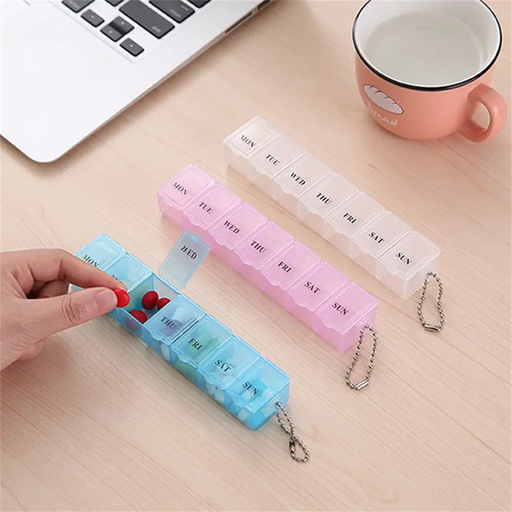
Why This Fits Their Persona: A two-piece option is practical for someone starting a vitamin organiser routine or wanting separate boxes for home and work.
The pack format can provide a straightforward starting point without committing to a complex weekly layout; check compartment details before ordering.
Two boxes included; suitable for separating different daily routines or keeping a spare.
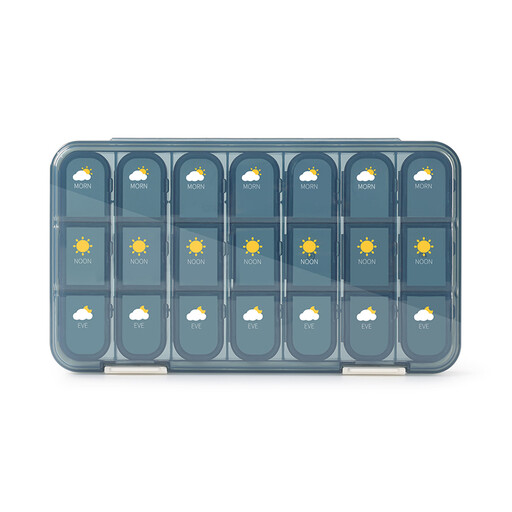
Why This Fits Their Persona: Suitable for shoppers who prioritise organised daily doses and a sealed design for home, office or travel use.
Its stated 7 removable daily compartments and silicone sealing ring make the layout and closure features clearer than vague “waterproof” wording.
Food-grade PP plastic; snap-lock lid with silicone sealing ring; Monday-to-Sunday compartments.
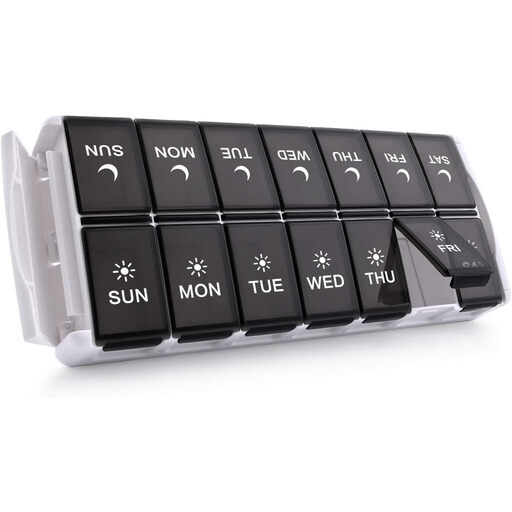
Why This Fits Their Persona: The twice-a-day format suits users managing morning and evening vitamins, supplements or medicines across seven days.
The AM/PM labels reduce reliance on memory, while the removable bottom cap is designed to support weekly filling.
Seven days of AM/PM compartments; stated capacity for multiple capsules, vitamins or fish oils per section.
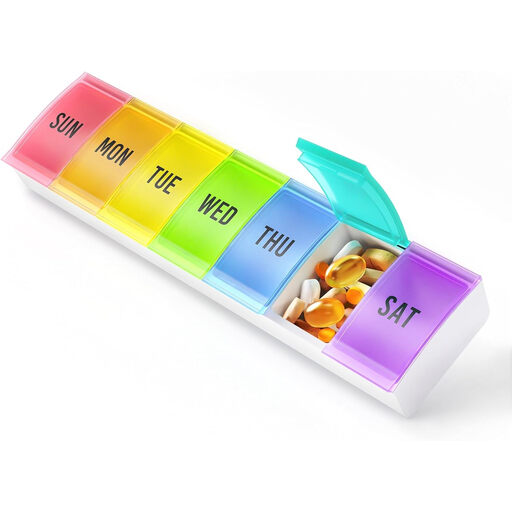
Why This Fits Their Persona: Its ergonomic lids and seven-day layout are worth considering for older users or people who find small, stiff lids uncomfortable.
The product description specifies ergonomic lids, secure snap-shut closures and colour covers, addressing access, identification and accidental opening concerns.
Seven compartments; BPA-free food-grade plastic; stated capacity for large capsules and supplements.
We have compiled a complete, real-time list of products that fully satisfy these strict selection criteria and UK safety regulations.
There is no universal lifespan. Hinges, lids and seals may wear through repeated opening, exposure to heat or incorrect cleaning. Replace the organiser if it cracks, no longer closes securely, becomes difficult to read or shows residue that cannot be removed. Check it regularly rather than relying on a fixed replacement date.
A compact travel pill organiser can be convenient, but keep prescription medicines in original labelled packaging where possible and carry supporting documentation for controlled or prescribed medicines. Check the requirements of your airline and destination, particularly when travelling internationally. A portable pill box should not be used to conceal medication from customs or security checks.
No. Some medicines require original packaging, specific humidity control, refrigeration or light protection. A sealed closure may help with everyday organisation, but it does not guarantee suitability for every medicine. Follow the dispensing label and ask a pharmacist before transferring tablets, capsules or liquid medicines into a tablet storage box.