
24/7 全天候客户支持

免费退货

当日/次日达

品质保障

开启新人专享福利: 全场免邮 | 低至 2 折 | 免费试用 30 天 JoyPlus 会员
下载 Joybuy
Managing daily medication, vitamins or supplements is easier when every dose has a clear place. However, choosing the right pill organiser involves more than counting compartments. A case that looks convenient online may be difficult to open, too shallow for larger capsules or poorly suited to travel.
This guide explains the key features to check, common buying pitfalls and which organiser styles may fit different routines.
A 28-compartment case may appear more practical than a 7-day pill box, but small sections can become cramped when storing fish oil, large vitamins or several tablets together. Check the dimensions and stated capacity of each compartment, rather than relying only on the total number.
A weekly pill organiser with seven roomy sections may be more suitable for one daily dose, while an AM PM pill organiser or four-times-a-day design is more appropriate for more frequent routines.
A secure lid is useful only if it can be opened comfortably. Stiff snap closures may be frustrating for older users or people with arthritis, while very loose lids can open inside a handbag or suitcase.
Look for practical details such as push buttons, ergonomic lids, smooth hinges or clearly described snap closures. Marketing terms such as “easy open” should be supported by a clear description of how the lid works.
A moisture-proof pill box may help reduce exposure to everyday humidity, but it should not automatically be treated as waterproof or suitable for immersion. Cases with seals still need to be closed correctly, stored away from excessive heat and kept dry before refilling.
For medicines with specific storage requirements, follow the instructions on the packaging and ask a pharmacist whether transferring them into a medicine organiser is appropriate.
Start by mapping the organiser to your actual routine:
Removable daily containers can also be useful for carers or anyone who wants to carry only one day’s supply.
Plastic is common because it is lightweight and easy to wipe clean. Check whether the listing identifies the material as BPA-free plastic, polypropylene or food-grade plastic, and look for useful construction details such as reinforced hinges, etched labels or a silicone sealing ring.
Labels should remain readable throughout regular use. Permanently etched or fade-resistant day markings are less likely to peel than simple stickers.
Measure the case against the space where it will be stored. A long weekly case may fit neatly in a bedside drawer but be less suitable for a small handbag. For travel, consider:
Do not fill compartments beyond their intended capacity. Keep the organiser away from children and pets, and check for cracks or damaged seals before use.
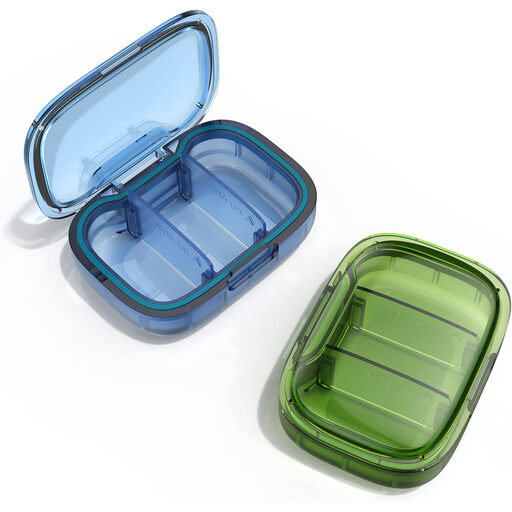
Why This Fits Their Persona: Two compact cases provide a straightforward option for handbags, pockets or keeping a spare at work. The three-section format suits short trips or separating a small number of daily items.
The smaller layout makes its capacity limitations clear, reducing the risk of buying a large-looking case with undersized sections.
Pack of two; three compartments per case; described as moisture-proof and portable.
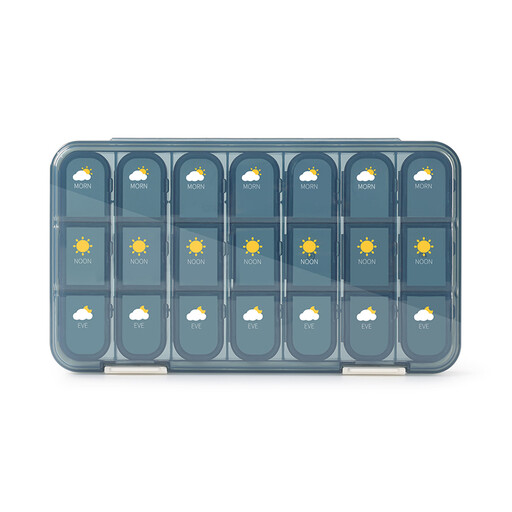
Why This Fits Their Persona: This option is suited to users who want a structured weekly system with separate daily containers for home, work or travel.
The listing specifies a silicone sealing ring and snap-lock lid, providing more concrete detail than a general “sealed” label.
Seven removable daily compartments; 21 compartments overall; snap-lock closure with silicone seal.
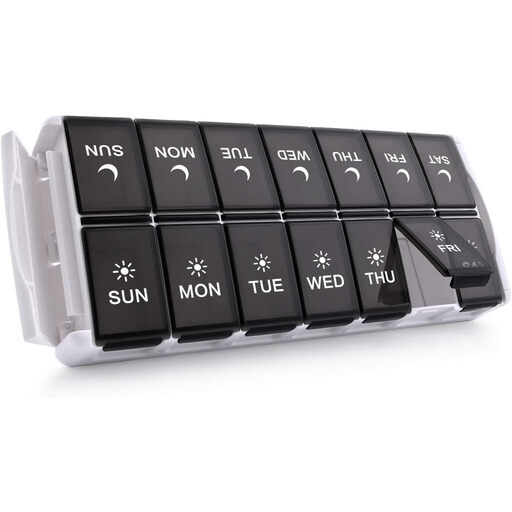
Why This Fits Their Persona: A practical match for people taking larger quantities of vitamins, fish oil or supplements twice daily and wanting to prepare a full week in one session.
The stated AM/PM layout and compartment measurements make it easier to compare real capacity with your routine.
14 labelled AM/PM sections; removable bottom cap for filling; BPA-free plastic; stated capacity for multiple large items.
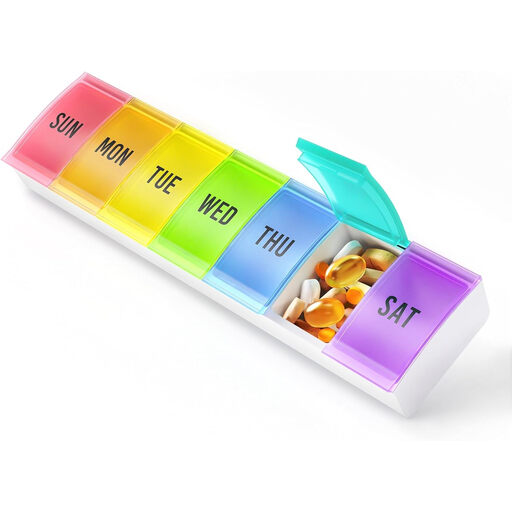
Why This Fits Their Persona: The colour-coded covers and ergonomic lids are intended to make a standard seven-day routine easier to identify and handle.
Its description identifies ergonomic lids and secure snap-shut closures, rather than relying only on a vague ease-of-use claim.
Seven compartments; BPA-free food-grade plastic; colour covers; stated capacity for capsules and fish oil.
Before filling a medicine organiser, wash or wipe it according to the product instructions and allow every section to dry fully. Prepare doses in a well-lit area and compare each item with its original packaging. Keep medicines in their original packaging if the label or pharmacist advises this, particularly where storage conditions or identification are important.
A tablet cutter pill box can be convenient for suitable scored tablets, but never split a tablet unless a doctor or pharmacist has confirmed that it is appropriate. Do not use a cutter for hard, irregular or modified-release tablets unless professionally advised.
For storage, keep the organiser in a cool, dry place away from direct sunlight. Inspect hinges, lids and seals regularly. Replace the case if it becomes cracked, contaminated or difficult to close securely.
We have compiled a complete, real-time list of products that fully satisfy these strict selection criteria and UK safety regulations.
Lifespan depends on the plastic, hinge, closure and frequency of use. Clean it gently, avoid excessive force and replace it if compartments no longer close properly. Product descriptions may include hinge-cycle or durability figures, but these are manufacturer specifications rather than a guarantee for every user.
A weekly pill organiser can work for travel if its closure is secure and its size fits your luggage. For a short trip, a portable pill case with fewer compartments may take up less space. Check airline, destination and prescription requirements before travelling, and retain original medicine labels where necessary.
Cost varies with capacity, number of compartments, seals and opening mechanisms. A simple daily pill box may be sufficient for a small routine, while an AM/PM or large-capacity design may justify a higher price when it replaces several separate cases. Compare the features you will use rather than paying for unused compartment space.