
24/7 全天候客户支持

免费退货

当日/次日达

品质保障

开启新人专享福利: 全场免邮 | 低至 2 折 | 免费试用 30 天 JoyPlus 会员
下载 Joybuy
Managing tablets, vitamins or supplements can become unnecessarily difficult when a pill organiser is poorly designed. Small compartments may not hold larger capsules, lids can be awkward to open, and unclear labels can make a weekly routine harder to follow.
For UK households, the right choice depends on more than appearance or a low price. A useful pill organiser should match your dosing schedule, hand strength, storage needs and travel habits. The following guide explains the main buying pitfalls, the specifications worth checking and our top recommendations for different users.
A compact daily pill box may look convenient, but some compartments are only suitable for a few small tablets. Fish oil capsules, large vitamins and multiple medicines can quickly fill the available space. Check the stated dimensions or capacity rather than relying on phrases such as “large capacity”.
A large capacity pill organiser or 7-day pill box is more suitable when each dose includes several tablets or bulky supplements. However, a larger design may take up more space in a handbag or wash bag.
A moisture-proof pill case may help limit exposure to damp air, but this does not necessarily mean it is waterproof or suitable for a bathroom shelf. Seals, hinges and snap closures can all affect how well the container protects its contents.
Keep medicines in a cool, dry place and follow the storage instructions supplied with the medicine. If moisture protection is important, look for a clearly described seal and close every compartment securely after filling.
A lid that is too stiff can be inconvenient for older people or users with arthritis. Conversely, lids that open too easily may spill tablets inside a bag. Look for easy-open compartments, push-button mechanisms or removable daily sections, while still checking that the closure feels secure.
Printed day markings can also fade or become difficult to read. Permanently etched or clearly printed labels are practical features for a weekly pill organiser, particularly when a carer is preparing several days at once.
Start with your routine. A daily pill box may be enough for one dose each day, while an AM/PM pill organiser separates morning and evening medication across seven days. Users taking tablets three times daily may need a 21-compartment or 28-compartment design.
For occasional use, a travel pill case with four to six sections can keep a small quantity of tablets organised without carrying a full weekly container. A portable pill container should be small enough for your luggage or purse but large enough to prevent crushing and overfilling.
Many organisers use plastic such as polypropylene or other durable materials. Where stated, BPA-free plastic can be a useful material specification, but it does not automatically indicate that the container is suitable for every medicine. Always follow the medicine packaging and avoid transferring tablets if their instructions require original packaging.
Choose a case that can be wiped clean. Allow every compartment to dry fully before refilling, as residual moisture can affect tablets and supplements. Do not use harsh chemicals unless the product instructions specifically allow them.
Check whether the design uses snap-shut lids, push buttons, a silicone sealing ring or an air-tight-style closure. These features may reduce accidental opening, but no portable pill case should be assumed to protect against all humidity or water exposure.
If you are considering a tablet cutter organiser, read the safety instructions carefully. Tablet splitting is not suitable for every medicine, particularly tablets with special coatings or modified-release properties. Ask a pharmacist before splitting prescribed medication.
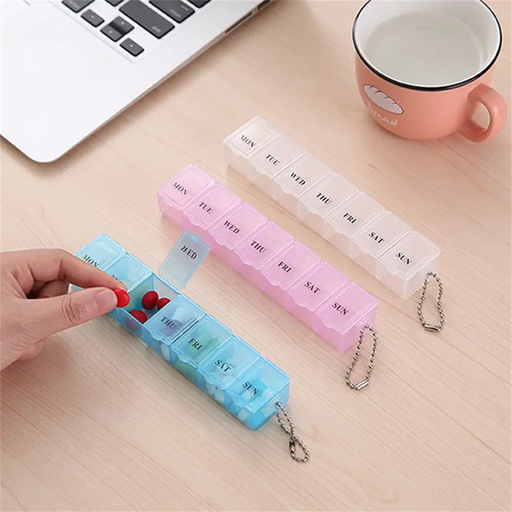
Why This Fits Their Persona: A two-piece format gives newcomers a straightforward way to organise separate medicines, vitamins or a spare set for a bag or bedside drawer.
The pack format can reduce the need to buy several separate cases, while the simple design avoids paying for unused scheduling features.
Two organisers in one purchase; suitable for basic tablet or supplement storage.
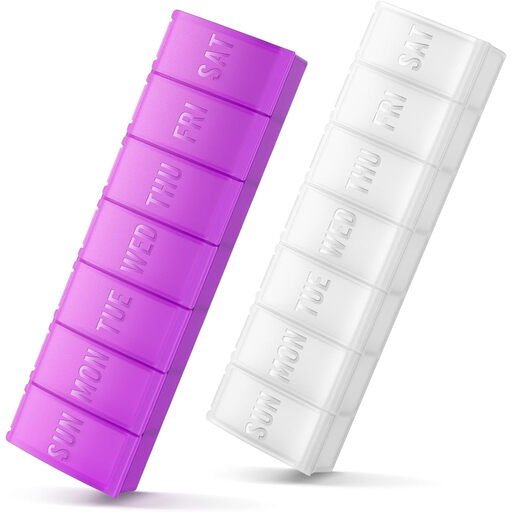
Why This Fits Their Persona: This option suits users who want a clearly marked weekly routine, roomy sections and a two-pack for home and travel.
Permanently etched day labels address the problem of fading markings, while easy-open lids are designed with accessibility in mind.
BPA-free plastic; large compartments; two organisers supplied.
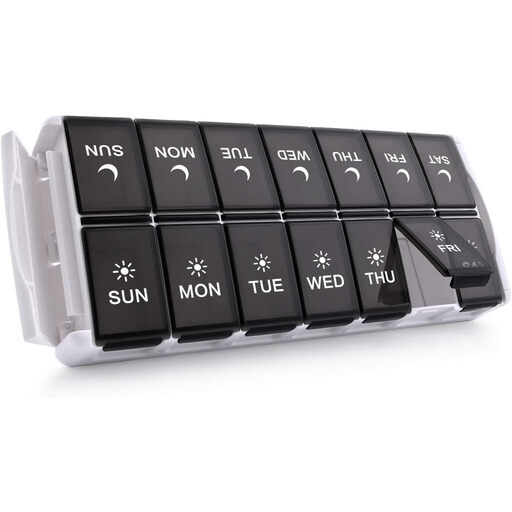
Why This Fits Their Persona: Users managing morning and evening doses across a full week receive a 14-section layout with space for larger capsules and supplements.
The AM/PM arrangement prevents a single undivided compartment from becoming confusing, while the easy-fill bottom cap supports weekly preparation.
14 labelled compartments; stated capacity for multiple vitamins, fish oils or capsules.
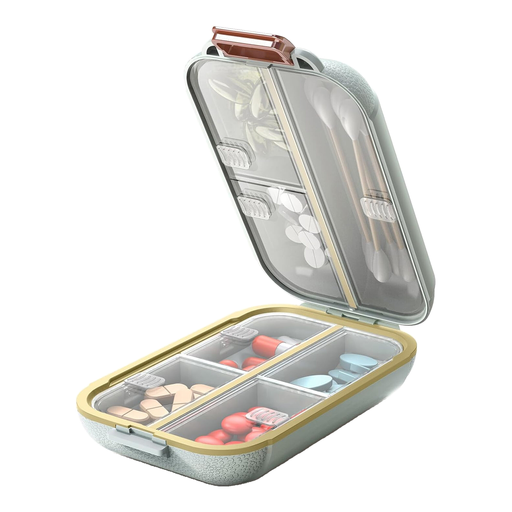
Why This Fits Their Persona: A compact seven-section case is practical for a handbag, work drawer or holiday luggage when a full AM/PM layout is unnecessary.
Seven separate compartments provide more structure than a loose travel container, while the air-tight-style lid is specified for portable storage.
Seven compartments; BPA-free material stated in the product description; compact travel format.
We have compiled a complete, real-time list of products that fully satisfy these strict selection criteria and UK safety regulations.
Before filling a medicine organiser:
A pill organiser supports organisation but does not replace medical advice, original instructions or a prescribed dosing schedule. Carers should double-check the contents against the medication list before handing over a prepared container.
It may be suitable for some medicines, but not all. Certain tablets require original packaging, special temperature control or protection from light and moisture. Ask a pharmacist before transferring prescription medicine into a weekly pill box.
Lifespan depends on the plastic, hinge, seal and frequency of use. Inspect the case regularly for cracked lids, loose hinges, faded labels or damaged seals. Replace it if compartments no longer close securely or the contents may mix.
A travel pill case can be useful, but keep prescription documentation and original packaging available when travelling, particularly for controlled medicines or international journeys. Check the airline and destination requirements before departure, and carry essential medication in hand luggage where appropriate.