
24/7 全天候客户支持

免费退货

当日/次日达

品质保障

开启新人专享福利: 全场免邮 | 低至 2 折 | 免费试用 30 天 JoyPlus 会员
下载 Joybuy
A pill organiser can make daily routines easier, but choosing one based only on a low price or attractive capacity can lead to avoidable problems. Compartments may be too small for larger capsules, lids can be difficult to open, and a case described as “sealed” may not be suitable for every medicine or damp environment.
Whether you are managing prescriptions, vitamins or supplements, the right pill organiser should match your routine, dexterity, storage needs and travel plans. Here are the main pitfalls to avoid, followed by practical product recommendations from Joybuy.
A weekly pill box may have enough sections for seven days but still be unsuitable for large fish oil capsules, multiple tablets or bulky supplements. A compact daily pill box can work well for a simple routine, yet become frustrating when each compartment is filled to capacity.
Look for descriptions that specify large compartments, individual dimensions or suitability for larger vitamins and capsules. Capacity claims should be treated as a guide rather than a guarantee, since tablet shapes vary.
Terms such as moisture-proof, airtight and sealed describe the organiser’s construction, not the storage requirements of every medicine. Some tablets are sensitive to humidity, while others should remain in their original packaging until use.
A moisture-proof pill organiser can be useful for short-term carrying, but it should still be kept in a cool, dry place. Avoid storing it in a bathroom, near a sink or in direct sunlight. If the medicine packaging or pharmacist gives specific storage instructions, follow those instructions instead of transferring the product automatically.
Small snap lids may be difficult for people with arthritis or limited dexterity. Conversely, a loose lid can open inside a handbag or suitcase. Check whether the design uses push buttons, snap-shut lids, silicone seals or hinged covers, and consider who will fill and open the case.
Clear day labels are also important. A case that is difficult to read can create confusion, particularly when morning and evening doses look similar.
Choose the layout that reflects the actual schedule:
If different medicines are taken at different times, separate AM and PM compartments are generally easier to follow than one large section per day.
Food-grade or BPA-free plastic is commonly used in these organisers. The practical points are smooth surfaces, secure hinges, legible labels and easy cleaning. Clean with a damp cloth or mild soap and water where the product instructions allow, then dry every compartment fully before refilling.
Etched or permanently printed labels may be preferable to stickers, which can peel with regular handling. However, no label removes the need to check each medicine carefully before use.
For commuting or holidays, compare the organiser’s overall dimensions with the space in your luggage, coat pocket or handbag. A portable pill case should be compact without forcing tablets into undersized sections.
A snap-lock lid or sealing ring may help reduce accidental spills and exposure to everyday humidity. It is still sensible to place the case inside a toiletries bag or separate pouch when travelling, and to keep a copy of your prescription details where appropriate.
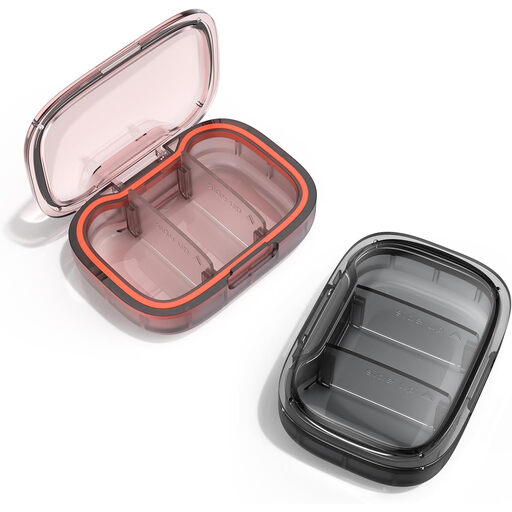
Why This Fits Their Persona: The pack of two gives a straightforward option for separating medicines from vitamins, or keeping one case at home and one in a work or travel bag.
Three compartments make the layout easy to understand, while the moisture-proof description is more specific than a vague “secure storage” claim. It remains important to keep it dry.
Pack of two; three-compartment format; compact design for vitamins, fish oil and travel use.

Why This Fits Their Persona: This suits users who want a structured weekly system with removable daily boxes for home, bedside or travel organisation.
The listing identifies a snap-lock lid, silicone sealing ring and seven removable daily compartments, making the closure and layout clearer than capacity-only descriptions.
21 compartments; removable daily boxes; food-grade PP plastic and silicone sealing ring.
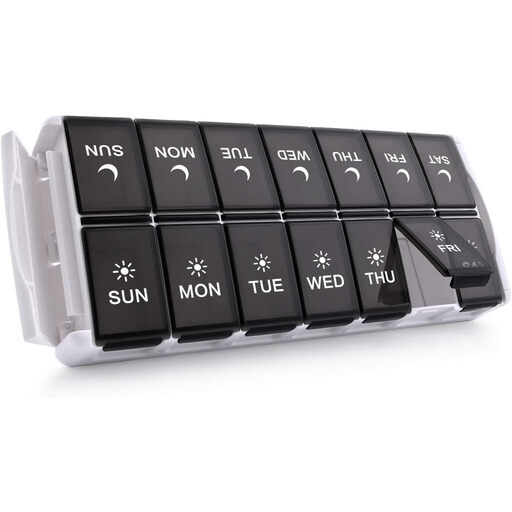
Why This Fits Their Persona: The AM/PM layout is designed for people taking several tablets or supplements at two daily points, including users preparing a full week in advance.
It separates morning and evening doses instead of relying on one crowded daily compartment. The easy-fill design also reduces repeated handling during weekly preparation.
Seven-day AM/PM arrangement; removable bottom cap for filling; stated capacity for larger vitamins and capsules.
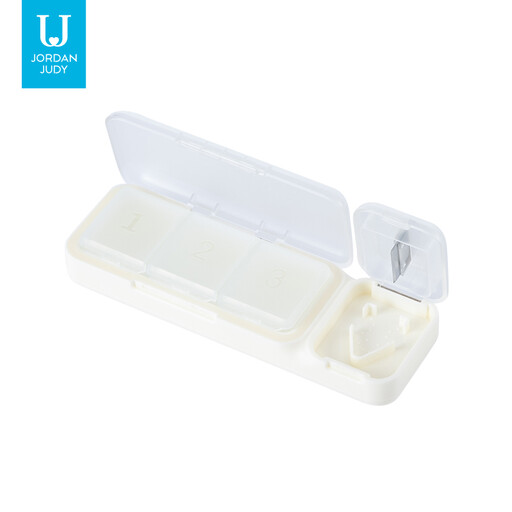
Why This Fits Their Persona: This portable pill case is suitable for carrying a small supply in a handbag, work bag or luggage when a full weekly organiser would be excessive.
Its small format avoids paying for unused weekly sections. The integrated cutter adds a specific function, but users should only split tablets when their pharmacist or medicine instructions permit it.
Compact daily storage; integrated tablet cutter; suitable for carrying medication while travelling or working.
Before transferring tablets, check the original packaging, leaflet or advice from a pharmacist. Some medicines should remain in their original containers because of moisture sensitivity, child-safety requirements, dosage instructions or identification needs.
When preparing a medication organiser:
A tablet organiser is a storage aid, not a substitute for prescription guidance. Do not use a built-in cutter for hard, irregular or unsuitable tablets, and seek advice if you are unsure whether a medicine can be split.
We have compiled a complete, real-time list of products that fully satisfy these strict selection criteria and UK safety regulations.
Lifespan depends on how often it is opened, the quality of the hinges and exposure to heat or moisture. Check the case before each refill. Cracks, loose lids, damaged seals or faded labels are practical reasons to replace it.
A travel pill organiser can be useful for carrying a limited supply, but keep medicines secure and follow airline, destination and prescription requirements. For longer trips, retain original packaging and supporting documentation where needed.
There is no regular running cost beyond the initial purchase. The main ongoing consideration is replacement when the case becomes difficult to clean, no longer closes properly or is unsuitable for a changed medication routine.