
24/7 Customer Support

Free returns

Same-day & Next-day Delivery

Quality Guaranteed

Unlock Your Welcome Offers: FREE Delivery | Up to 80% OFF | Free 30-day JoyPlus trial
Download the APP
A pill organiser can make weekly routines easier, but the wrong design may create fresh problems. Compartments that are too small can leave tablets crushed or lids difficult to close. Day labels may fade, while a case described as “waterproof” may only offer limited protection from splashes rather than safe submersion.
For UK shoppers, the practical choice depends on how many tablets you take, how often you need them and whether the organiser will stay at home or travel in a handbag, suitcase or work bag.
A large number of compartments does not automatically mean better organisation. A 7-day pill box may provide one compartment per day, while a daily medication organiser with morning, afternoon and evening sections may suit a more complex routine. Check both the number of sections and the number of doses each section is intended to hold.
Large vitamin tablets, fish oil capsules and supplements can take up more room than smaller tablets. If you regularly carry several items, look for a large pill dispenser or clearly stated compartment capacity.
Terms such as moisture-proof, sealed and waterproof can describe different levels of protection. A waterproof pill case may help protect contents from light moisture, but it should not be assumed to keep medicine dry after being submerged or exposed to condensation for long periods.
Keep medicines in line with the storage instructions on their packaging. Some medicines should remain in their original labelled containers, so check with a pharmacist before transferring prescription tablets into a pill case.
Small snap lids can be frustrating for people with limited hand strength, arthritis or long nails. A case that is easy to open at first may also become less convenient if hinges stiffen or labels wear away. Look for easy-open pill organiser features, tactile lids and clear day markings rather than relying on product photographs alone.
Keep all medication out of sight and reach of children and pets. An organiser is a storage aid, not a child-resistant medicine container unless the product specifically states otherwise.
Start with your actual routine:
Count the items used per dose and compare them with the stated compartment capacity. If a listing gives capacity in tablets or capsules, remember that shapes and sizes vary.
A secure closure should stay shut in a bag without requiring excessive force. For travel, consider detachable daily sections, a separate case or a compact travel pill organiser that can be checked quickly at airport security.
A silicone seal or snap-lock lid may help reduce moisture exposure, but inspect the seal regularly. Do not wash a sealed organiser in a dishwasher unless the instructions expressly allow it. Hand washing with mild soap and thorough drying is generally more suitable for the products described here.
Look for clearly stated materials such as BPA-free plastic, food-grade polypropylene or other disclosed plastics. Material information helps you compare products, but it does not replace the medicine’s own storage requirements.
Check whether day labels are printed, etched or removable. Removable daily boxes can be convenient for carers or travel, while fixed sections may be simpler for a regular bedside routine. For medicines that must remain in original packaging, use the organiser only for suitable items such as supplements after confirming the arrangement with a pharmacist.
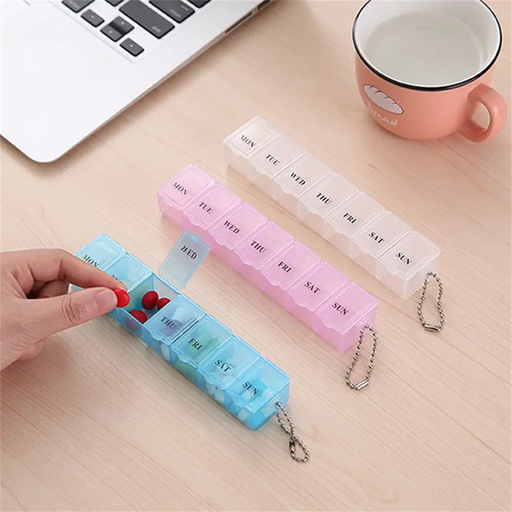
Why This Fits Their Persona: A two-piece option can suit shoppers starting a simple home or work-based storage routine, or anyone wanting a spare case for short trips around the UK.
The pack quantity is stated in the product name, helping avoid assuming that a pictured pair is supplied when only one organiser is included.
Two organisers are supplied; suitable for separating home and travel use.
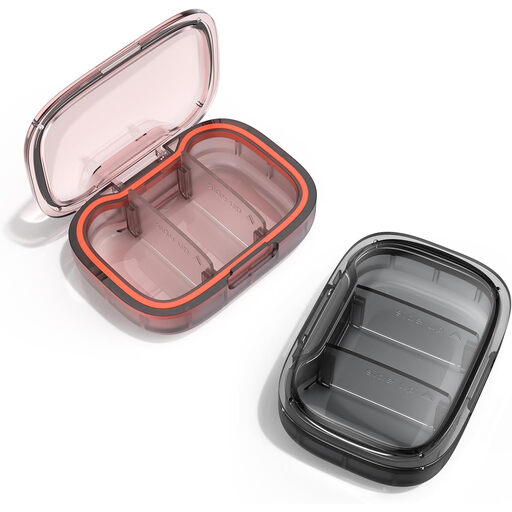
Why This Fits Their Persona: Its three-compartment format and mini travel positioning suit carrying a limited selection of tablets, vitamins or fish oil in a handbag or cabin bag.
The listing identifies three compartments and describes the case as moisture-proof, giving more specific information than a generic travel case title.
Pack of two; three compartments per case; compact format for travel.
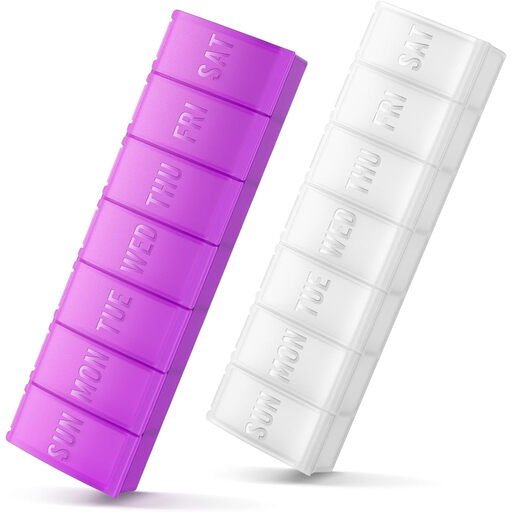
Why This Fits Their Persona: This two-pack is suited to shoppers who value stated materials, large compartments and a reusable weekly layout for home and travel.
Its product details specify BPA-free plastic, smooth hinges and etched day labels, addressing common concerns about unclear materials and fading markings.
Seven compartments; large stated capacity; two-piece pack with easy-open lids.
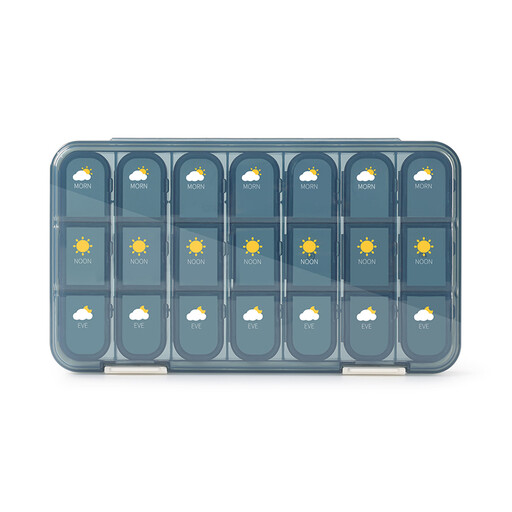
Why This Fits Their Persona: Twenty-one compartments can suit users who separate several daily doses, or carers preparing a structured weekly schedule.
The stated 21-compartment layout makes dose separation clearer than a basic weekly case with one section per day.
21 compartments; portable sealed weekly format; suitable for multiple daily doses.
We have compiled a complete, real-time list of products that fully satisfy these strict selection criteria and UK safety regulations.
Wash and dry the organiser before first use, then prepare it in a clean, well-lit area. Check each item against its original packaging or medication list. Fill only the compartments you need and confirm the day and dose labels before closing the lids. Ask a pharmacist before transferring prescription medicines, particularly if they require original packaging or special storage.
There is no universal lifespan. Replace it when lids no longer close securely, hinges crack, labels become unreadable or the seal is damaged. Regularly check for powder, residue and moisture. A damp compartment should be cleaned, dried fully and inspected before refilling.
A pill organiser has no direct effect on medicine prices or prescription charges. It may help reduce waste caused by forgotten doses or misplaced supplements, but it cannot replace reminders, dosage instructions or advice from a pharmacist. Choose capacity and layout based on your routine rather than paying extra for features you will not use.