
24/7 全天候客户支持

免费退货

当日/次日达

品质保障

开启新人专享福利: 全场免邮 | 低至 2 折 | 免费试用 30 天 JoyPlus 会员
下载 Joybuy
A pill organiser can make daily routines easier, but choosing the wrong design may create new problems. A box that looks spacious online may not fit larger capsules, while a “secure” lid may be difficult to open when your hands are stiff. For UK shoppers, the most useful choice depends on the number of doses, storage conditions and how often the organiser will travel.
A slim portable pill box may fit neatly in a handbag or coat pocket, but its compartments can be too small for fish oil, large vitamins or several tablets. Check the compartment dimensions and stated capacity rather than relying on phrases such as “large capacity”.
For example, the VVM weekly pill organiser is specified to hold up to eight fish oils or 17 capsules per compartment. This gives a clearer indication of use than a general capacity claim.
Snap closures can help prevent accidental opening, but a stiff mechanism may be inconvenient for people with arthritis, reduced grip strength or long nails. Look for ergonomic lids, push-button mechanisms or smooth hinges. The opening action should be manageable without excessive force.
A lid that is too loose is also unsuitable for carrying in a work bag or suitcase. Check that the closure is designed to resist accidental opening, while remembering that a pill organiser is not a substitute for child-resistant medicine packaging.
An airtight pill container may help limit exposure to moisture, but the product description and storage instructions still matter. Some medicines should remain in their original packaging, blister strip or pharmacy container. Ask a pharmacist before transferring prescription medicines, particularly if they are moisture-sensitive, controlled or supplied with specific storage directions.
For vitamins and supplements, a sealed design may be useful, but it should still be kept away from heat, direct sunlight and children.
A weekly pill organiser normally provides seven day-labelled sections. This can work well for one daily routine, while a daily medicine organiser with morning and evening sections may be more suitable for twice-daily schedules.
People taking tablets at several points during the day may prefer a 7-day pill box with four daily compartments. Check whether the dividers are removable and whether each section is large enough for the required number of tablets.
For occasional use, a portable pill box with three, four or six compartments may be more convenient than a full weekly case. A travel pill case is useful for carrying a day or two of vitamins or medication without packing the whole organiser.
Look for labels that are clearly printed, etched or moulded into the lid. Fading labels can make a routine harder to follow, especially when the organiser is used every day.
The VVM 7-day design uses etched day labels, while another VVM model uses fade-resistant 3D printing. Its product information states that the labels are designed to withstand more than 15,000 open-and-close cycles. This is a specification, not a guarantee of service life, so hinges and closures should still be checked periodically.
BPA-free plastic, food-grade polypropylene and medical-grade plastic are common materials in this category. These descriptions refer to the stated material specification and should not be interpreted as medical endorsements.
A silicone sealing ring can be useful where moisture protection is important. However, the organiser must be cleaned according to its instructions and completely dried before refilling. Avoid abrasive cleaners, and do not place products in a dishwasher unless the manufacturer specifically allows it.
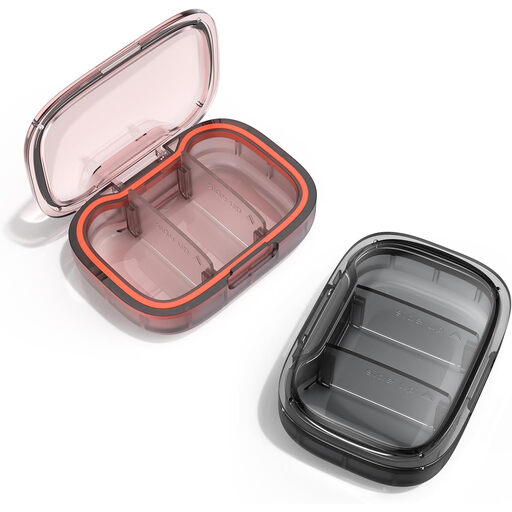
Why This Fits Their Persona: Two compact cases suit shoppers who want a straightforward vitamin organiser for a handbag, desk drawer or short trip around the UK.
The three-compartment layout avoids paying for a large weekly case when only a few doses need to be carried.
Pack of two; compact format for vitamins, fish oil and short outings.
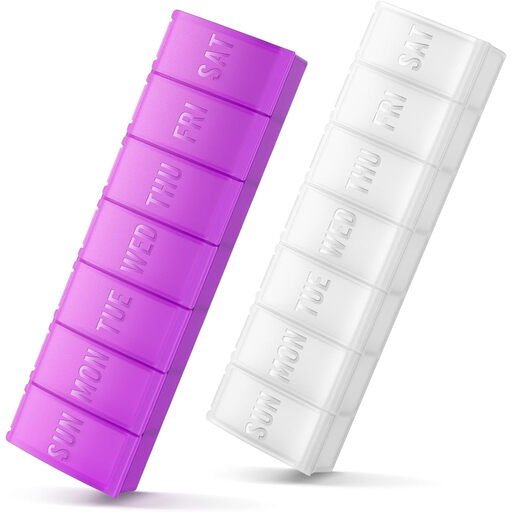
Why This Fits Their Persona: A two-pack weekly format suits households that want one organiser at home and another for travel or a carer’s routine.
Permanently etched day labels address the risk of fading print, while smooth hinges and easy-open lids address stiff closures.
BPA-free medical-grade plastic; roomy compartments for large vitamins, fish oil and supplements.
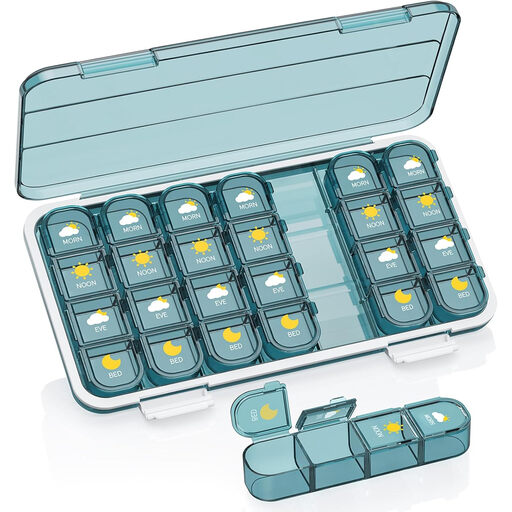
Why This Fits Their Persona: Four daily sections suit people who need a more structured schedule for medication, vitamins or supplements at home or while travelling.
Separate dose periods reduce the ambiguity of a single compartment labelled only by day.
Seven-day layout; separate case included; designed for vitamins, fish oils and supplements.
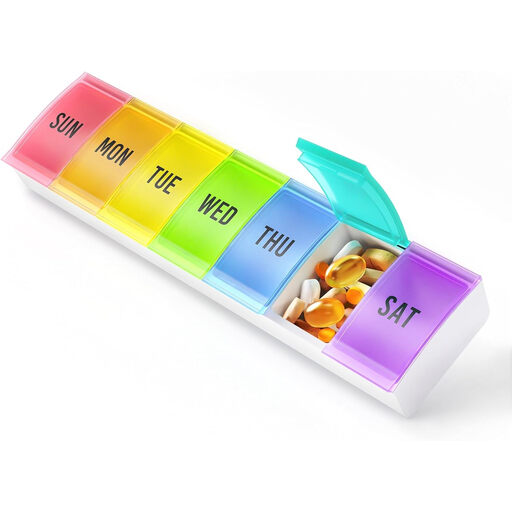
Why This Fits Their Persona: The ergonomic lid design is intended for older users, people with arthritis or anyone who finds small openings inconvenient.
The stated secure snap-shut lids balance easier opening with resistance to accidental opening during normal carrying.
Seven compartments; BPA-free food-grade plastic; stated capacity for capsules and fish oils.
We have compiled a complete, real-time list of products that fully satisfy these strict selection criteria and UK safety regulations.
Lifespan depends on the plastic, hinges, closure and frequency of use. A product specification may state an intended cycle count, such as more than 15,000 openings, but this is not a guarantee. Inspect the organiser regularly and replace it if damaged.
A portable pill box or travel pill case can be convenient for short trips. For flights or prescription medication, retain original labels and packaging where possible, and check airline or destination requirements before travelling.
Cost usually reflects the number of compartments, sealing design, material, labelling and whether the product is supplied as a single case or multipack. Select the layout and opening mechanism you will use reliably rather than paying for features that do not match your routine.