
24/7 Customer Support

Free returns

Same-day & Next-day Delivery

Quality Guaranteed

Unlock Your Welcome Offers: FREE Delivery | Up to 80% OFF | Free 30-day JoyPlus trial
Download the APP
Waking up with a stiff, aching neck is a frustratingly common experience for many in the UK. While we often blame a bad night's sleep, the culprit is frequently the very thing meant to provide comfort: our pillow. Choosing a new pillow for neck pain can feel overwhelming, with a market full of confusing claims and features.
As the Joybuy Product Recommendation Officer, my role is to help you navigate this landscape. We will look past the marketing hype and focus on the practical features that genuinely contribute to better neck support and a more restful night. Before you invest, let's examine the common pitfalls that lead to poor purchases.
The "One-Size-Fits-All" Myth: Many pillows are marketed as a universal solution. However, a pillow that works for a 6'2" side sleeper will likely cause misalignment and pain for a 5'4" back sleeper. The right pillow must match your body frame and primary sleeping position. A mismatched pillow is a primary cause of persistent neck and shoulder discomfort.
Ignoring Adjustability: Your support needs are not static. They can change based on your mattress, minor injuries or even just personal preference over time. Buying a pillow with a fixed height and firmness is a gamble. An adjustable memory foam pillow provides a more future-proof solution, allowing you to tailor the support for long-term comfort.
Focusing on a Single "Miracle" Material: Marketing often highlights a single material as the ultimate solution. In reality, the pillow's overall design—its shape, height and how different materials are layered—is far more important. A well-designed hybrid pillow can easily outperform a poorly designed one made from a single, supposedly superior material.
To make an informed choice, focus on these non-negotiable parameters. They determine how well a pillow will support your unique anatomy and sleeping style.
Pillow loft is the uncompressed height of the pillow. Matching it to your sleeping position is crucial for maintaining neutral spinal alignment.
The material dictates the feel, support and breathability of the pillow.
While a traditionally shaped pillow can work if the loft is correct, many find an orthopaedic pillow UK design more effective. These often feature a contoured, wave-like shape with two different height edges, designed to cradle the neck and promote proper alignment for both back and side sleepers.
Instead of a single "best" pillow, we match specific products to different user needs. Here are our recommendations based on the practical criteria discussed above.

Why This Fits Their Persona: Side sleepers require significant loft to maintain spinal alignment. This pillow's three removable foam layers allow for precise height customisation to perfectly fill the gap between the head and shoulder, alleviating pressure. The cooling technology also addresses a common complaint of memory foam overheating.
It directly counters the "one-size-fits-all" trap by being fully adjustable. Users can experiment with different layer combinations to find the exact height and firmness that suits their body frame and mattress.
Three removable foam layers for tailored support. ThermoSync technology helps regulate temperature for a cooler sleep.
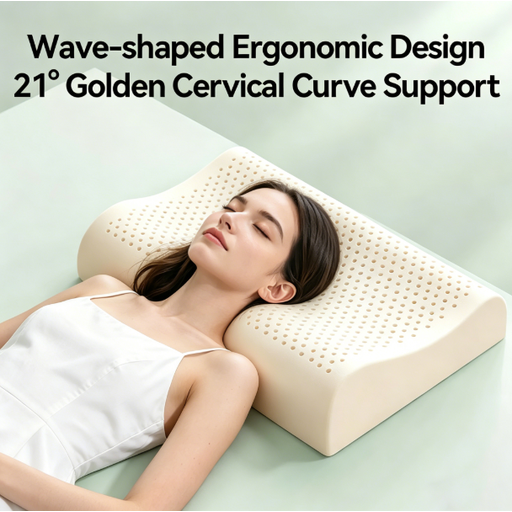
Why This Fits Their Persona: For those who prefer natural materials and a more buoyant feel, this pillow is an excellent choice. Made from 93% natural latex, it offers responsive support that is ideal for back and side sleepers who dislike the slow sinking of memory foam. The ergonomic wave shape is designed to support the neck's natural curvature.
This pillow moves beyond vague material claims by specifying its high latex content (93%) and its functional, ergonomic wave design. This provides a clear reason for its supportive properties, rather than relying on hype.
Made from highly breathable and naturally hypoallergenic latex. The contoured wave design provides targeted neck support.

Why This Fits Their Persona: Combination sleepers shift between their side, back and stomach, meaning their support needs change throughout the night. This hybrid pillow's adjustable layers and combination of supportive foam and soft microfibre provide the ultimate versatility to accommodate any position.
By being both adjustable in height and offering a combination of materials, it directly solves the problem of a fixed, non-versatile pillow. It empowers the user to create a pillow that works for them, not the other way around.
Combines the plush comfort of microfibre with the contouring support of memory foam. Removable layers allow for full customisation.
We have compiled a complete, real-time list of products that fully satisfy these strict selection criteria and UK safety regulations.
There is often an adjustment period of a few nights up to a week. Your neck and shoulder muscles need time to adapt to a new, more supportive sleeping posture. If your pillow is adjustable, use this initial period to experiment with different layer combinations to find the most comfortable and supportive configuration for you.
A simple test is to check your alignment. When lying in your usual sleeping position, your head, neck and spine should form a relatively straight line. For side sleepers, your nose should be aligned with the centre of your chest. For back sleepers, your chin should not be pushed down or tilted too far back. You can ask someone to check your posture or take a photo to see for yourself.
High-quality memory foam and natural latex pillows typically have a lifespan of 2-3 years, which is longer than many traditional fibre-filled pillows. You will know it is time for a replacement when you notice it has lost its original shape, feels lumpy or no longer provides the support it once did, leading to the return of neck discomfort.