What matters when choosing?
Start with the exact model’s dough function and recipe quantity. Then check where the appliance will stand, where it will be stored and how each user will leave it ready for the next person.
| Concern |
What to check |
Who this matters to |
| Space and batch size |
Compare the dimensions with your counter and cupboard space; use the manual’s pizza-dough quantity, not the loaf-size label, to plan a batch. |
When I have to clear the counter afterwards, I need a machine I can store and a batch that feeds the people joining in. Around 36% of consumers put space and batch fit first. |
| Dough function and control |
Confirm a pizza-dough, dough or knead-only function on the exact model; check its cycle and controls if you want to vary a recipe. |
I mainly want the machine to prepare dough, not bake a loaf, and I may want control over kneading or rising. For around 29% of consumers, that function and control are the primary concern. |
| Cleaning and allergens |
Read the pan and paddle cleaning instructions, and decide whether shared use needs separate equipment or other allergen controls. |
If people with different dietary needs share the equipment, I need to know how food residue will be removed before the next use. Cleaning and cross-contact control come first for around 21% of consumers. |
| Scheduling and safe use |
Agree when the machine may run and check its instructions, socket location and the condition of the plug and lead. |
I cannot occupy the only clear worktop whenever I like, so the running time has to work for everyone using the kitchen. Around 14% of consumers prioritise scheduling and appliance use. |
Brands with relevant models
These named product lines illustrate different ways to meet the pizza-dough brief; brand inclusion does not establish availability or performance across other models.
Panasonic
Its named models offer a choice between a compact pizza-dough-capable machine and one with more settings.
- Panasonic UK & Ireland lists 18 programmes, including pizza dough, and dimensions of 255 × 307 × 290 mm for the SD-PN100. It lists pizza dough and manual kneading and rising settings among the SD-YR2550’s 31 programmes.
- Check the intended dough quantity and the space required for the exact model; a higher programme count alone does not establish a better fit for your recipe.
Lakeland
The Compact 1lb Daily Loaf Bread Maker is a space-conscious option to examine when pizza dough is the main task.
- Lakeland lists 11 presets, a small footprint and a knead-only function for pizza dough and rolls.
- Its 1lb loaf format is not a pizza count; check the model’s recipe quantity if you are making dough for a group.
Morphy Richards
The Fastbake is worth comparing when a straightforward dough setting and larger stated loaf-size options matter more than compact storage.
- Lakeland’s Fastbake listing describes dough use for pizza bases, 1.5lb and 2lb loaf-size options and a 13-hour delay timer.
- Confirm the pizza-dough recipe quantity separately; loaf-size options do not establish how many pizza bases one cycle makes.
Sage
The Custom Loaf is a model to examine if changing settings is part of your dough-making plans.
- Sage Appliances lists 13 automatic settings, nine custom settings, loaf sizes from 250g to 1.25kg and dimensions of 41.7 × 24.4 × 33.8 cm.
- Check the manual for the pizza-dough method you intend to use and make sure its dimensions work in the shared kitchen.
Joybuy dough-making option
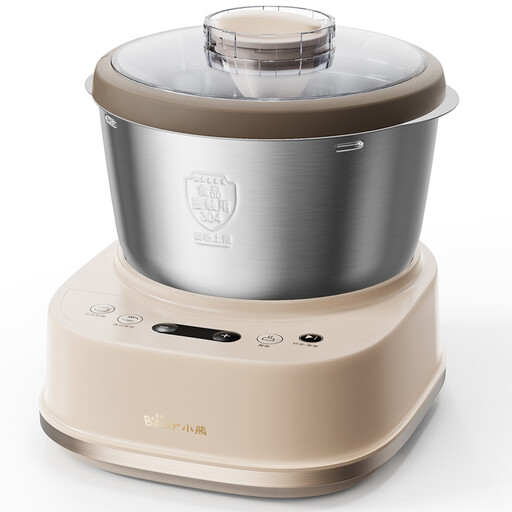
This option is a dough maker rather than a confirmed bread maker. If you are considering it for pizza dough, check the model’s recipe and cleaning instructions before deciding whether it meets the same needs.
 No image available
Bear HMJ-A50N1 Dough Maker, 5 L, 2.5 kg
Consider this dough maker if you want help preparing dough, but confirm a suitable pizza-dough method in its manual before choosing it for that purpose.
The product title states a 5 L capacity and 2.5 kg dough kneading; neither figure tells you how many pizzas a permitted recipe will make.
For shared use, check the food-contact cleaning instructions and confirm the supplied plug is suitable for your socket.
View on Joybuy
Common questions
Does a bread maker need a dedicated pizza-dough programme?
Not necessarily: a stated dough or knead-only function may also meet your needs. Check the exact model’s instructions for a suitable pizza-dough method and whether its cycle stops before baking; Panasonic lists pizza dough for the SD-PN100 and SD-YR2550, while Lakeland lists knead-only use for pizza dough on its compact model.
Does a gluten-free setting make a shared bread maker safe for someone with a wheat allergy or coeliac disease?
A gluten-free setting alone cannot establish that shared equipment is free from allergen cross-contact. The Food Standards Agency emphasises removing allergenic food material from equipment, surfaces and utensils; agree appropriate cleaning and separation arrangements for the people using the kitchen.
Does a bread maker in a shared home need annual PAT testing?
Do not assume an annual portable appliance test is a universal requirement. The Health and Safety Executive says the Electricity at Work Regulations require potentially hazardous equipment to be maintained safely in applicable work settings, but do not prescribe annual inspection or testing; for a shared home, follow the manufacturer’s instructions, check for visible damage and observe any household or landlord rules.
What if the shared kitchen is used to sell pizza?
If the activity is a food business, the Food Standards Agency’s registration service says it must register with the local authority at least 28 days before trading or food operations begin. Check the requirements for the particular activity and UK nation with the relevant local authority rather than applying commercial-kitchen rules to an ordinary shared household.


