
24/7 Customer Support

Free returns

Same-day & Next-day Delivery

Quality Guaranteed

Unlock Your Welcome Offers: FREE Delivery | Up to 80% OFF | Free 30-day JoyPlus trial
Download the APP
By Joybuy Product Recommendation Officer
Buying PLA basic 3D printer filament 1.75mm can seem straightforward, but the wrong spool may lead to inconsistent extrusion, wasted prints and colours that do not match your project. For UK makers, beginners and educators, the practical choice depends less on impressive marketing language and more on measurable specifications, printer compatibility and how the filament will be stored.
This guide explains the main buying traps, the technical details worth checking and a selection of products suited to different printing habits.
The 1.75mm measurement refers to the filament diameter, not universal printer compatibility. Your machine must support FDM 3D printer filament and the selected material. PLA is commonly suitable for open-frame and enclosed desktop printers, but always check the printer manufacturer’s recommended nozzle temperature, bed temperature and spool dimensions.
A spool can also be physically too wide for a compact holder. Check the spool’s external diameter, width and centre-hole size if your printer has a fixed mounting system.
A low-cost spool may appear attractive until uneven feeding causes under-extrusion or visible layer inconsistencies. Marketing terms such as “high-speed” also need context: fast printing depends on the printer, nozzle, temperature, cooling and model geometry. A high-speed PLA filament is not automatically suitable for every machine.
For regular printing, a 1kg PLA filament spool often provides a practical balance between cost per gram and storage. Smaller quantities may be more suitable when testing a new colour or material.
PLA is made from a plant-based polymer in many formulations, but “biodegradable 3D printing filament” does not mean that a finished print will quickly break down in a garden compost bin. Disposal conditions vary, and industrial composting may be required. Check the product information and local waste guidance rather than assuming PLA can be placed in household compost.
Look for a clearly stated diameter and tolerance. The JOYBUY x ANYCUBIC range specifies 1.75mm diameter with ±0.02mm filament tolerance. A narrower stated tolerance can help maintain more consistent material flow, although print results are also affected by moisture, nozzle condition and slicer settings.
Before loading a new spool, inspect the filament for tangles, dust or brittle sections. Keep the filament path aligned and avoid allowing the loose end to slip under another loop.
PLA is generally selected for its relatively straightforward printing behaviour, low tendency to warp and suitability for models, prototypes, classroom projects and decorative parts. It is not the right material for every functional application: parts exposed to high heat, outdoor weather or significant mechanical stress may require another filament type.
Use the temperature range supplied with the spool as a starting point. A small temperature tower or calibration model can help you adjust extrusion temperature and cooling for your particular printer.
Choose spool quantity according to your project frequency. A multi-roll pack such as the KINGROON option can suit users who print frequently and want more material available, while a single 1kg spool offers a straightforward way to select a particular colour.
Colour also affects appearance. Glossy, bright and clear filaments highlight different design features, while a matt or textured finish can make layer lines less noticeable. Clear PLA should not automatically be treated as optically transparent; printed walls, infill and layer structure influence the final result.
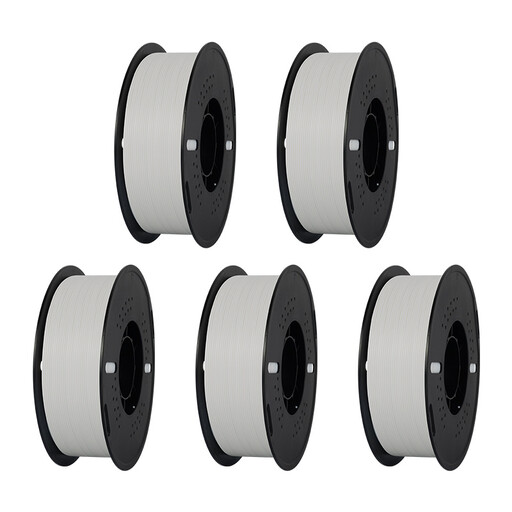
Why This Fits Their Persona: A multi-roll format can suit beginners, families and UK clubs that print frequently and want spare material available for practice models.
The listing identifies 1.75mm PLA and a five-roll format, making quantity easier to assess than an unclear pack description.
Multiple rolls; white PLA is useful for prototypes, models and later painting.
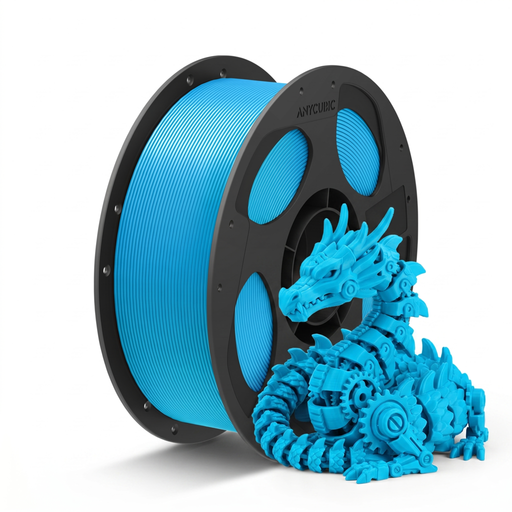
Why This Fits Their Persona: Suitable for makers who want a clearly specified spool and a vivid colour for display models, gifts or creative projects.
Its product information states the diameter and ±0.02mm tolerance instead of relying only on broad quality language.
1kg quantity; cyan colour; stated ±0.02mm tolerance.
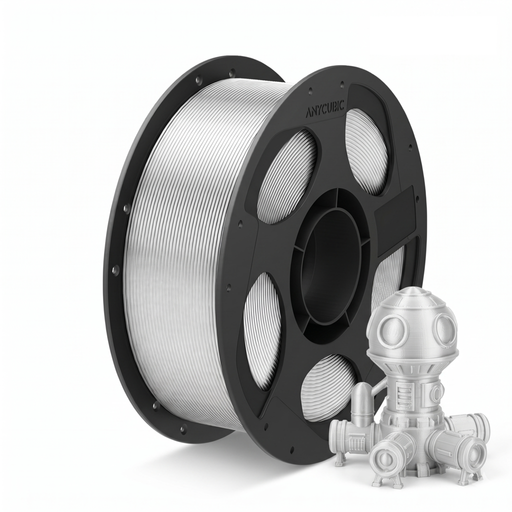
Why This Fits Their Persona: A practical option for decorative pieces, light-passing designs and prototypes where a clear appearance is part of the brief.
The stated tolerance and low-warp PLA description provide more useful selection information than colour alone.
Clear finish; 1kg spool; stated 1.75mm diameter and ±0.02mm tolerance.
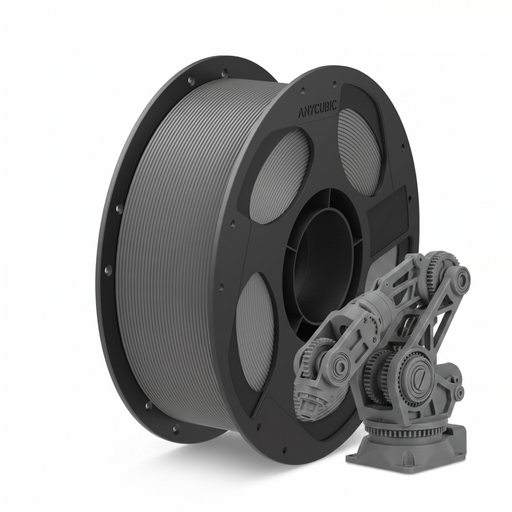
Why This Fits Their Persona: Grey filament works well for repeated prototypes, architectural forms, tabletop models and functional test prints where surface detail matters.
A matt textured appearance can make visible layer lines less prominent, while the stated tolerance supports a more informed purchase.
1kg spool; texture grey finish; listed low-warp PLA characteristics.
We have compiled a complete, real-time list of products that fully satisfy these strict selection criteria and UK safety regulations.
No. It is suitable only for printers designed for 1.75mm filament. Some older or specialist machines use 2.85mm or 3mm filament. Confirm the required diameter and material support in your printer manual before ordering.
It depends on model size, infill, supports, failed prints and nozzle settings. Small decorative items may use only a few dozen grams, while large prototypes can consume several hundred grams. Slicer software normally estimates material usage before printing.
PLA can be economical for general models because it is widely available and usually prints without the heated chamber required by some technical materials. Your overall running cost also includes electricity, replacement nozzles, build-plate consumables and failed prints. Selecting a suitable spool, storing it dry and calibrating your printer can help reduce waste.