
24/7 Customer Support

Free returns

Same-day & Next-day Delivery

Quality Guaranteed
Download the APP
Categories
Mounting anything to a plasterboard wall can feel like a gamble. Whether you're a kitchen fitter installing a row of cabinets or a homeowner hanging a heavy mirror, the fear of a fixing failing is always present. Using the wrong hardware can lead to damaged walls, fallen objects and costly repairs. The market is filled with options, from simple plugs to complex anchors, making it difficult to know which one is right for the job.
As a Joybuy Product Recommendation Officer, my role is to help you navigate these choices. This guide cuts through the clutter, offering practical advice on selecting the correct plasterboard fixings for your specific task. We will look at the key factors to consider and highlight a few reliable solutions for common professional and DIY applications.
Choosing the right fixing isn't just about grabbing the first one you see. To ensure a secure and lasting installation, you need to assess the task properly. Here are three critical factors to consider.
The single most important factor is the weight of the object you are mounting. Fixings are designed for different load capacities.
Not all plasterboard walls are the same. The type of wall will dictate which cavity wall fixings are most suitable.
Different fixings for plasterboard walls achieve their grip in different ways.
Based on performance, versatility and user feedback, here are our recommendations for reliable fixings that cover a range of common tasks.
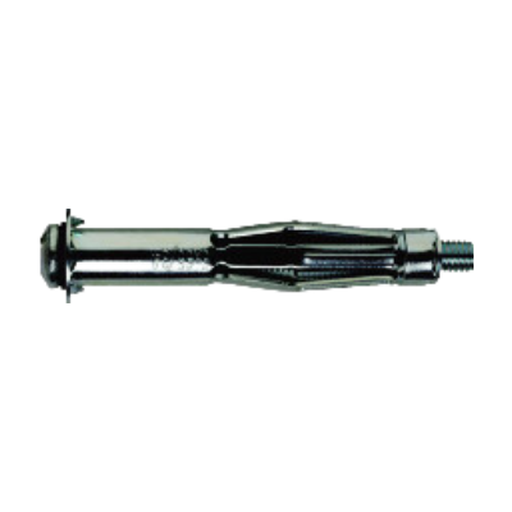
Why It Stands Out: This is a high-performance metal cavity fixing designed specifically for securing heavy items to plasterboard. Its all-metal construction and wide-spanning legs create an exceptionally strong anchor point inside the wall cavity, distributing the load effectively. A key feature is that the screw can be removed and re-inserted without the anchor falling into the cavity, which is invaluable when temporarily removing radiators for decorating.
Pros:
Who is it for: Professional tradespeople, particularly plumbers, heating engineers and kitchen fitters, who need a dependable solution for mounting heavy objects like radiators, boilers and wall cabinets to plasterboard. It's also an ideal choice for experienced DIYers undertaking major renovation projects.
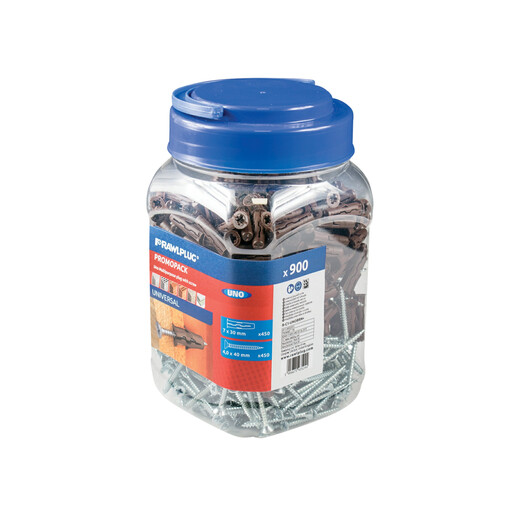
Why It Stands Out: The Rawlplug UNO is the definition of a versatile workhorse. While not a dedicated cavity fixing, its unique design allows it to function effectively in plasterboard as well as solid materials like concrete, brick and blockwork. The plug expands along its entire length and has anti-rotation fins, providing a secure grip in almost any substrate. This makes it an indispensable part of any toolkit.
Pros:
Who is it for: Tradespeople and DIY enthusiasts who need a reliable, all-in-one fixing solution. If you frequently switch between working on solid walls and plasterboard, this rawl plugs and screws set saves you from carrying multiple types of fixings.
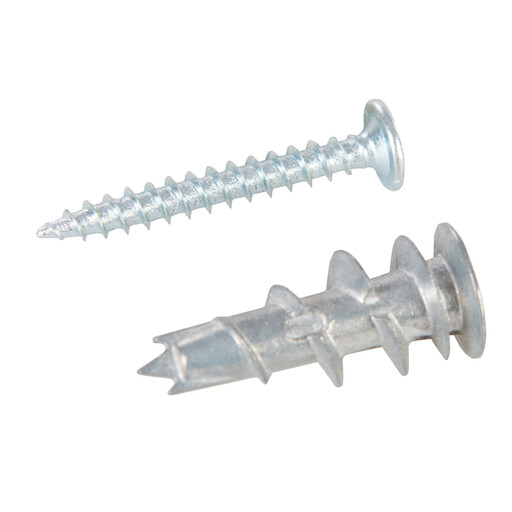
Why It Stands Out: For light-duty applications where speed is paramount, these self-drilling plasterboard fixings are hard to beat. There is no need for a pilot hole; the sharp, self-tapping thread cuts directly into the drywall with a standard screwdriver. This dramatically reduces installation time, making them perfect for repetitive tasks.
Pros:
Who is it for: Electricians installing back boxes and trunking, decorators hanging pictures and anyone needing to quickly attach lighter items to plasterboard. They are a must-have for efficiency on the job site or for quick home improvement tasks.
Our recommendations cover some of the most common and demanding applications, but every project has unique requirements. If you need a different size, a specialised anchor for a specific wall type or a larger quantity, we have a wider selection available.
Explore our full range of screws and fixings to find the perfect match for your project.
1. What is the strongest fixing for plasterboard? For securing very heavy items, heavy duty plasterboard fixings like metal expanding cavity anchors or spring toggles are generally considered the most robust options. These fixings work by spreading the load across a wide surface area behind the plasterboard, which prevents the anchor from pulling through the material. Always check the manufacturer's stated load capacity and ensure it is suitable for your wall's condition.
2. Can you use normal rawl plugs in plasterboard? It is generally not recommended to use standard rawl plugs and screws in plasterboard for anything other than very light objects. These plugs are designed to expand and grip the sides of a hole in a solid material like brick. In a hollow cavity, they have nothing to grip against and can easily be pulled out under load. It is always safer to use dedicated drywall anchors or cavity wall fixings.
3. Do I need to drill a pilot hole for self-drilling plasterboard fixings? No, the primary advantage of self-drilling plasterboard fixings is that they do not require a pilot hole. They are designed with a sharp, drill-like point that cuts its own hole and thread as you drive it into the plasterboard with a screwdriver. This makes them an exceptionally fast and convenient solution for light-duty tasks.